Southern Metal Family
First published March 2004
By Simon Vincent
Prequel: It was with great sadness we heard of the passing of well known Invercargill contractor Jim Bates. A really nice guy, Jim was one of the very early people feature in Truck Journal (less than six months after we started). Our sincere condolences to his family and friends. In recognition of his passing we are posting his original story plus a few bonus pictures of his gear in later years.
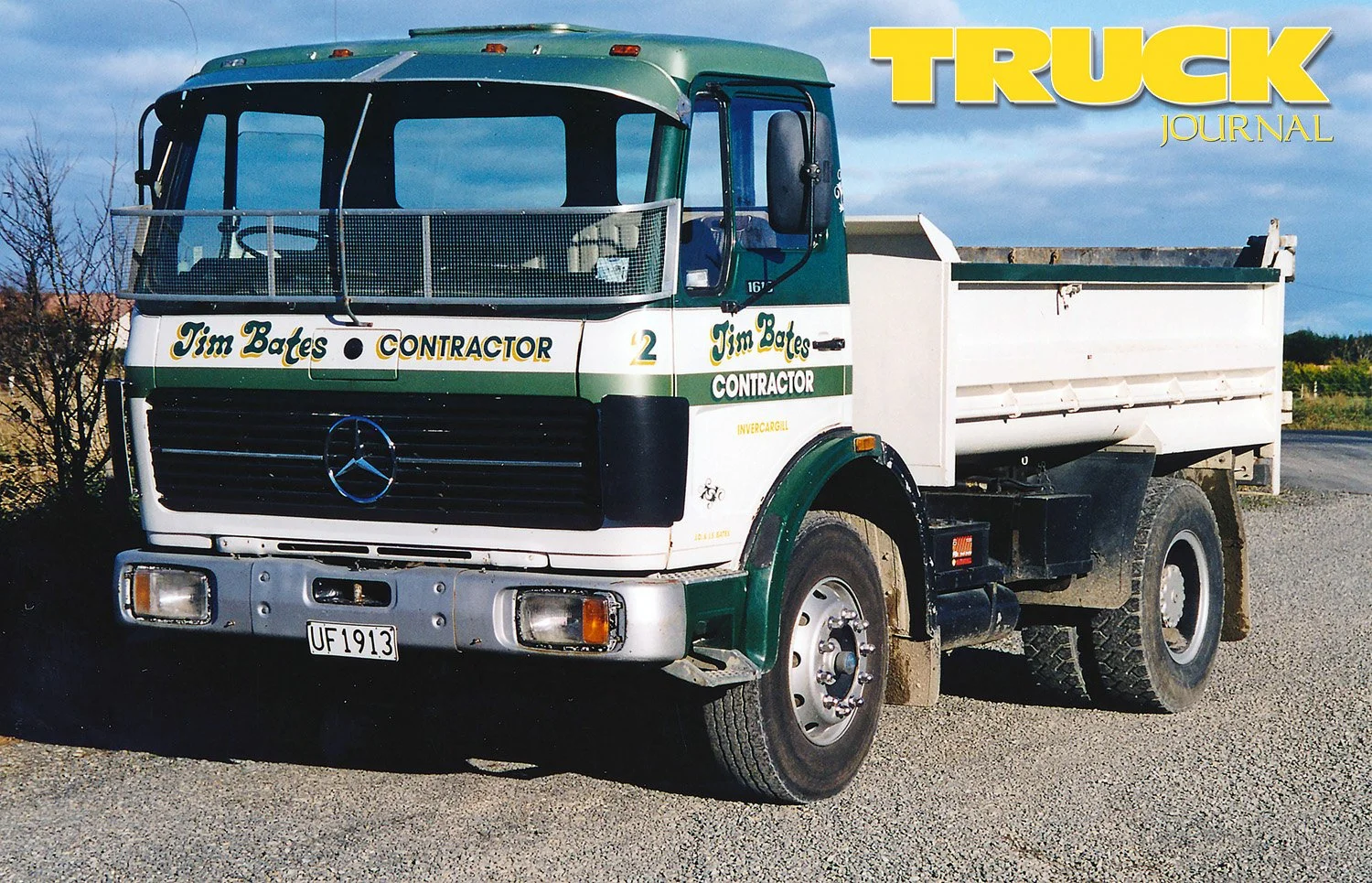
Jim Bates Contractor runs a fleet of immaculate American Iron at the bottom of the South Island. Surprisingly, these trucks were all second hand and in most cases had covered significant distances in line haul before being purchased and then brought up to Jim’s exacting standards.
Invercargill may have the reputation as a windswept and rainy location but, according to recent figures, Auckland took the crown as being the wettest city in New Zealand in 2003. However, Southland is not the easiest of climates to work in; even the trees grow with a slight lean to the North. You would not expect to find some of the smartest trucks in New Zealand in this area of wild weather.
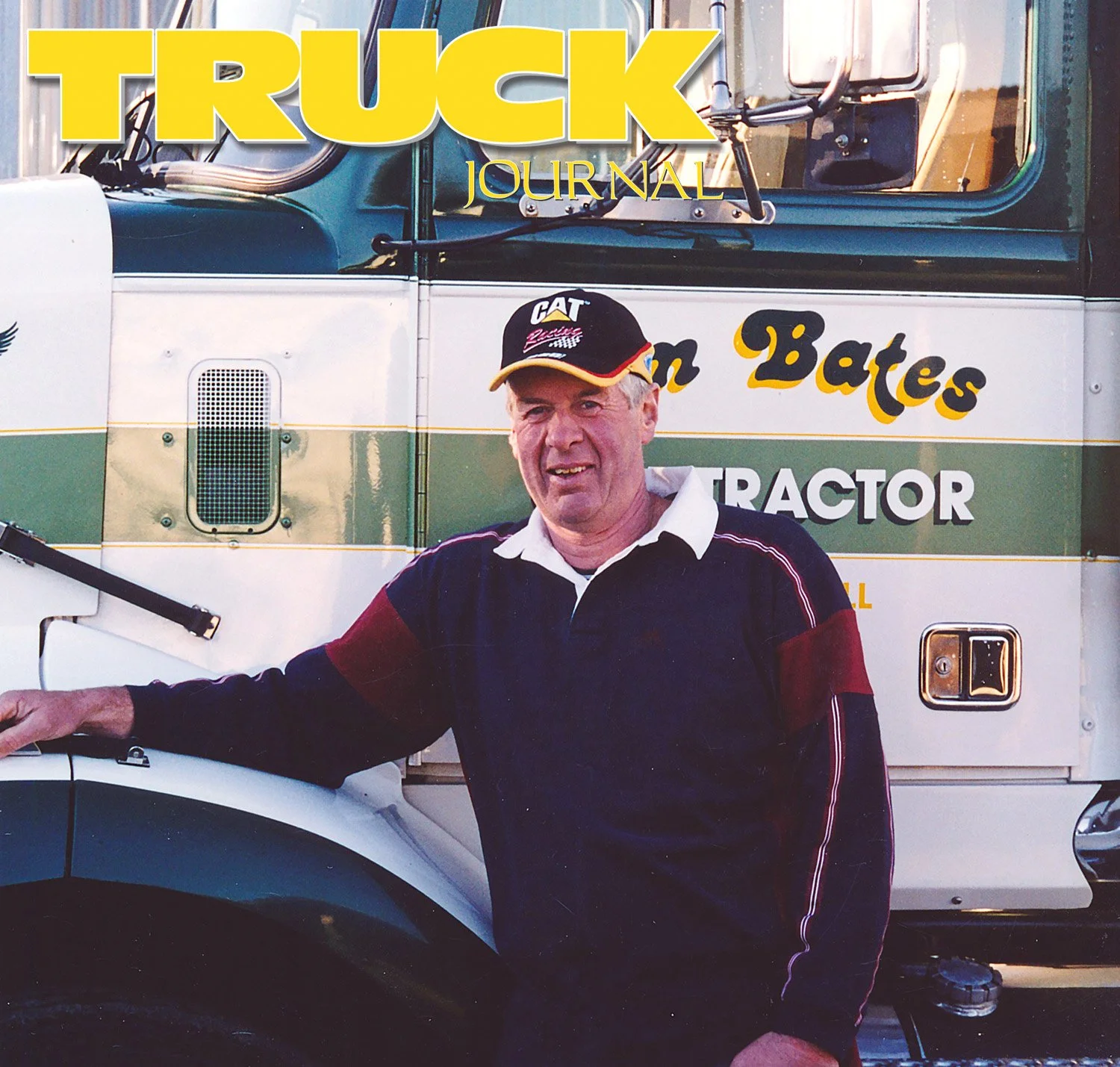
Jim Bates
Not hampered by the conditions, the pride and dedication that goes into keeping such a tidy ship afloat is obvious in the presentation of Jim Bates Contractor’s small but immaculate fleet of trucks. The business prospers, despite stiff competition from both the major nationwide contractors and smaller operators in the highly competitive, contracting industry.
The family firm, started by Jim and Sharon Bates, now uses predominately American gear for their trucking requirements. The operation has grown some what, from the original AB International truck carting waste oil, to a fleet of; eight trucks; five trailers; two excavators; three wheeled loaders; a couple of rollers; one tractor and the usual assortment on smaller ancillary gear required to run a successful contracting business.
Family Affair
The business has been very much a family affair. Jim and Sharon make sure that everything runs smoothly with Jim still working on jobs or in the workshop as needed. Their three sons Tony, Nathan and Greg used to spend their school holidays helping out on jobs with their parents. Today the boys are an integral part of the business, Tony drives an International T Line tipper, Nathan the Kenworth T400 tractor unit and Greg operates the Yanmar V104-2 excavator.
The multi-talented Jim was not unfamiliar with this type of work prior to starting out on his own 20 years ago. After initially working for Bill Richardson, as a mechanic at Southern Transport at their old site in Invercargill, Jim moved on to another southern business, Fairfield Asphalt. It was here that Jim learned the contracting trade from Jim Fulton. (Fairfield Asphalt which has since become part of the Fulton Hogan Group.)
Jim had been carting waste oil to Fairfield Asphalt’s bitumen plant for about a year when the opportunity to purchase half the business of local operator Ray Bevan arose in 1984. The contracting business was up and running. Initially Jim worked with a KT Dodge and a Massey Ferguson traxcavator.
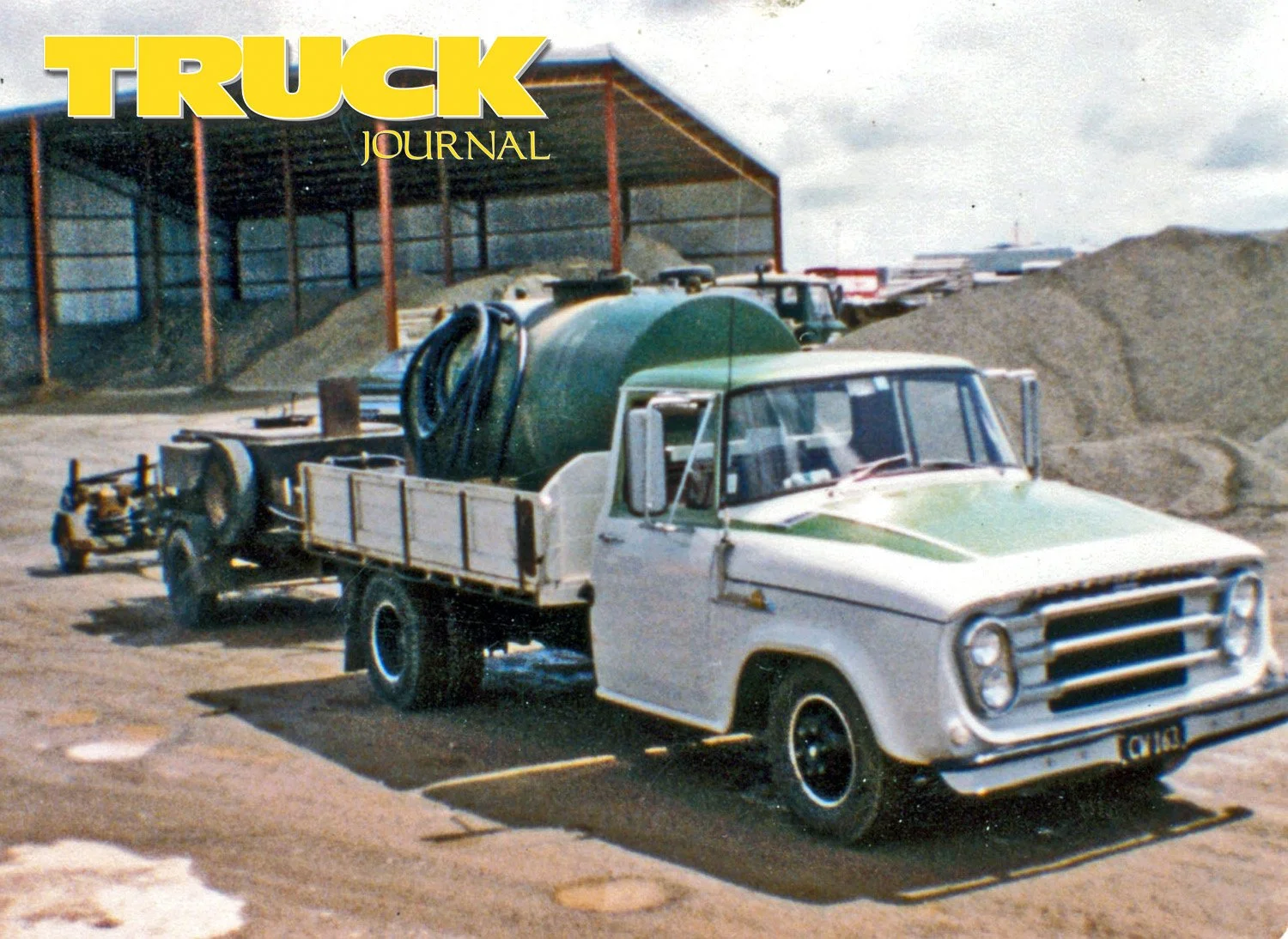
Jim’s original AB International with two trailers in tow.
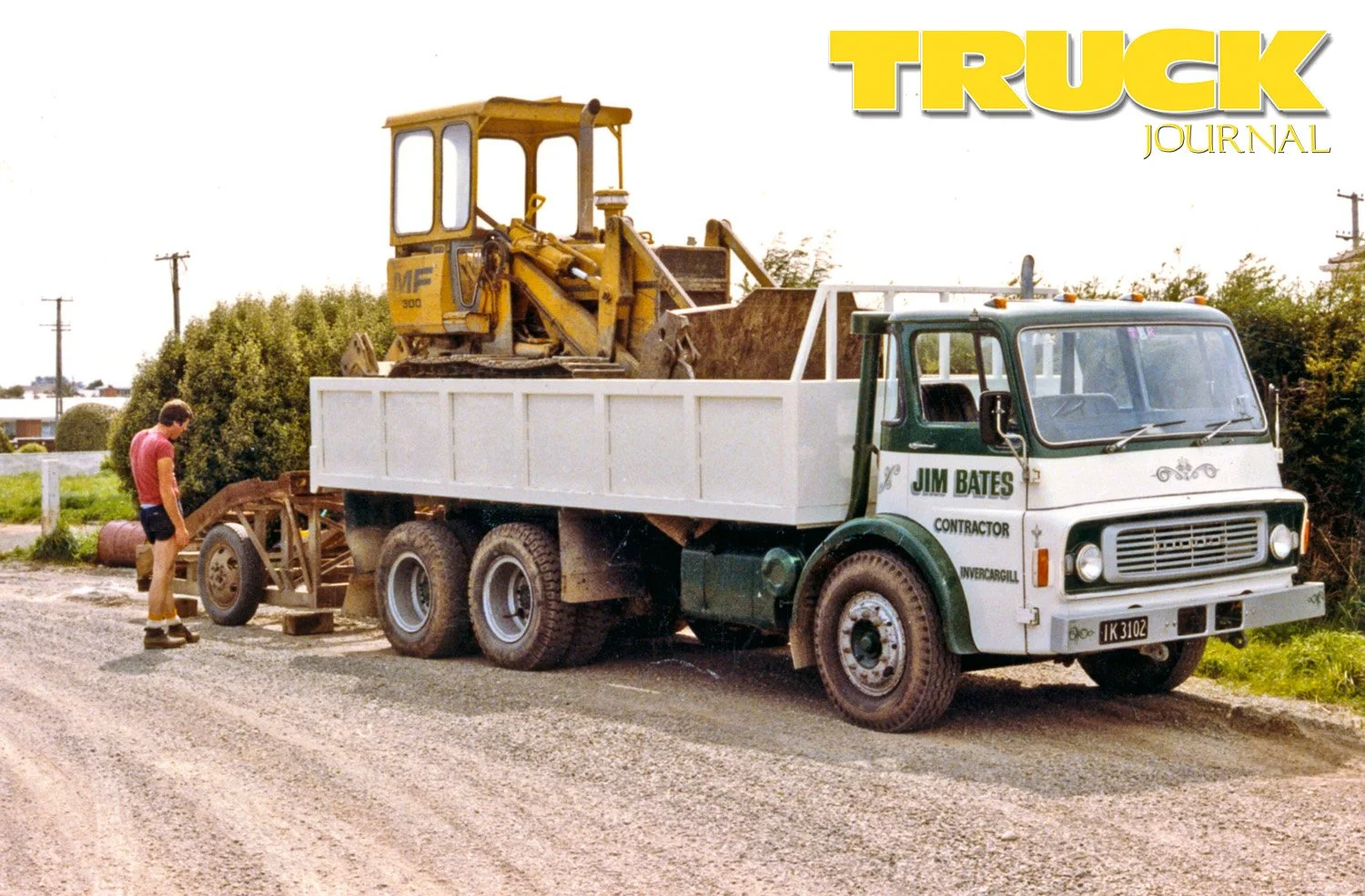
Jim’s KT Dodge tipper with a traxcavator loaded on the back.
Work in those early days included; flood protection work with the associated rock cartage; section clearing; driveways; demolition and the like. Jim continued to work alongside Ray Bevan as required whilst also tackling some of his own work. Eventually he was able to purchase the remainder of Ray’s business when Ray decided it was time to sell up.
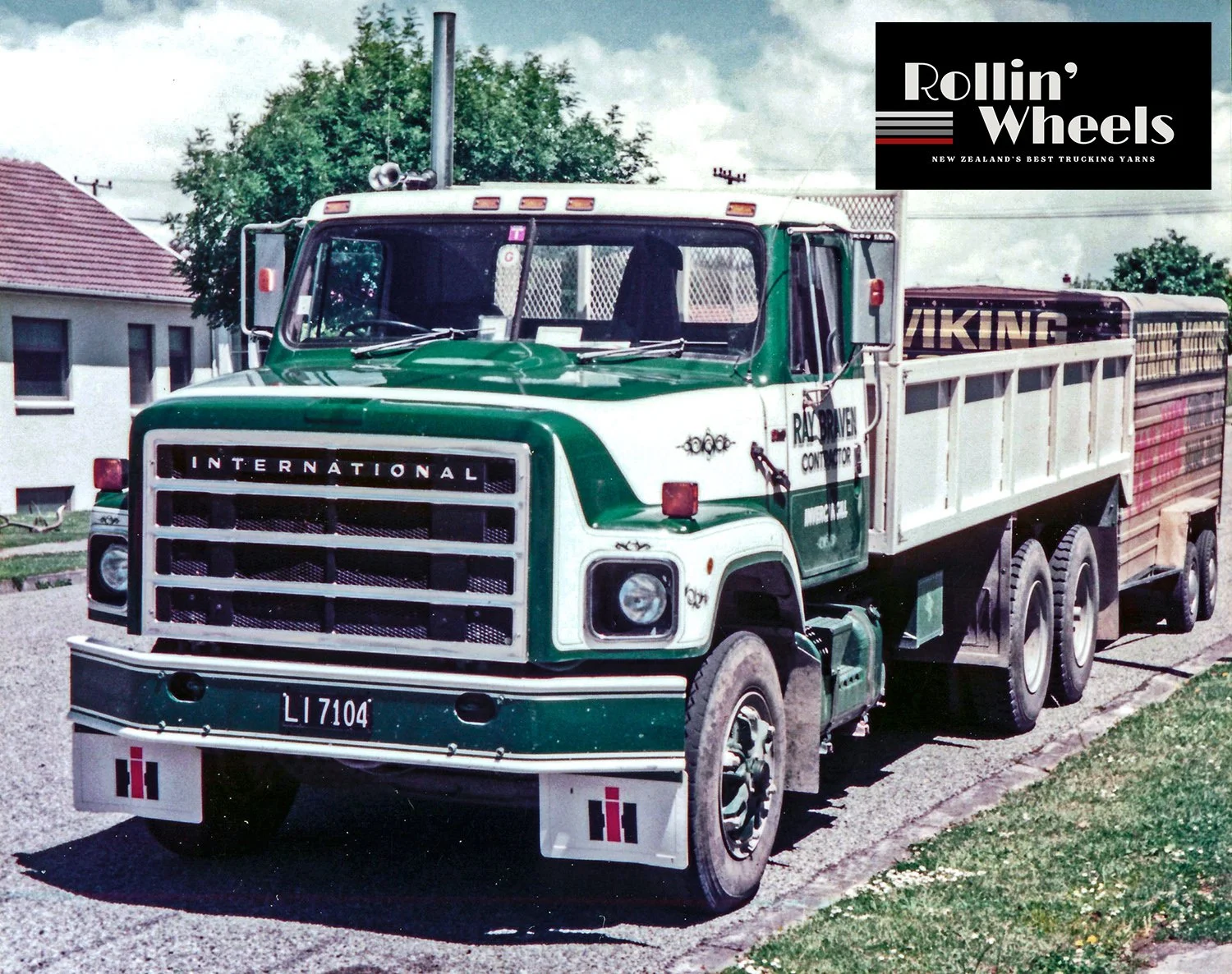
Ray Bevan’s International SF2670 tipper.
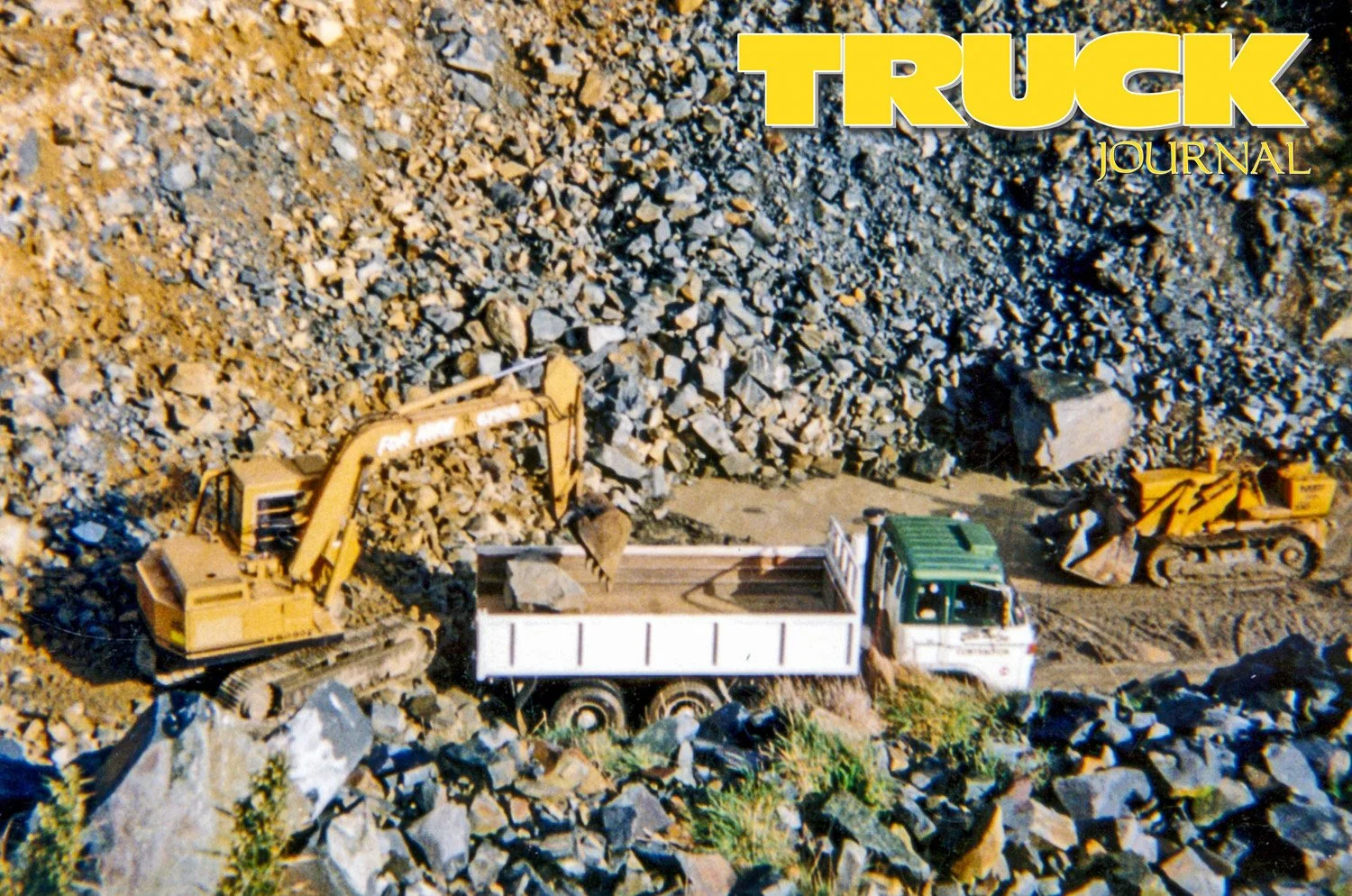
The Nissan being loaded in a rock quarry.
As work picked up the Dodge was upgraded to a Nissan CW20, which utilised the deck off the Dodge, and the first excavator was purchased. The first of the American trucks, an International S Line, was added to the small fleet as Jim continually strove to improve his gear. The philosophy of having the best available gear to do the job is one that Jim continues to subscribe to today. He does not see the necessity of running new trucks on this type of work and is just as happy to purchase late model American trucks which can be easily maintained and rebuilt.
Exacting Standards
The passion for having the best gear can be seen to this day. From hiring trucks to cart the worst rock, to using deck liners for rock or demolition work, Jim’s pride in the fleet’s presentation is apparent. Jim likes thing to be done once and done right. This attention to detail filters down to include such small things as replacing steel bolts with stainless steel ones when painting his trucks into his fleet colours.
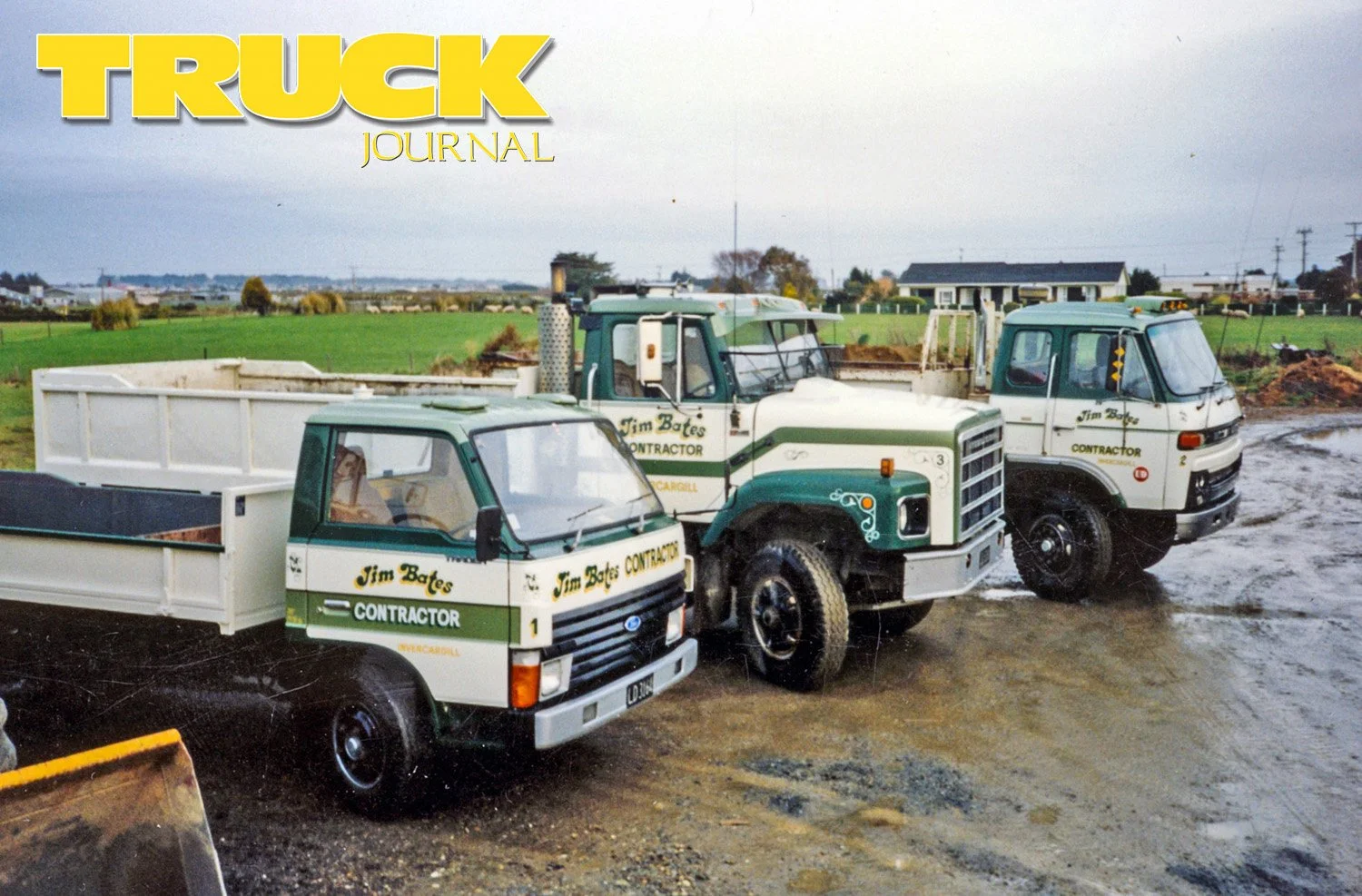
Jim’s early fleet with the Nissan, the ex Bevan S-Line and a Ford Trader.
When one of the trucks was damaged (after its load bound in the top of its tipping semi) Jim and his staff carried out all the necessary repair work to ensure that it went back on the road at his exacting standard. Whilst the company employs a driver / mechanic to maintain the fleet, all drivers are expected to change their own oil and maintain not only the correct coolant levels but more importantly the correct quality of coolant in the system.
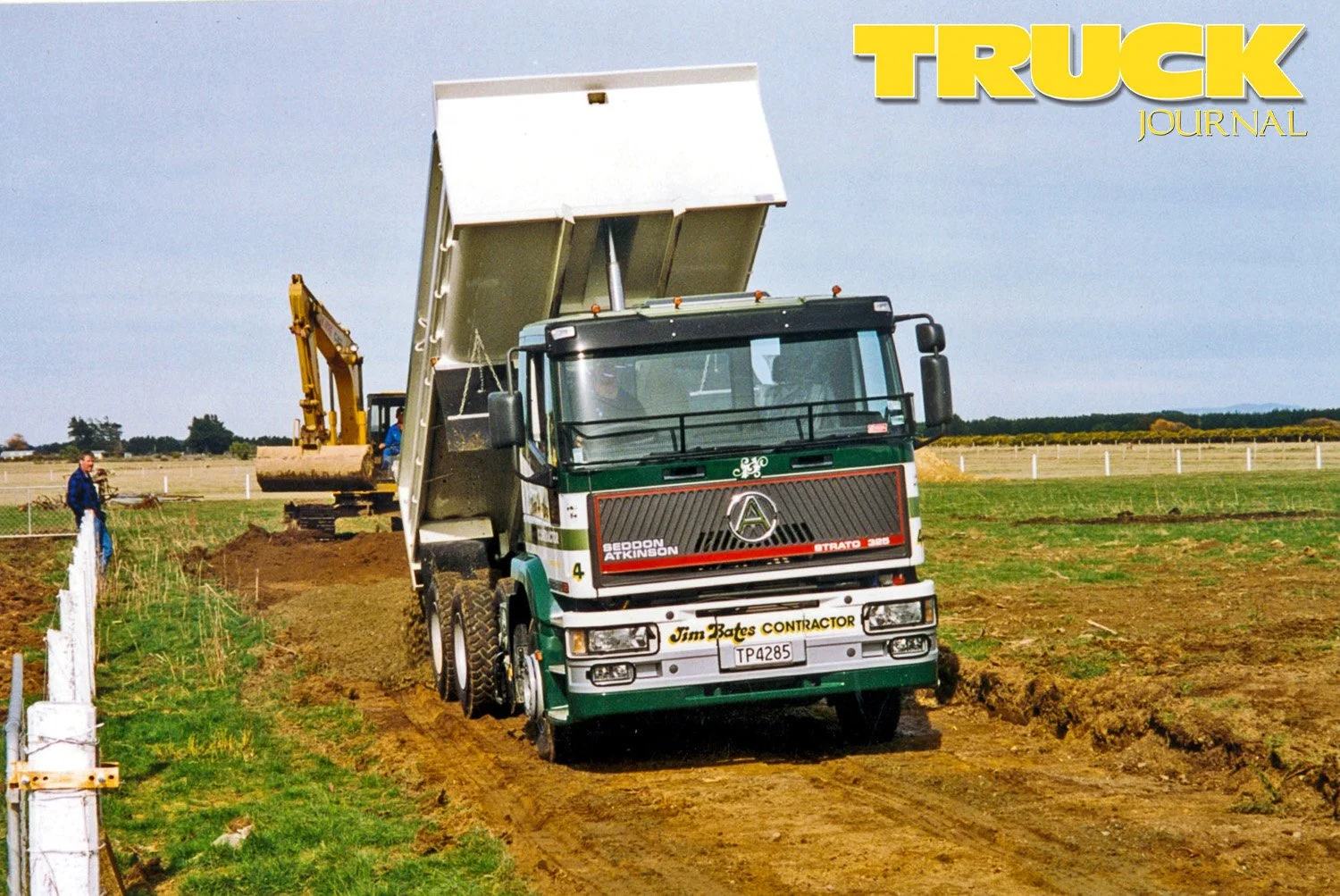
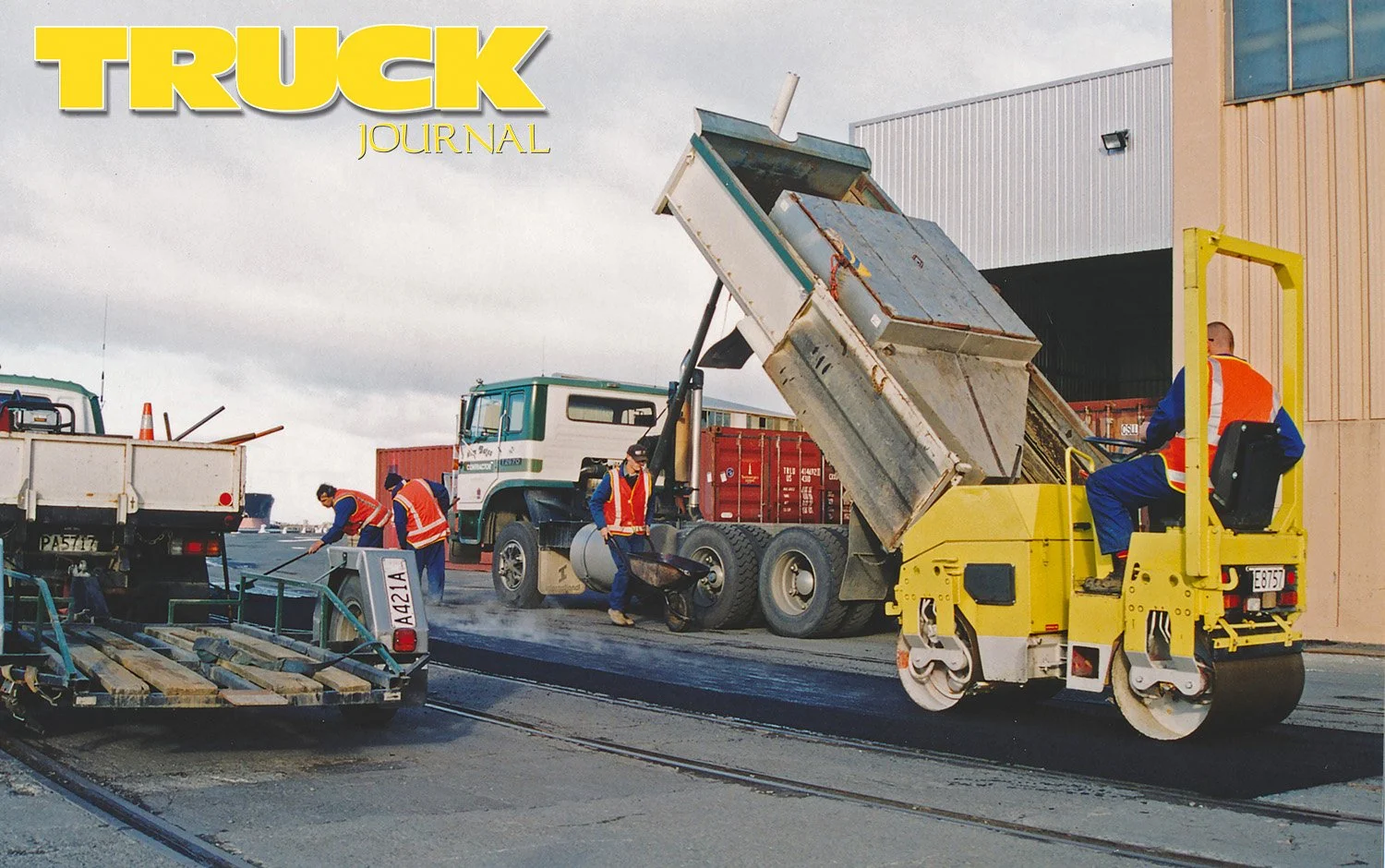
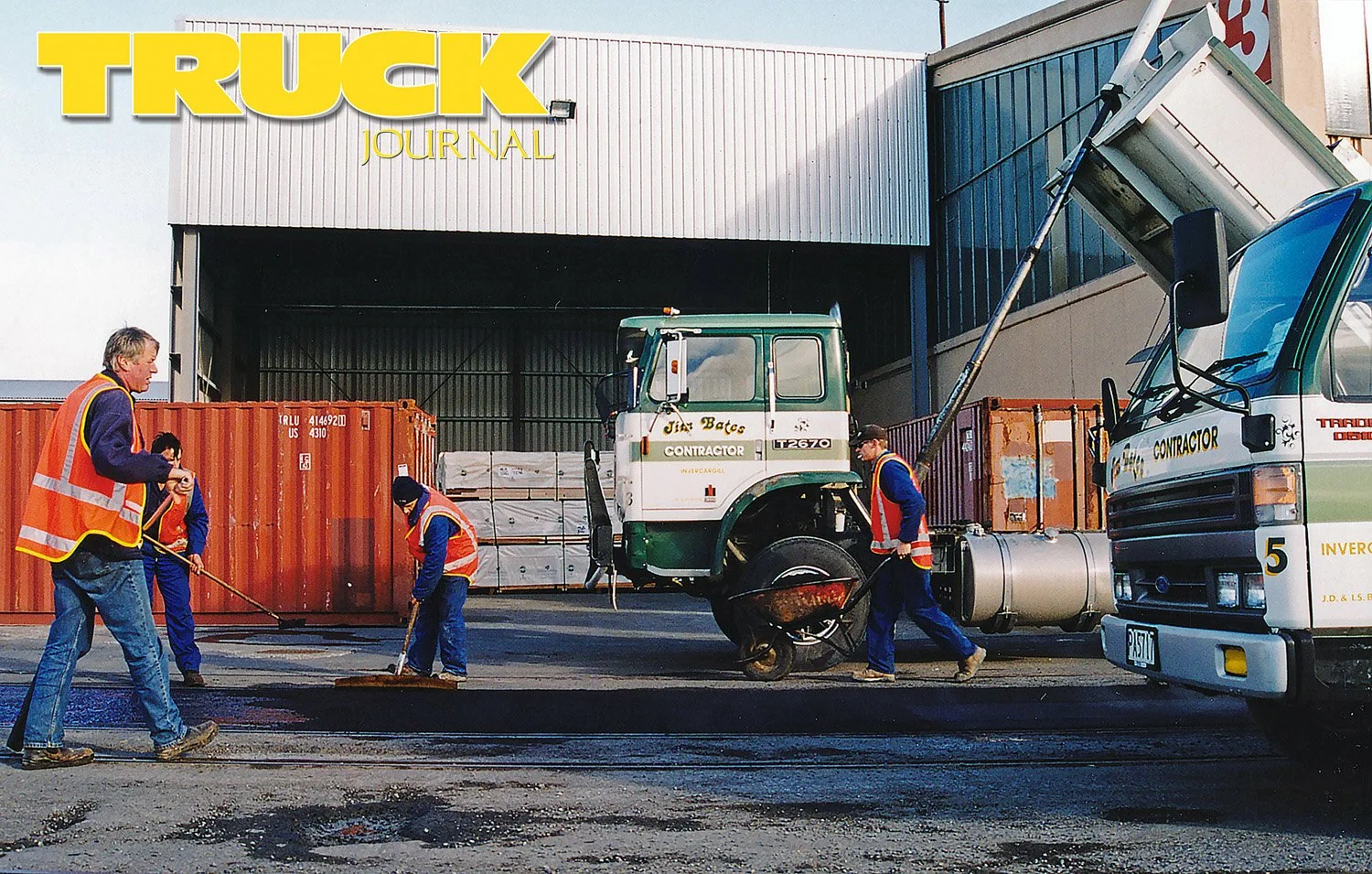
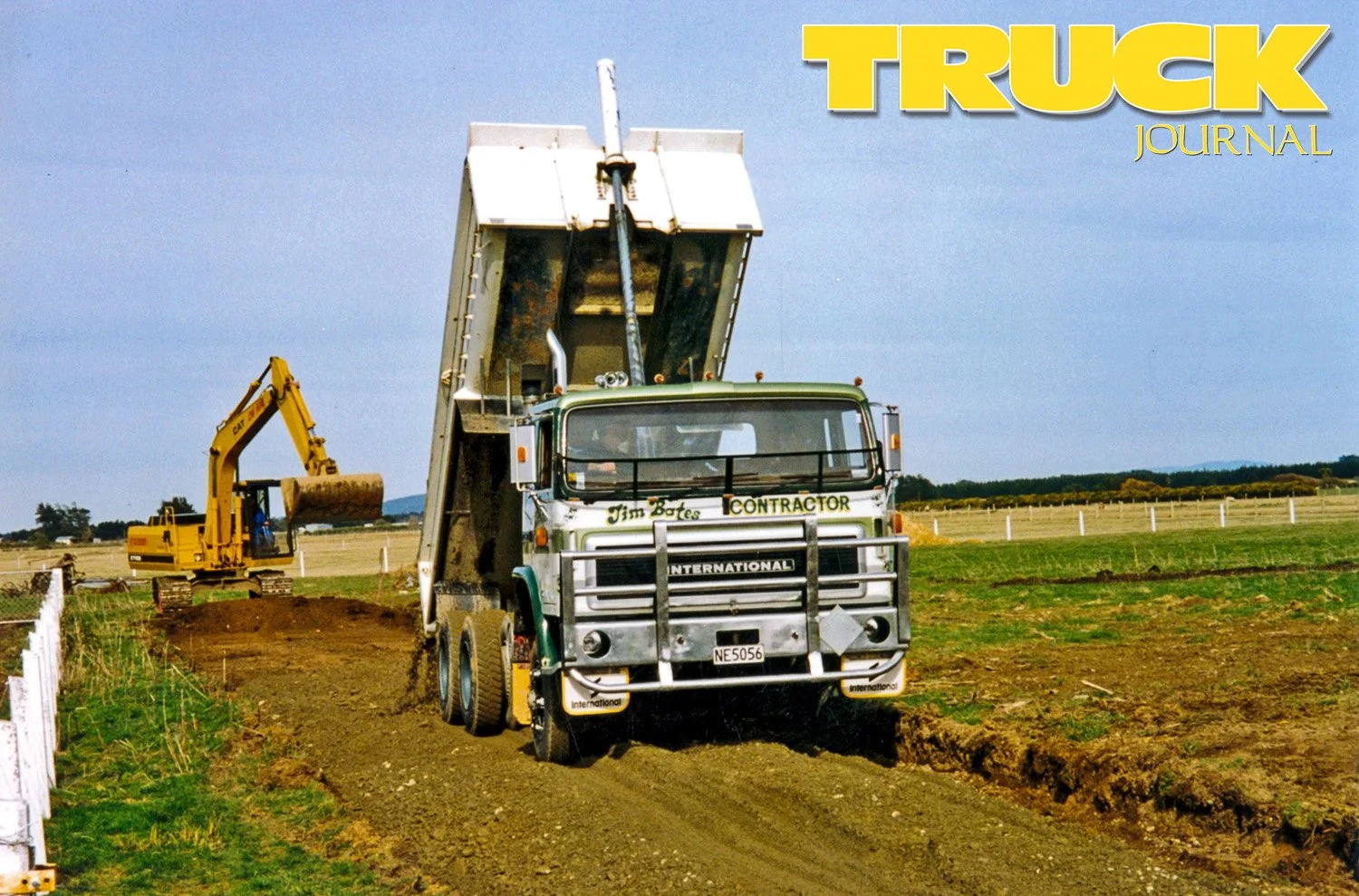
Each staff member is multi-talented and therefore complement each other. The diversity within the nine members of the team helps keep staff levels to a minimum while allowing maximum flexibility, which allows better utilisation of the gear.
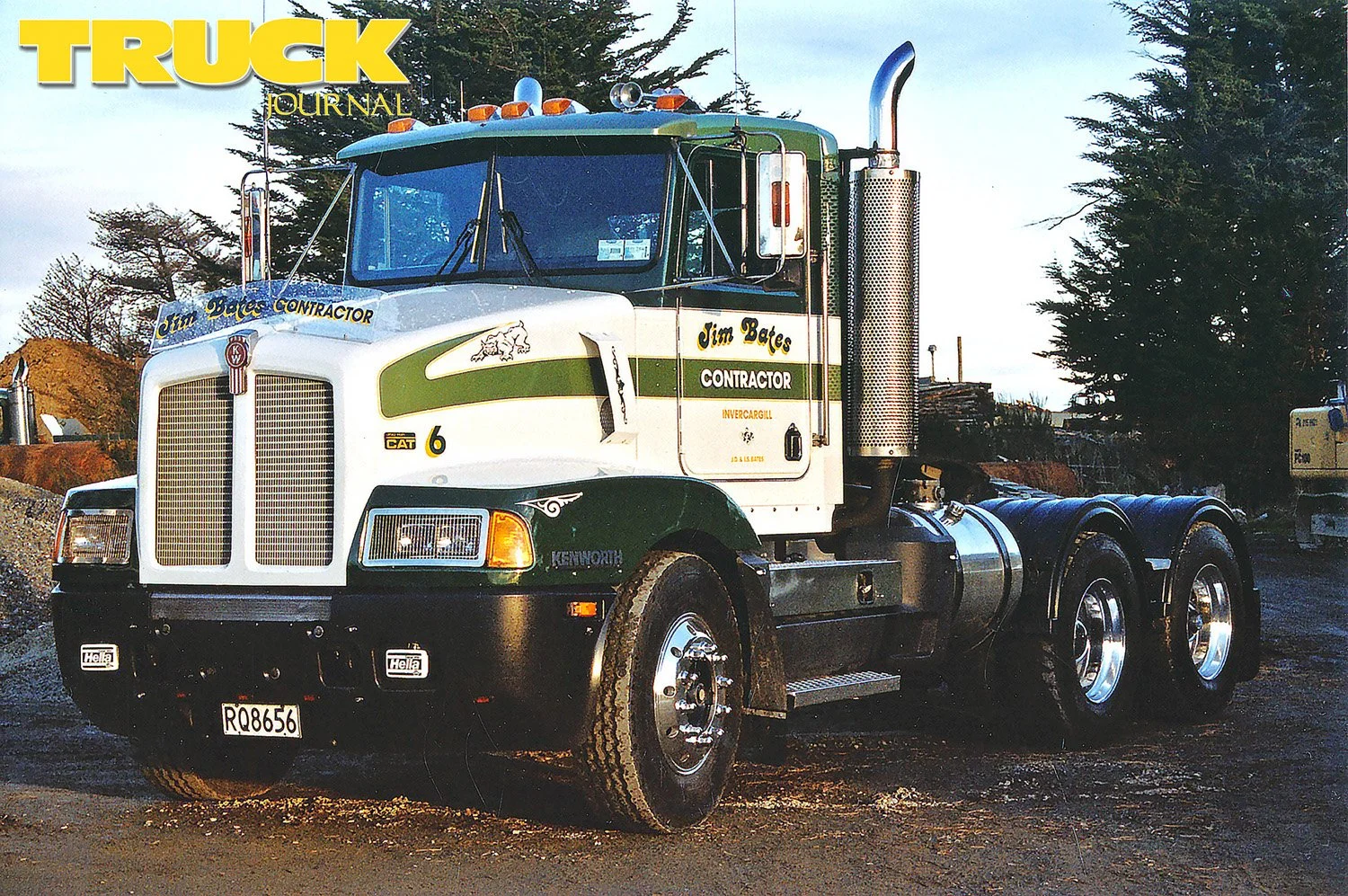
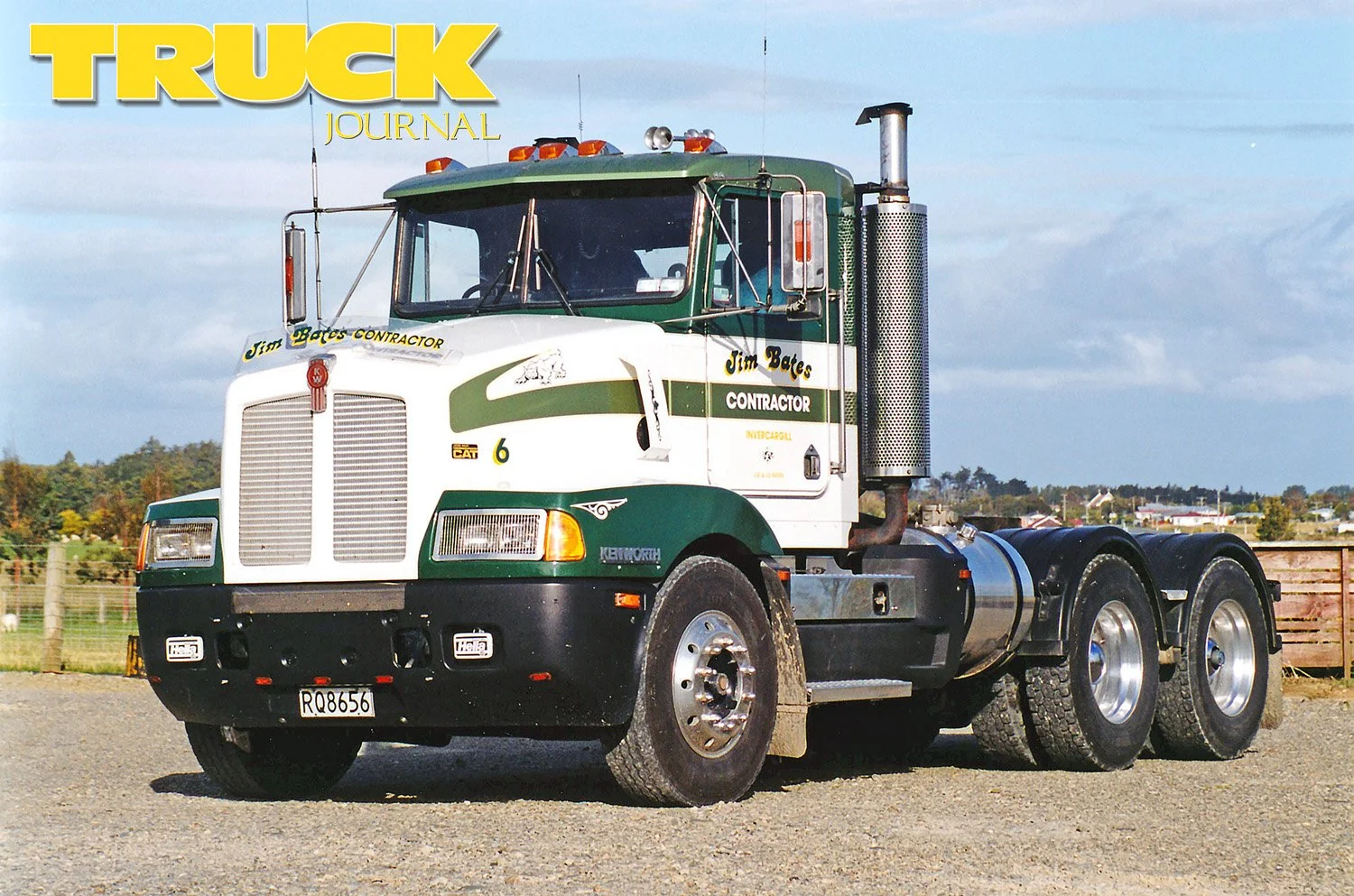
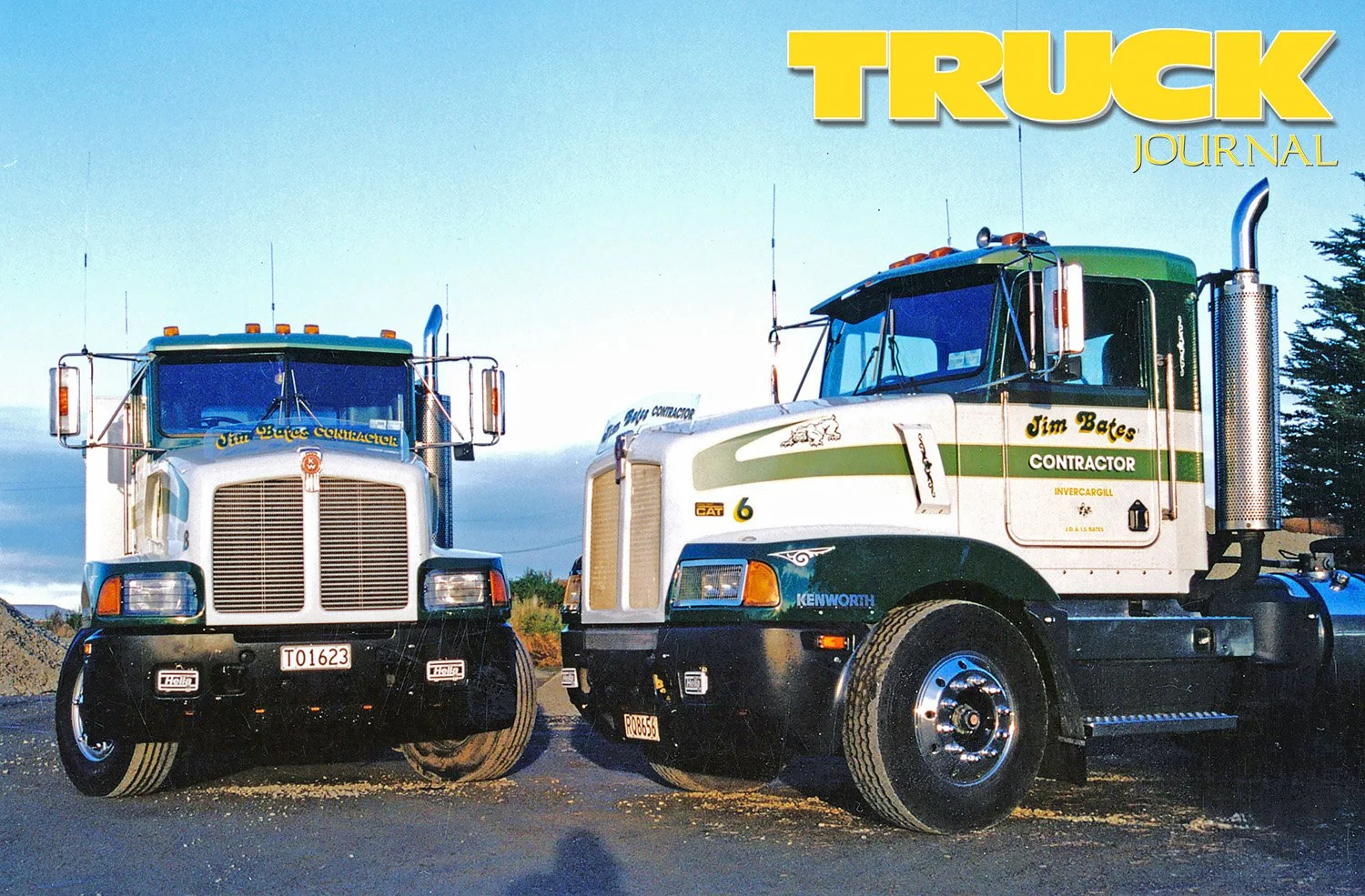
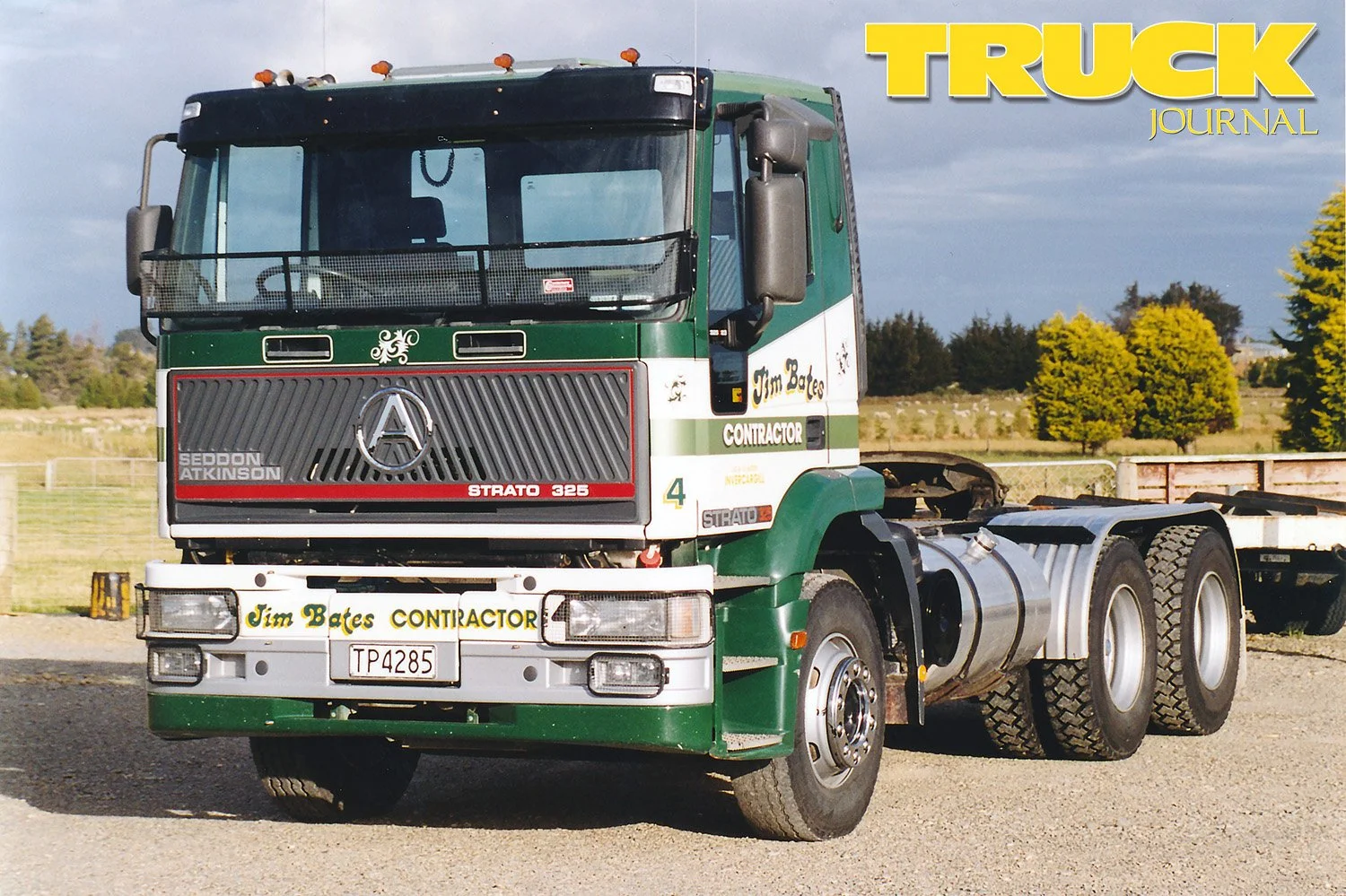
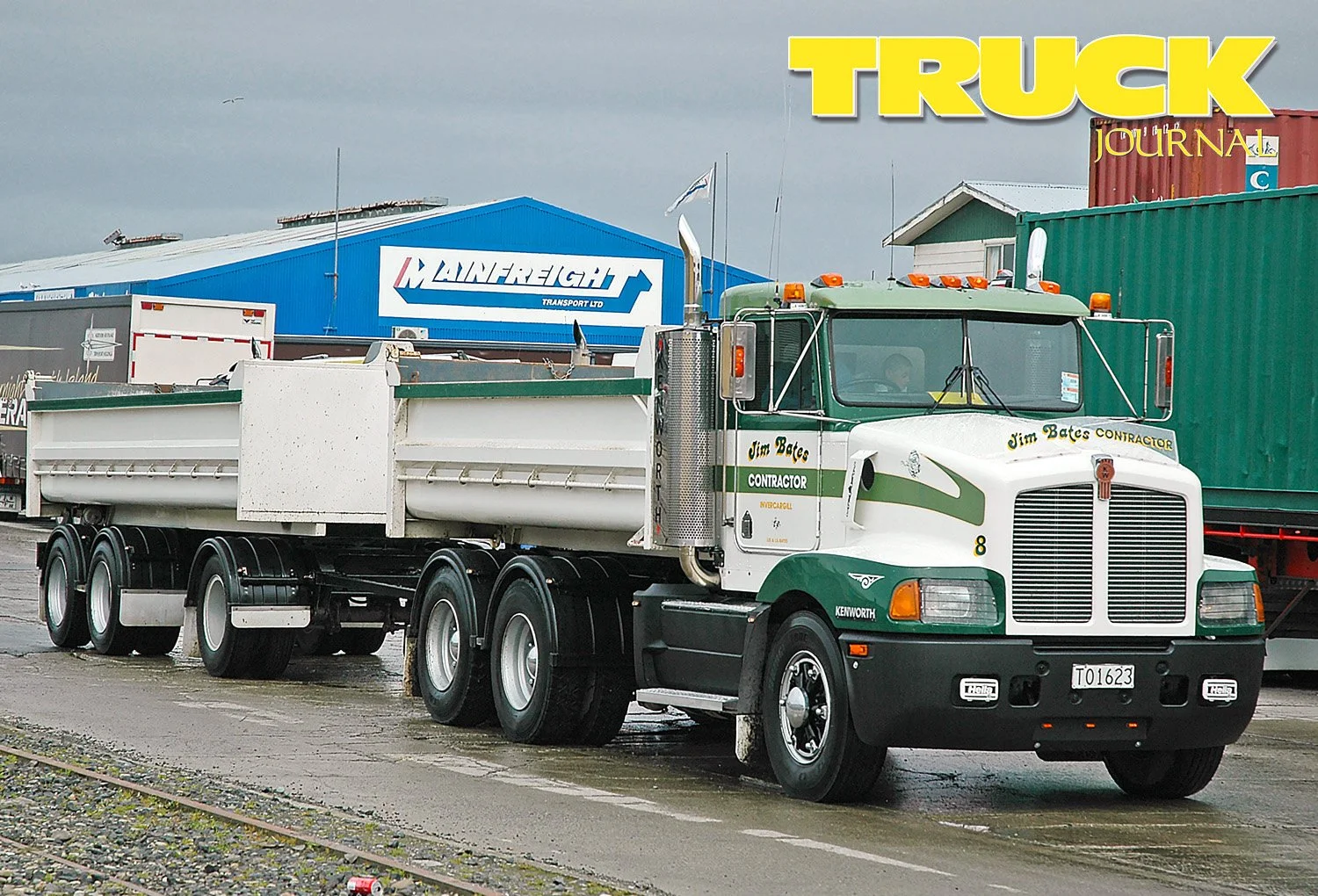
The pride in the truck presentation is not limited to Jim. The drivers have regularly entered their trucks in the local Labour weekend truck show and have won several prizes over the years. The T Line has won best Gravel Truck and been runner up to King Rig; the Seddon Atkinson runner up to King Rig and The Kenworth T400 has been Best Kenworth and Best Gravel Truck. An outstanding record given the dirt and muck these units are subject to in everyday operations.
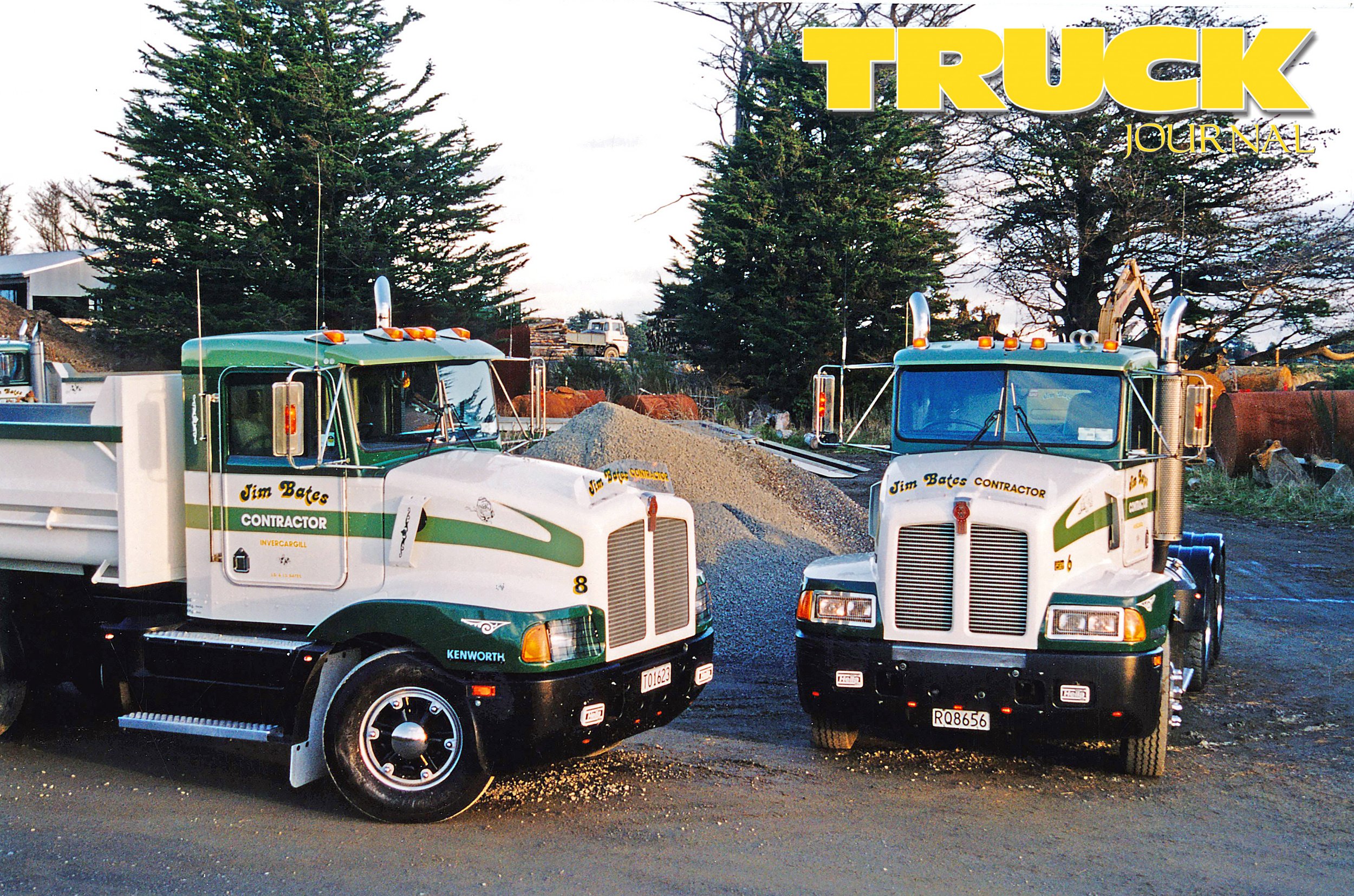
Even the yard is in first class order. It is well metalled (the company does cart gravel) and has a workshop and sufficient garaging for the trucks. There is still some room for expansion, but this may not be needed as a shingle supply yard has been obtained, which is located just around the corner.
Location was important to Jim when setting up and as a result the yard is located about 10 minutes from town where dust and noise would not disturb neighbours. An added benefit from locating away from town, and off the main road, is that there is less likelihood of vandalism or theft. The family residence is on site, which provides increased security.
Quality Work
Jim sees the presentation of his gear as just an extension of his philosophy to his work. He is very proud of his work and gets pleasure from seeing each job completed properly. Jim is concerned about the current trend of tendering for each job - he sees this as an opening allowing lower quality products and workmanship to be used. Not interested in being the lowest tenderer, he will only do a job if he believes that it can be done to the best standard at a fair rate.
Long Standing Clients
Today much of Jim’s work is gained through the relationships he has developed throughout his career. Not only does he have a core amount of his own work but regularly contracts to Fulton Hogan and Works Infrastructure (a continuation of sub-contracting to Bitumix) to assist with major projects or undertaking smaller jobs that they may not wish to handle.
South Port is one of Jim’s original clients and he has been involved in much of the development and expansion of their facilities especially the likes of the log handling areas and pavement and sealing extensions. His work continues at the port to this day - Jim’s team were carrying out seal repairs the day we visited.
Another large southern business that has provided work from time to time is Camalco’s aluminium smelter located at Bluff. It has seen the boys regularly on site to carry out repair and upgrade work. This is one site were Jim finds that OSH requirements can have a significant impact on his business. As a requirement for working at the smelter site, all staff are required to attend a significant induction course and medical examination.
While obviously concerned with the need to observe safe work practises, Jim has some reservations about the significant amount of valuable work time required to attend the induction courses on an ongoing basis. The medical however has proved its worth, with one of Jim’s men finding that he had a previously undiagnosed heart condition.
Increased Competition
The changes to the way in which Local Bodies allocate their work have had an effect on Jim’s business. On one hand it has opened up new opportunities for work that Jim has been able to take advantage of. It has meant that the company has now completed jobs for the Southland District Council including curb and channel upgrades and road repairs in some of the small townships around the district. (Work which was not previously available as Local Bodies had their own in-house contractors.)
However, the down side to this freeing up of the council work was that extra competitors for the same work were created. The council owned Local Authority Trading Enterprises (LATES) competed for the work they had previously had a monopoly on as well as competing for the work previously carried out by general contractors. As time has moved on most LATES have been sold to outside operators, returning the playing field to a more level position.
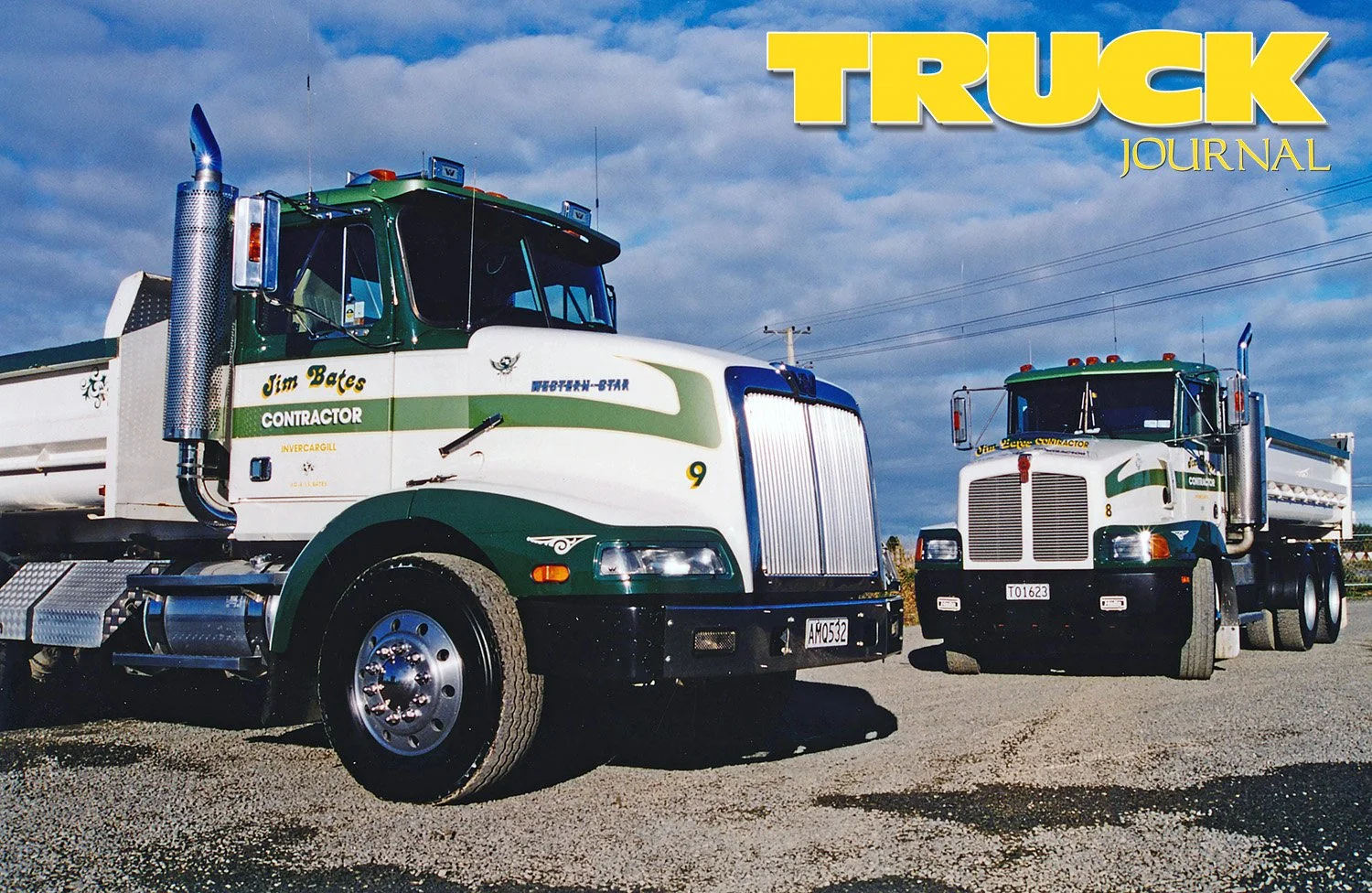
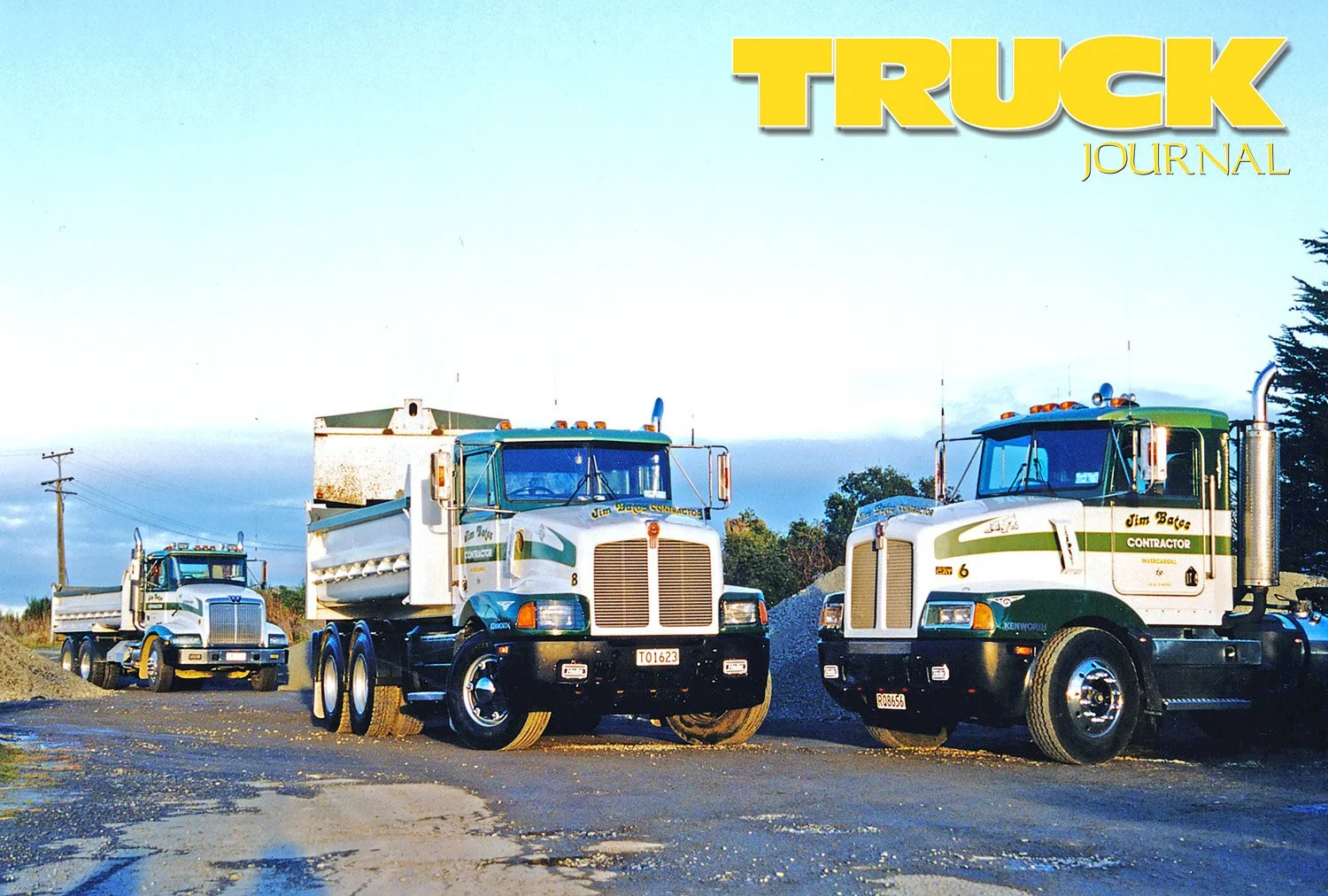
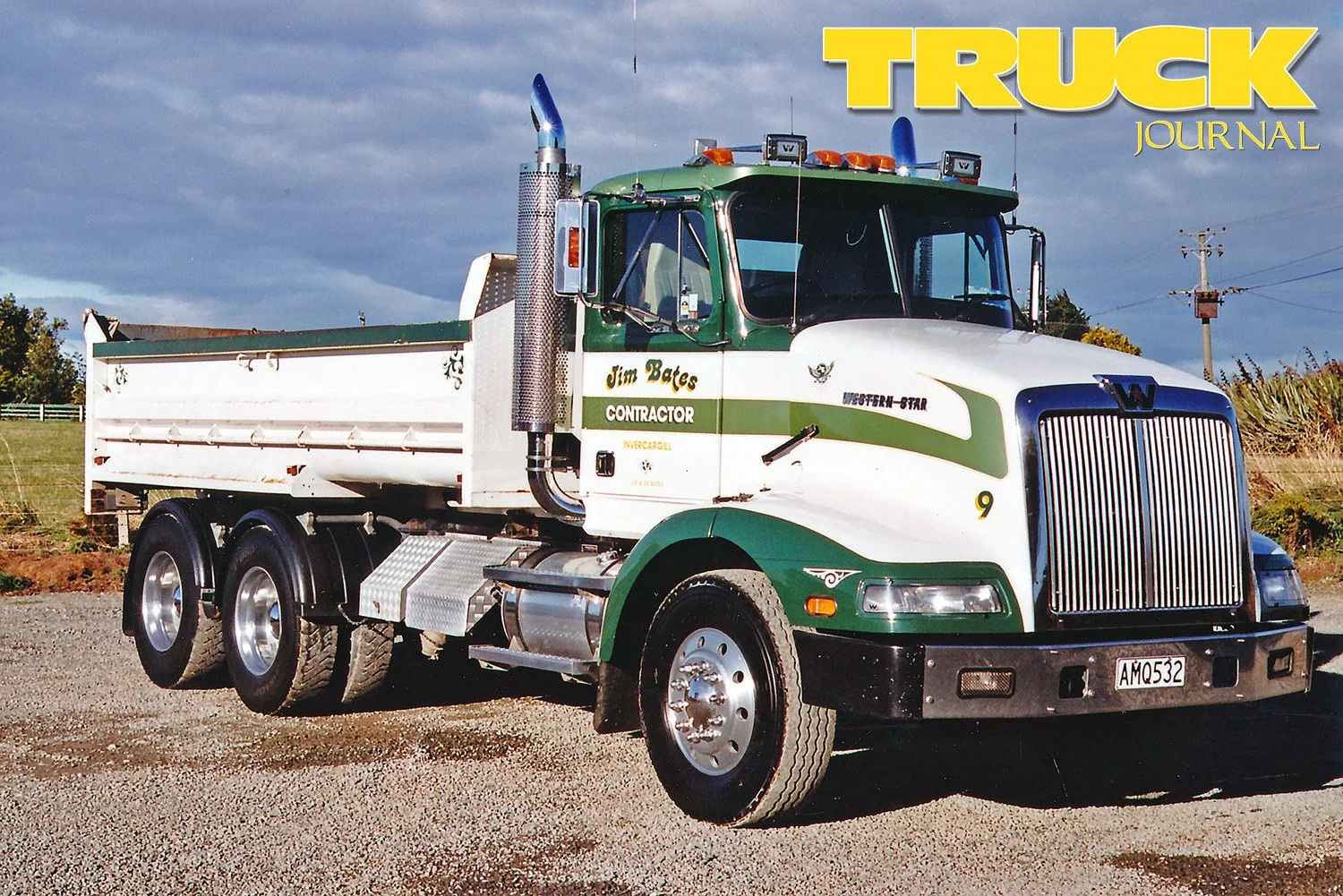
Jim says 50% of their work consists of small jobs like site preparation; driveways; car parks and other smaller sized jobs. It is this niche in the market that Jim finds best for his business. Having said that, he is not one to turn down any work. As we all know, you can never be sure what a job can lead to with regard to future business. Jim also noted that he has had to diversify to meet his customers’ needs, however he is aware that customers can be fickle and you can never rely on their to unconditional support at a future time.
With such high standards, a positive attitude, an excellent team of men and an eye on the future, business is looking good for Jim, Sharon and their sons. Their success in this highly competitive industry is a credit to Jim and Sharon’s drive and determination.
Optimised for 25 Tonnes
To maximise loadings while maintaining durability Jim has settled on steel decks for his trucks and trailers. He sees no advantage in putting alloy tippers on the road to try and achieve 30 tonne payloads, in his opinion these are only of real use for long distance bulk work. As he says, “Most orders for metal fall into multiples of 25 tonnes. This means that 4 trips are required to deliver 100 tonnes to site irrespective of whether the truck has a 30 or 25 tonne payload.”
This also gives him the flexibility to run two tractor/tipper units in the fleet without the worry of tight payload constraints. Even so, as his trucks must cart metal from a site 35 kms away payload capacity is still very important. The greater durability of steel has the added benefit of less worry about damage caused by the type of load carried even though he has liners for harsher work.
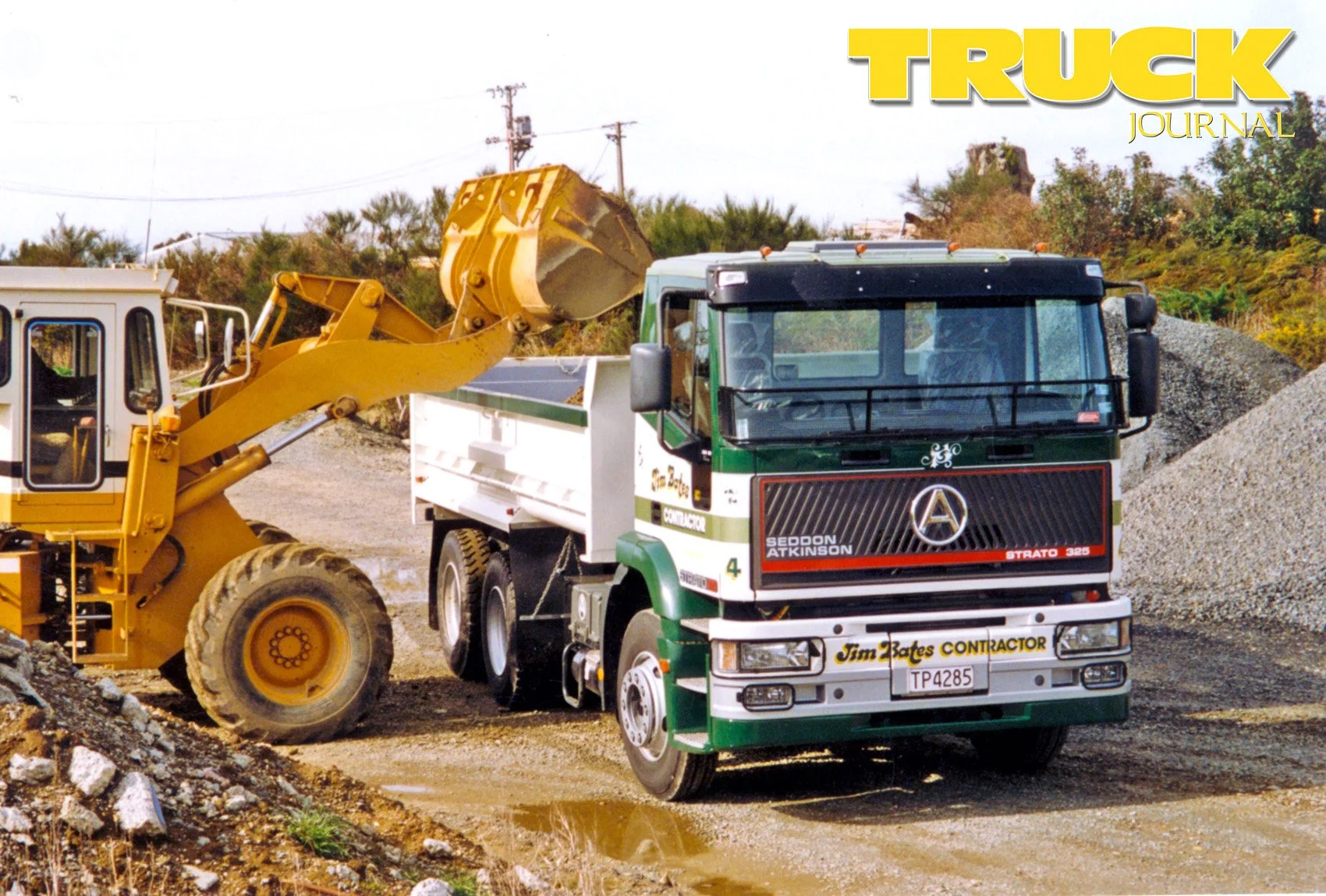
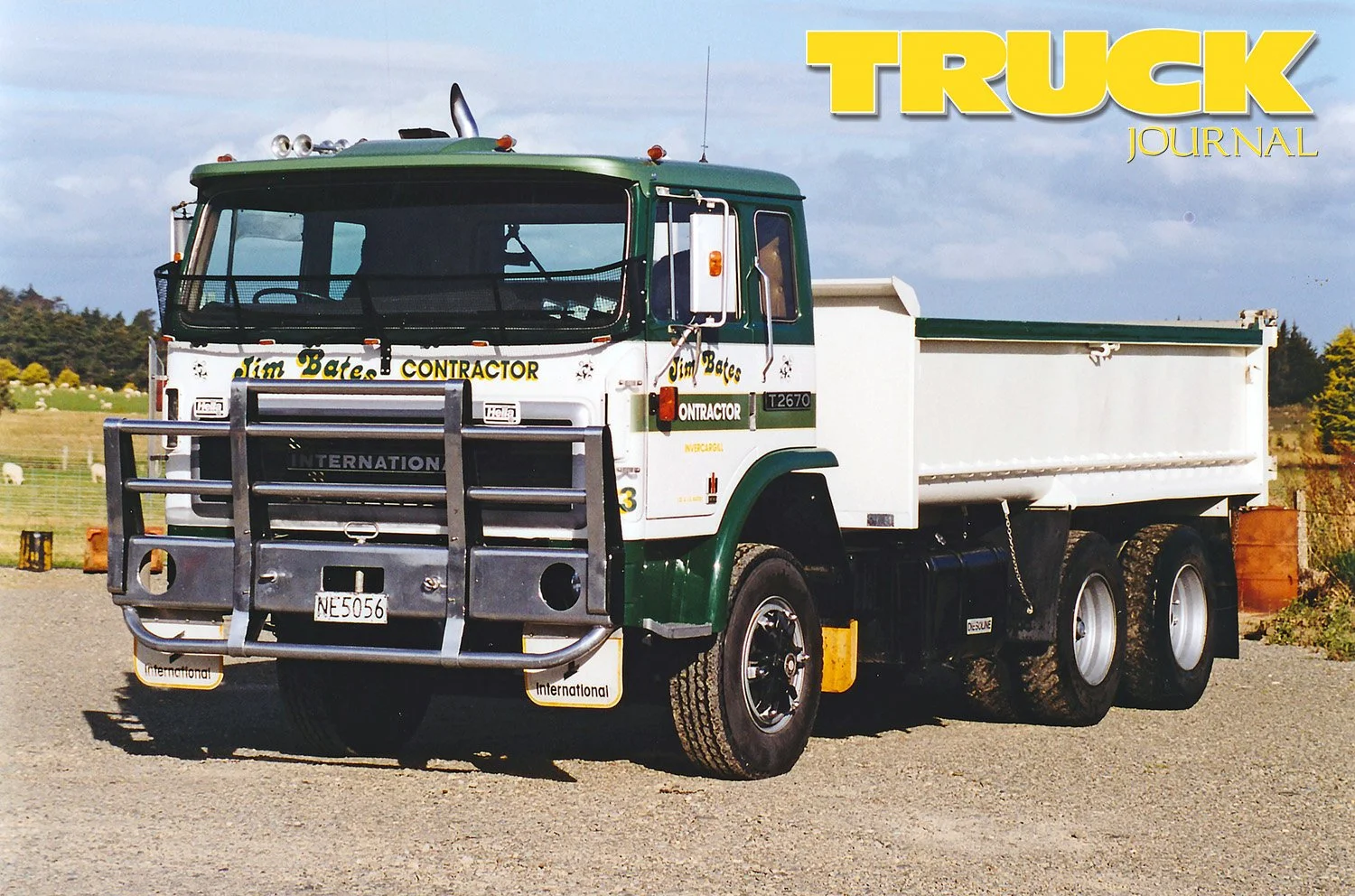
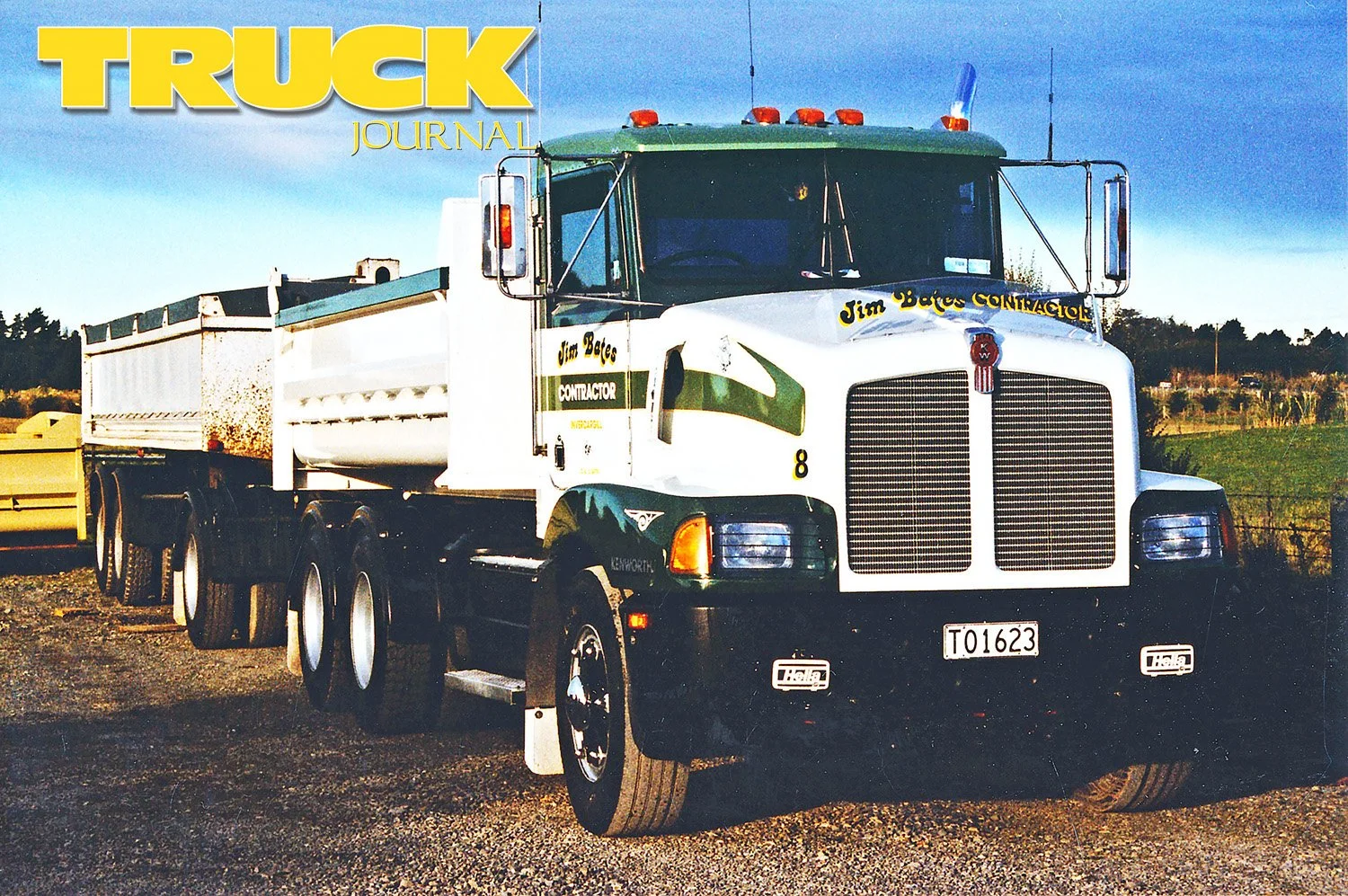
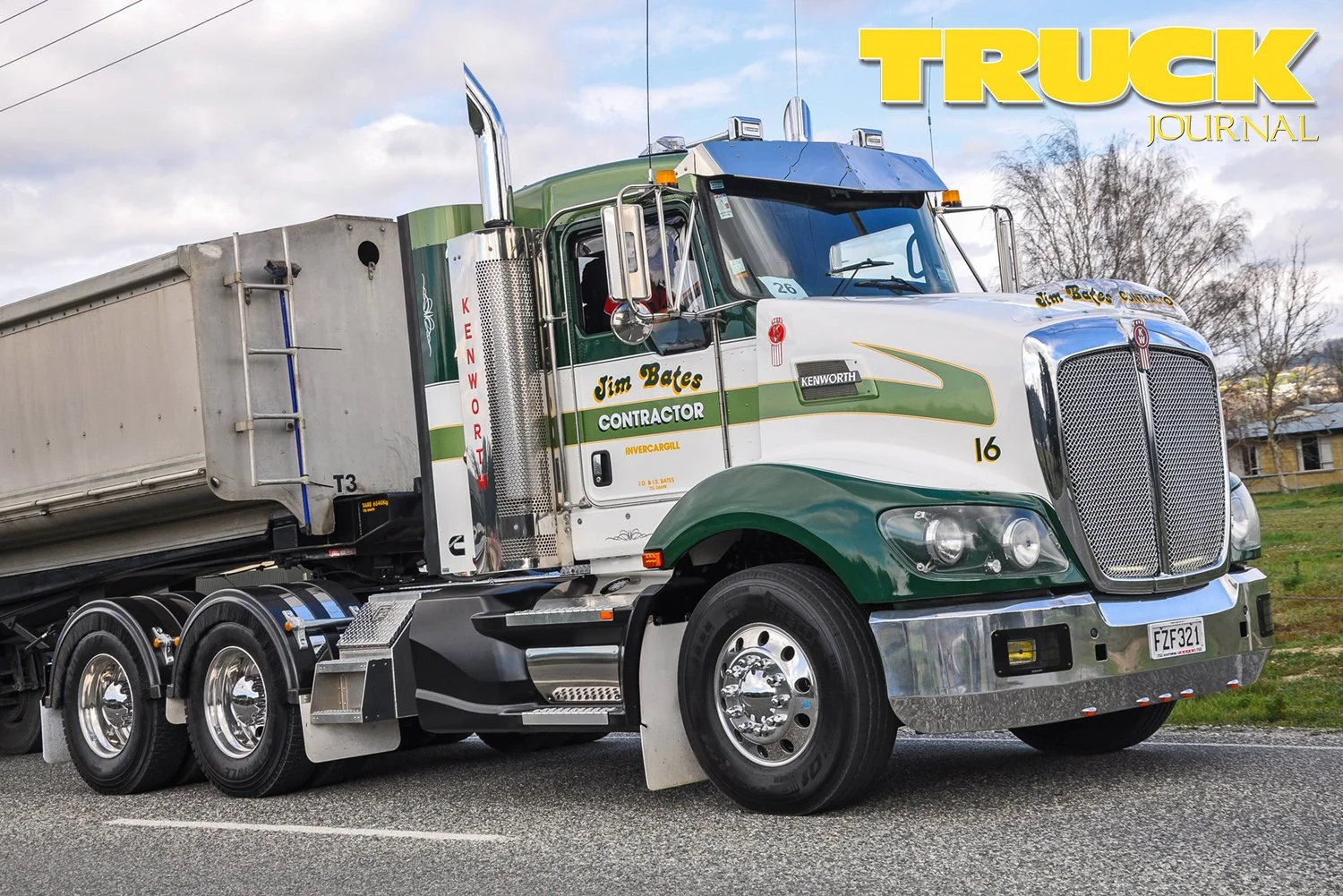
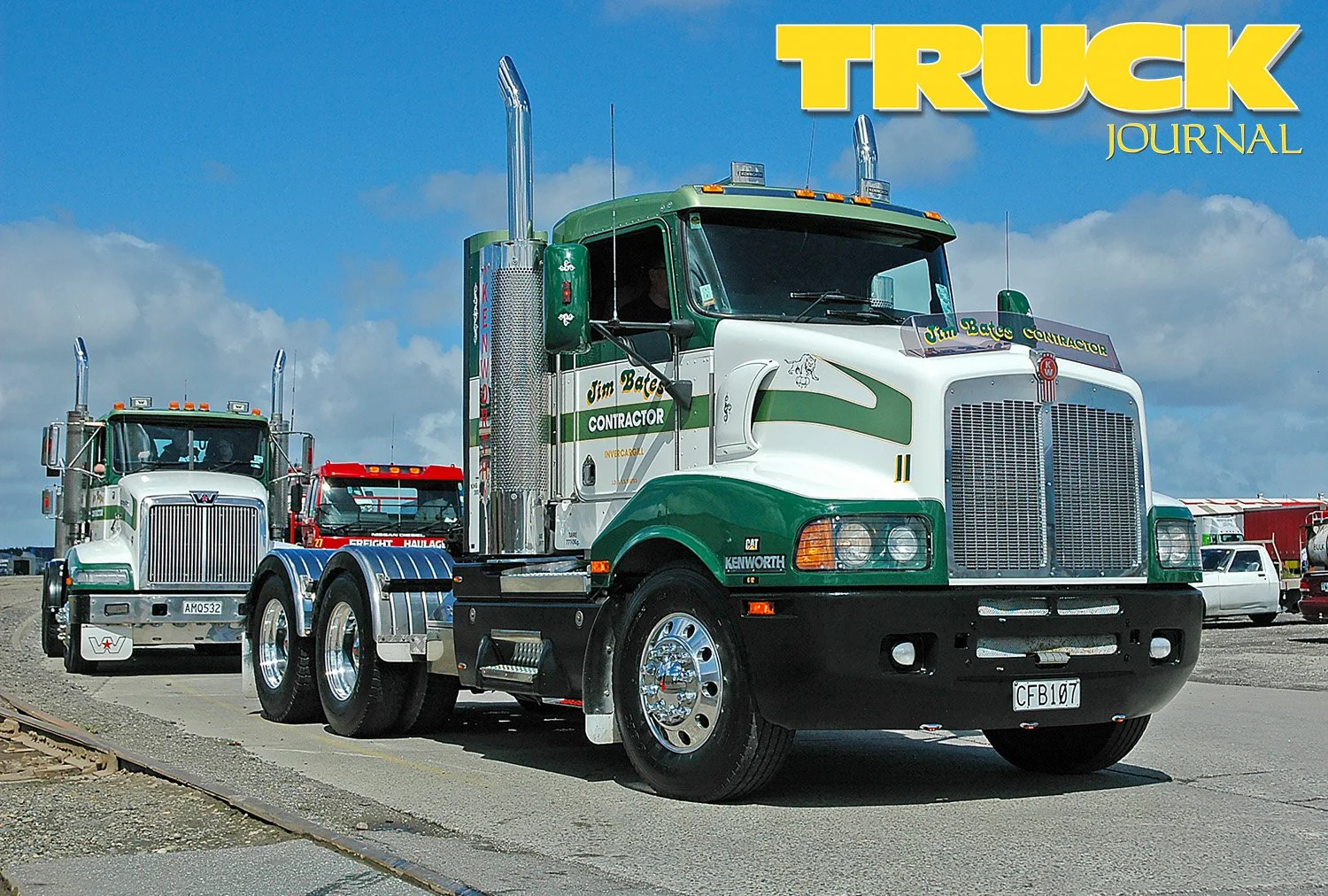
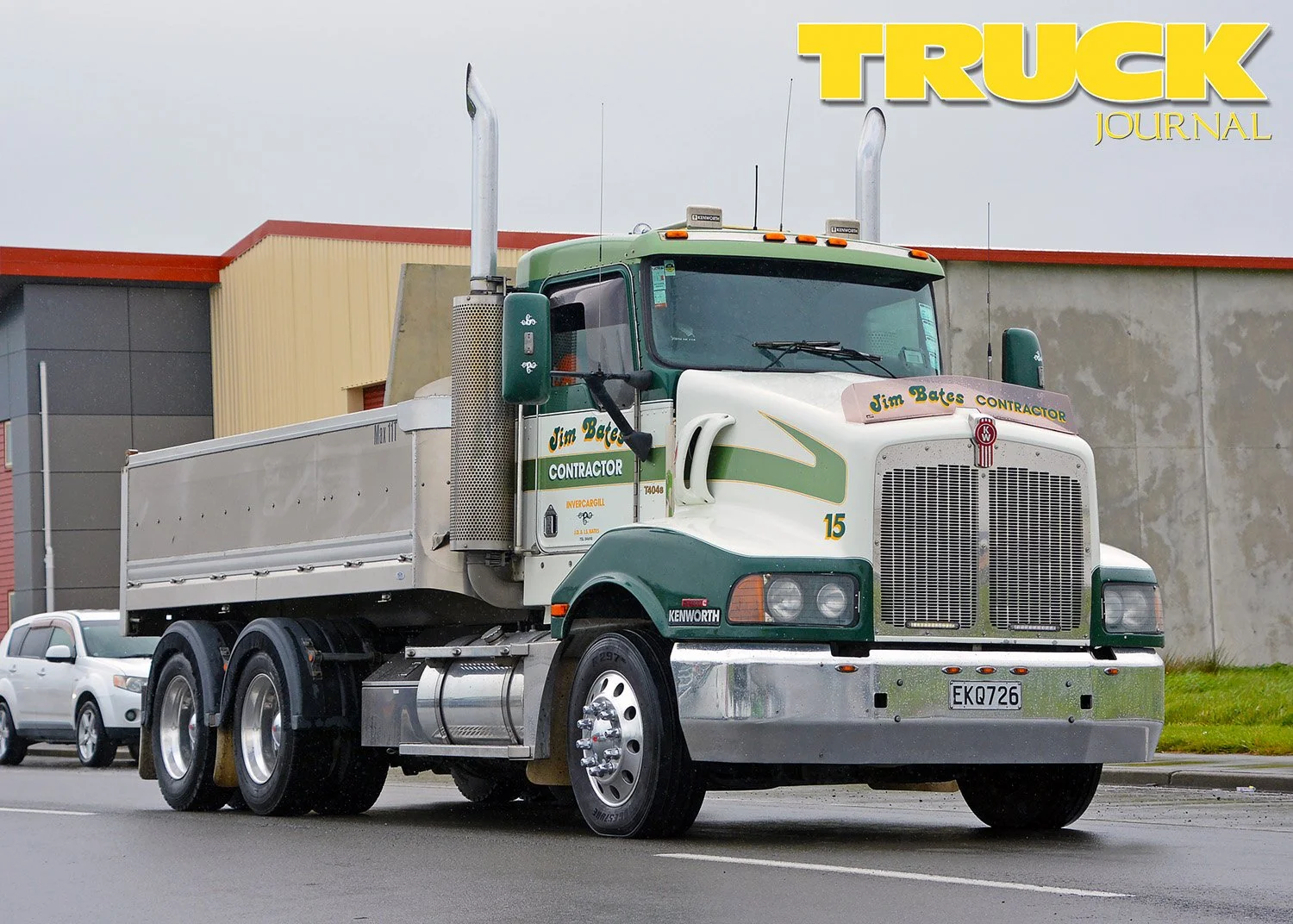
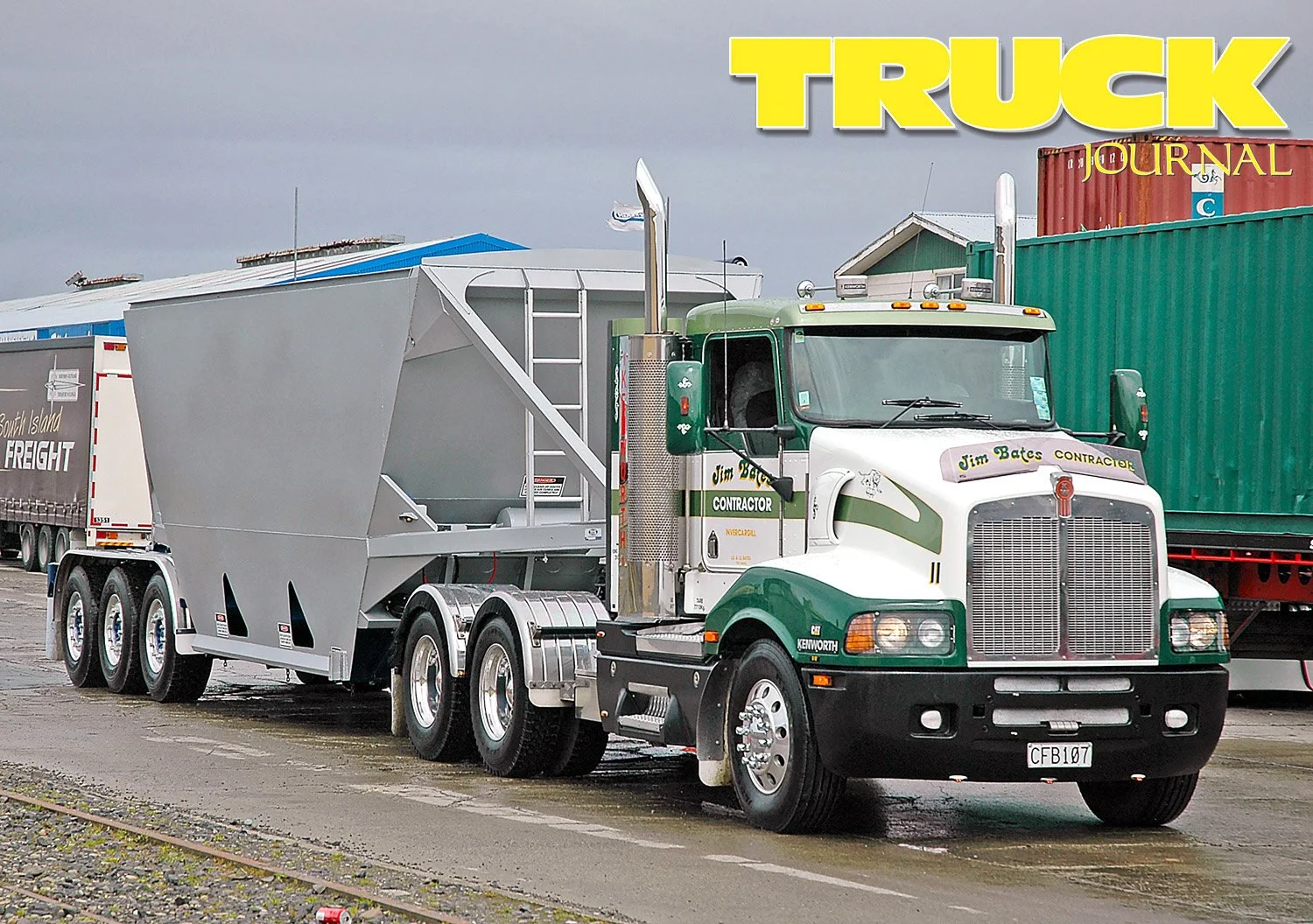
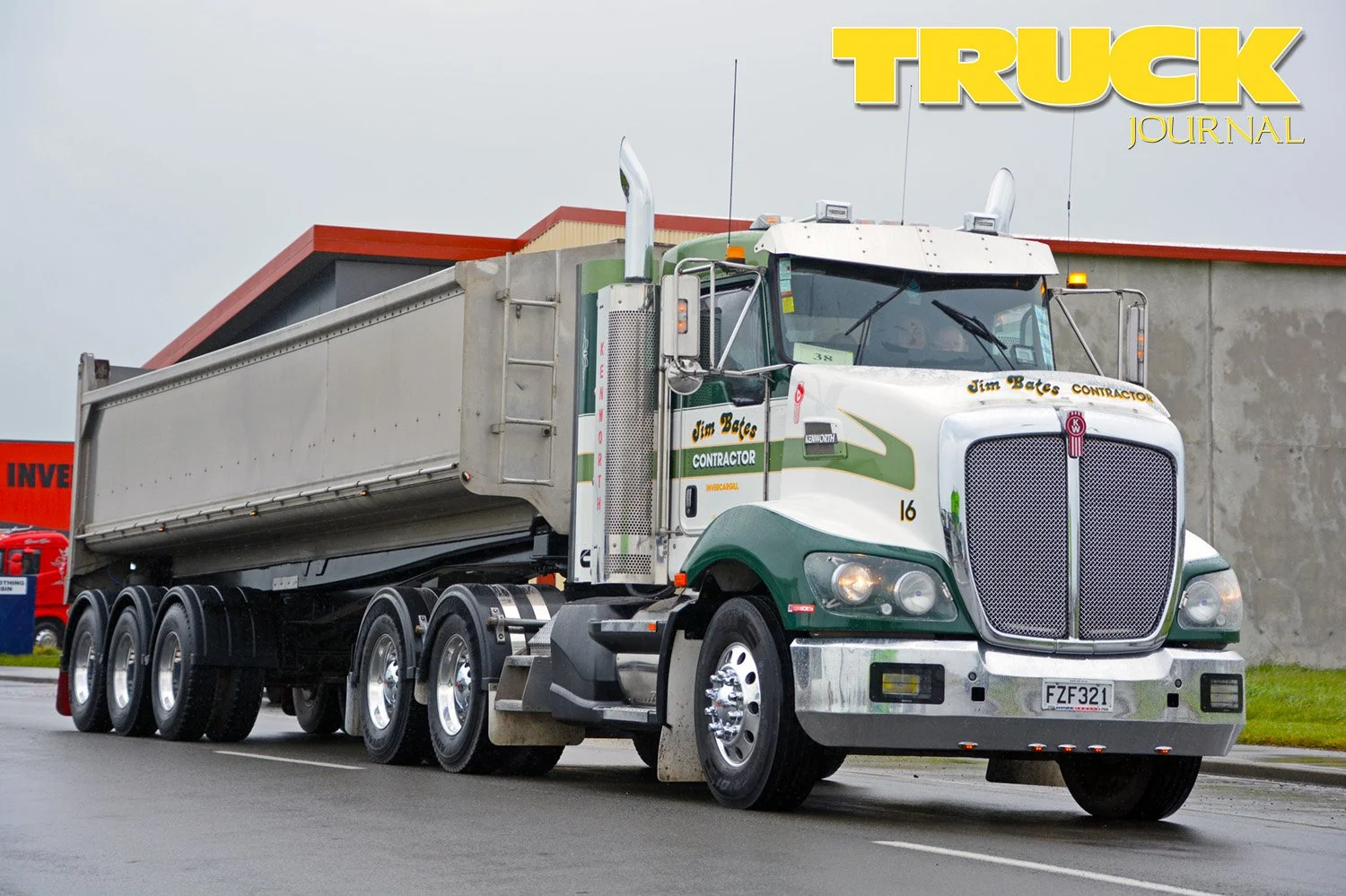
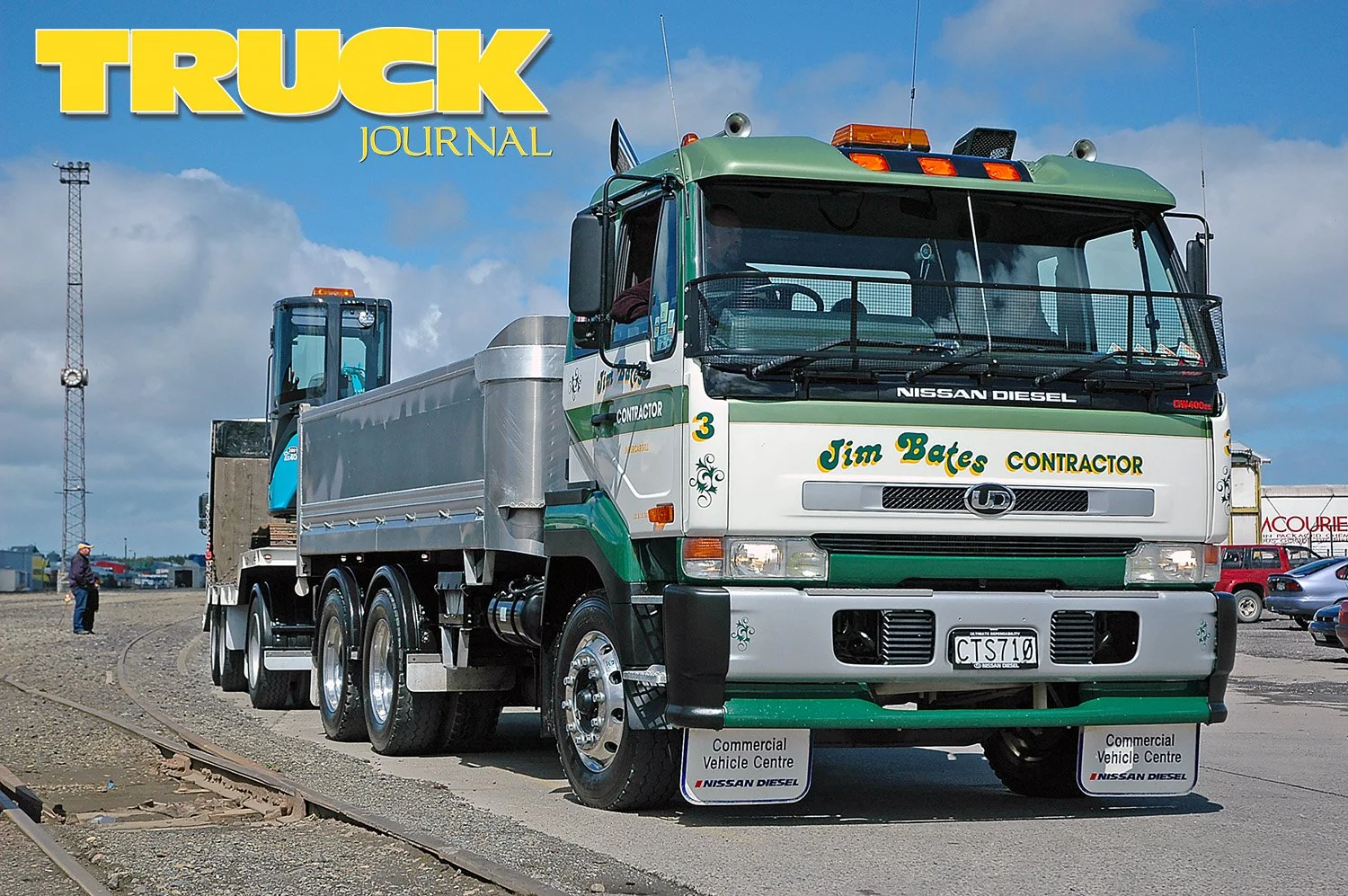
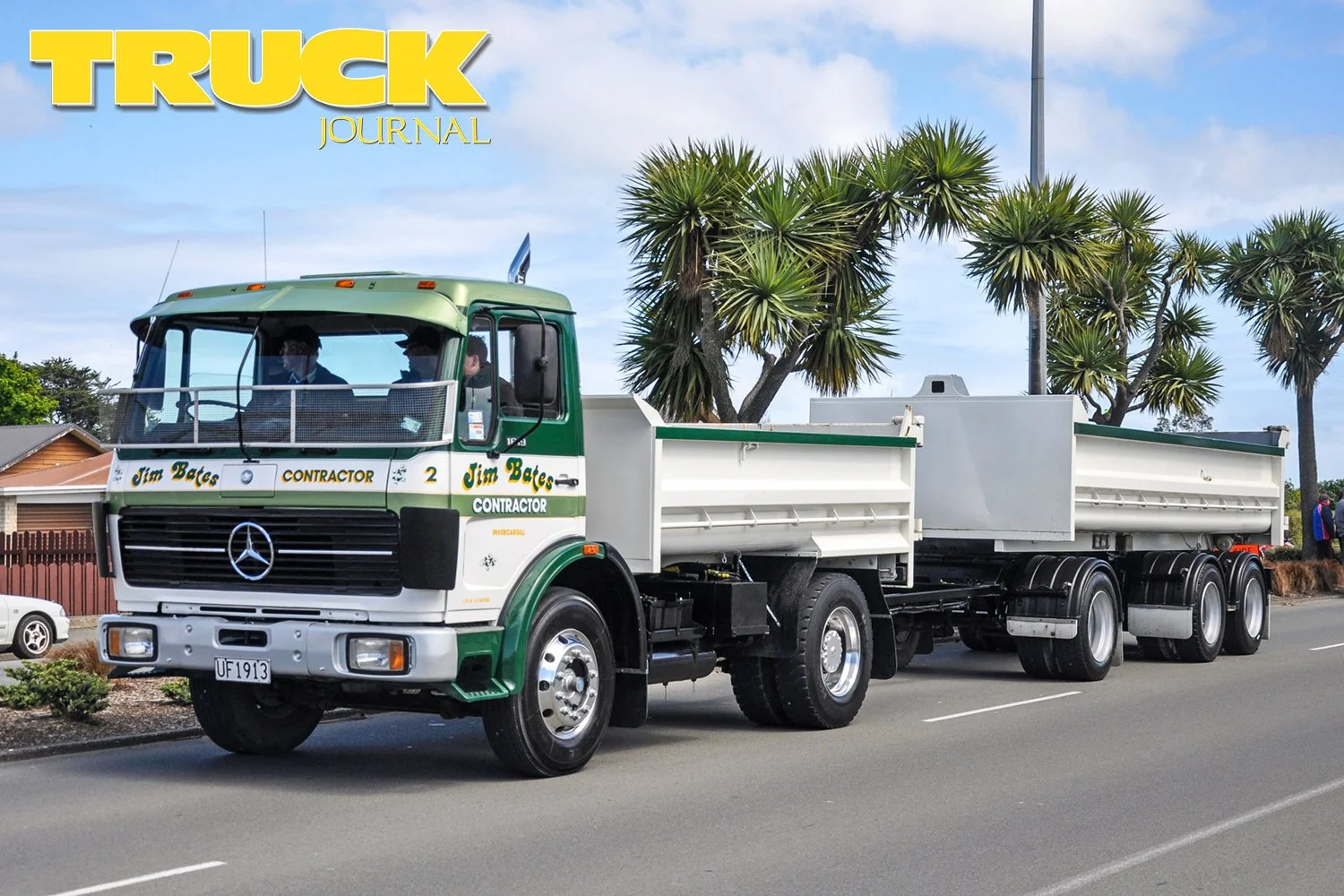
Some of Jim’s fleet in later years
His trucks were always turned out as show winners.