
62 Years of Ups and Downs
First published April 2009
by Simon Vincent
When you sit back and look at the 62 year history of Broadbridge Transport, it can be all too easy to assume that the road to that point must have been paved in gold. They went through the hay days of transport, with regulated competition, and some of the most powerful periods of economic growth ever experienced in this country. But behind every successful transport operator who reaches such milestones is a road littered with casualties, companies that never quite made it. The line between success and failure is often very blurred, however, Cyril and Hazel Broadbridge managed to drag a small rural operation, started from scratch after the war, to what is today a strong family based transport operation in Renwick, a few kilometres west of Blenheim.
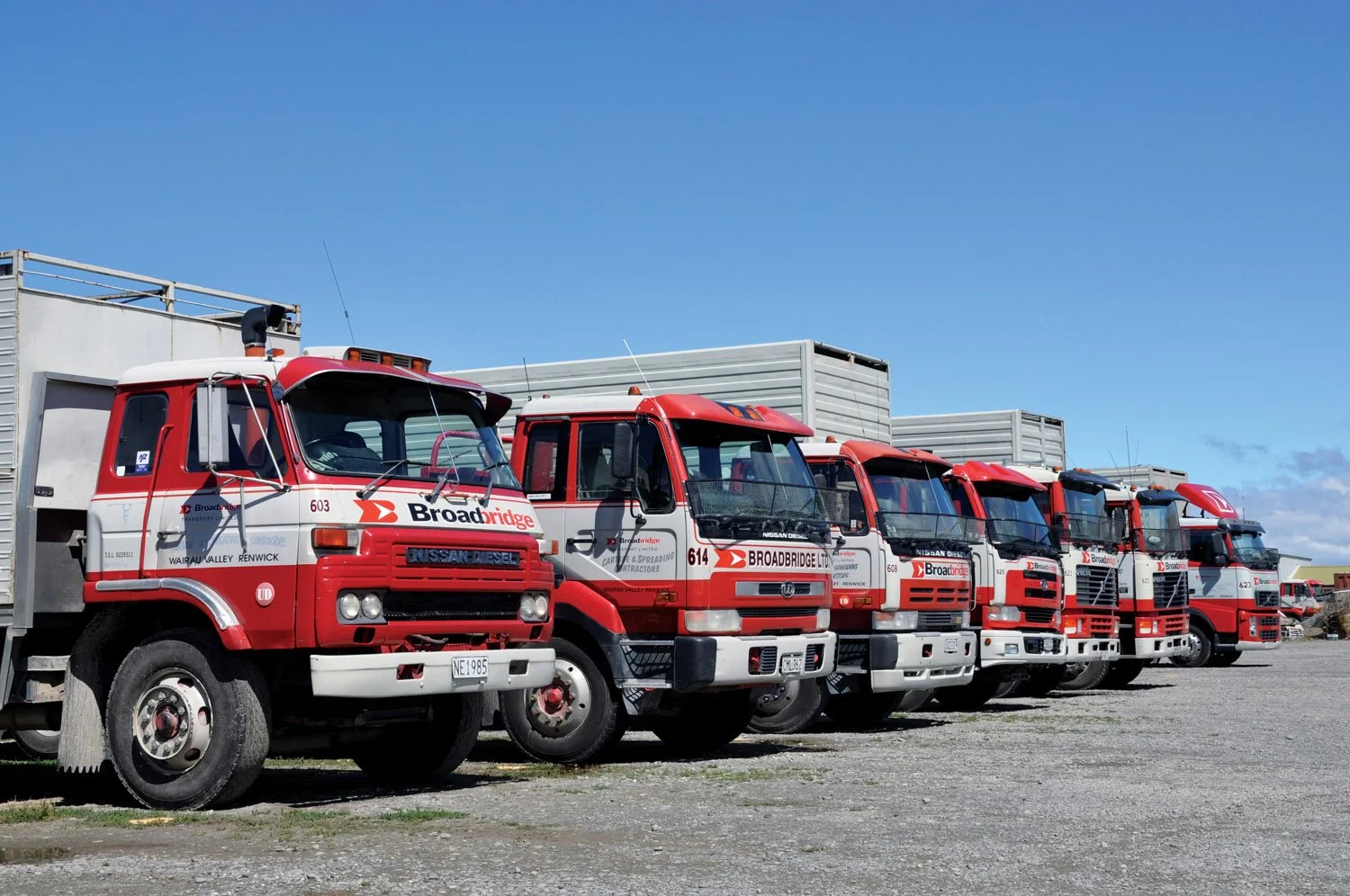
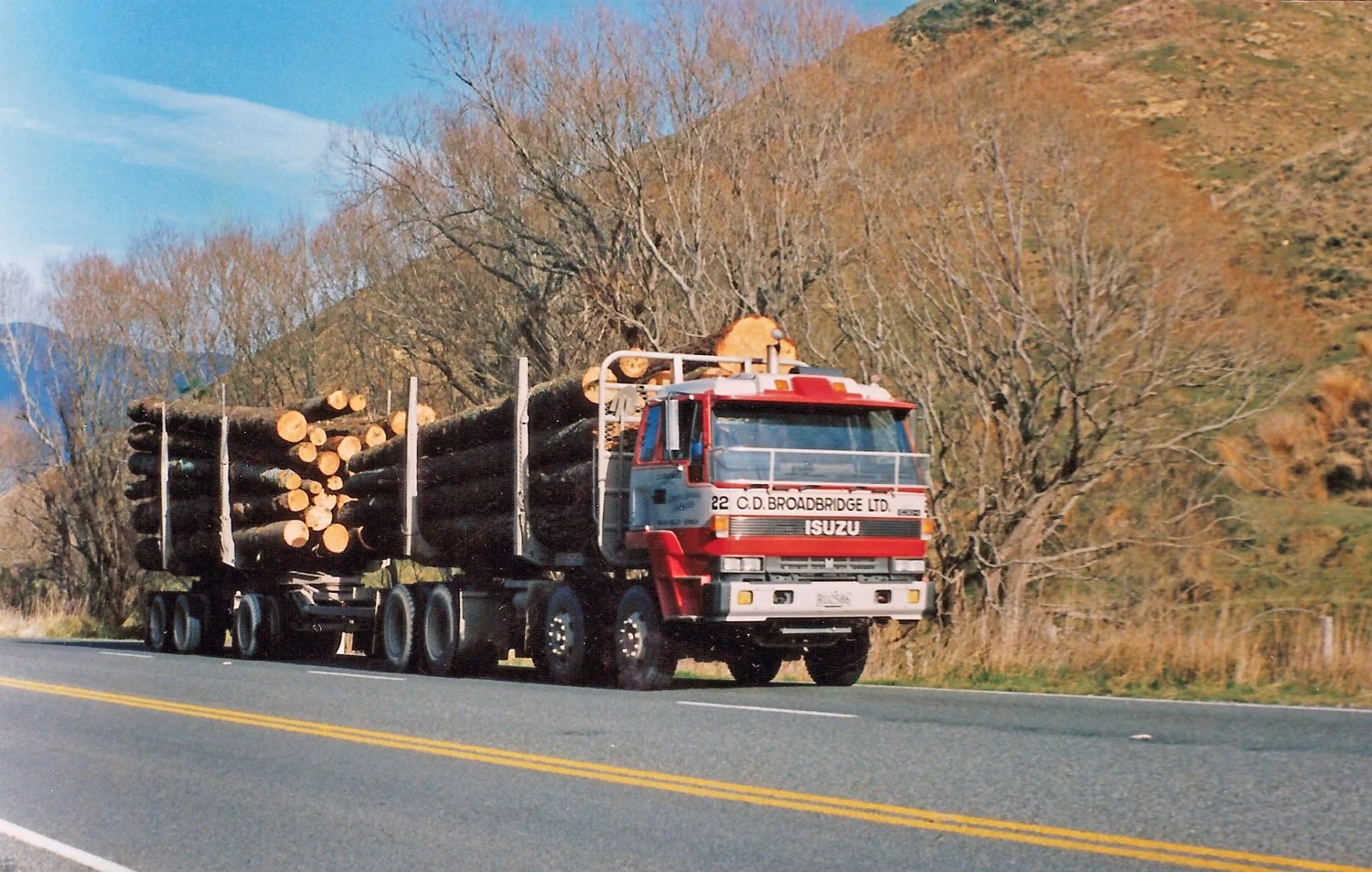
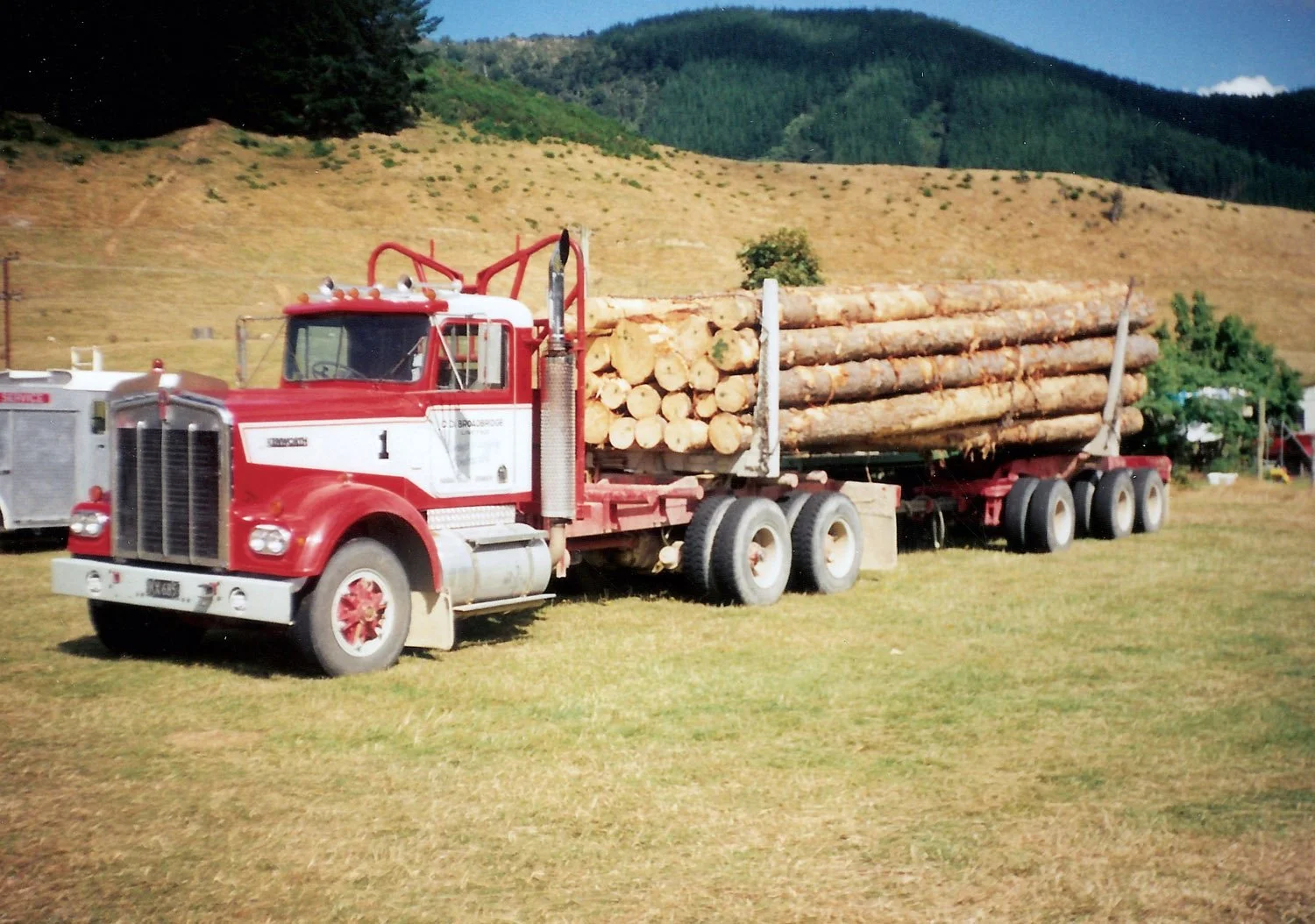
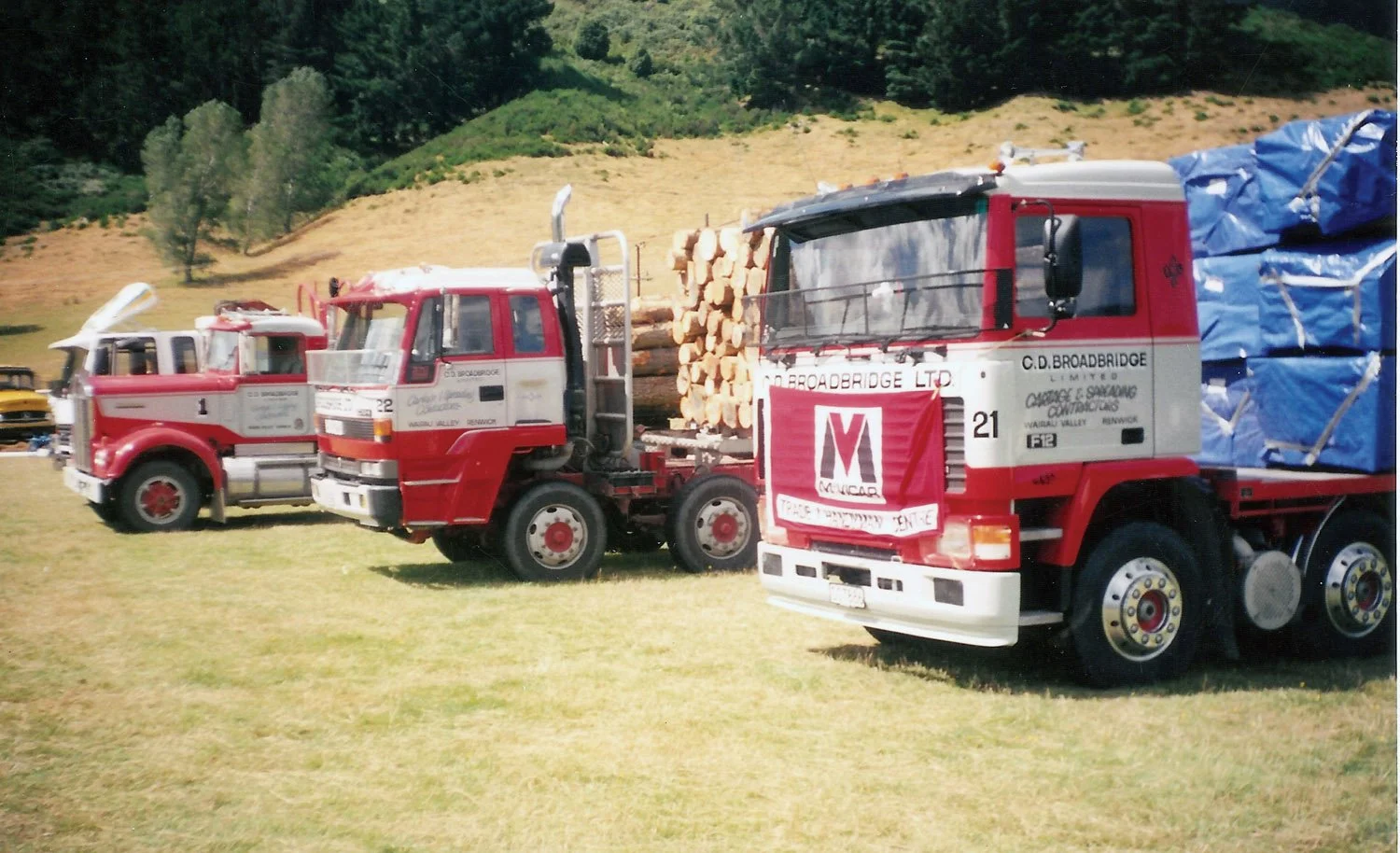
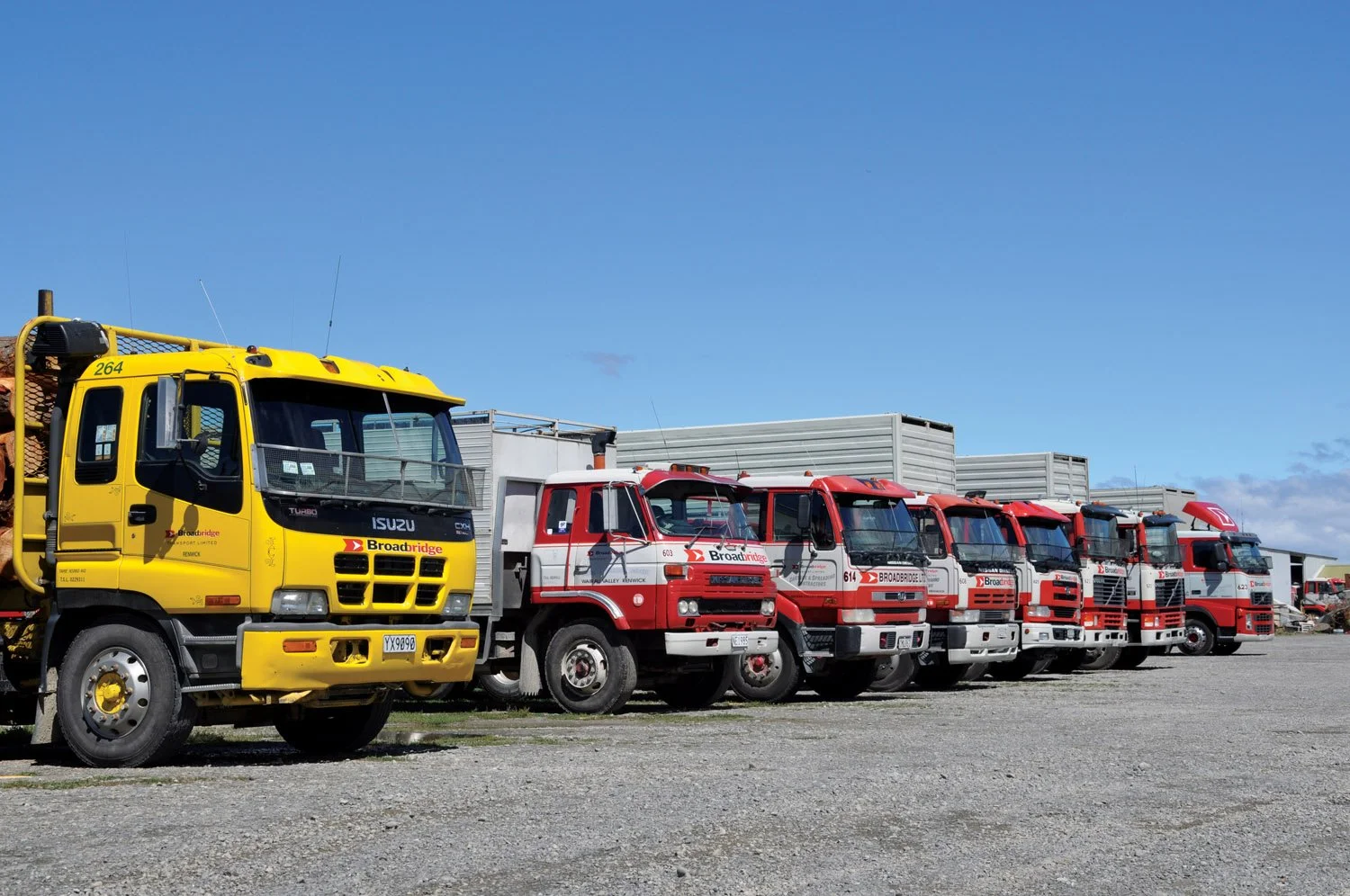
The Broadbrdige fleet spanned a variety of Japanese and European marques
Hard work, long hours and stubborn persistence
Success can be fickle, and for Broadbridge Transport, the successor to C D Broadbridge Ltd, the road has been built upon truck loads of hard work, long hours and stubborn persistence. Not that many years ago, the chips were down and life wasn’t looking very rosy at all, yet determination, good friends and bucket loads of support have seen the company pulled back from the brink of giving up.
Today, directors Weir and Leon Broadbridge have rebuilt their father’s company back into one they are extremely proud of, and that will see the next generation of Broadbridge continue well into the future.
Speaking Candidly
It is not often that we find companies or owners prepared to speak candidly about their setbacks, the Broadbridges however have the strength of character to admit that things were bad and, Weir says, that without the support and help of a couple of friends, they might not have made it. He remembers one friend in particular saying, ‘We’re going to break down the barriers and go through’, but at the time Weir wasn’t quite as sure as his mate.
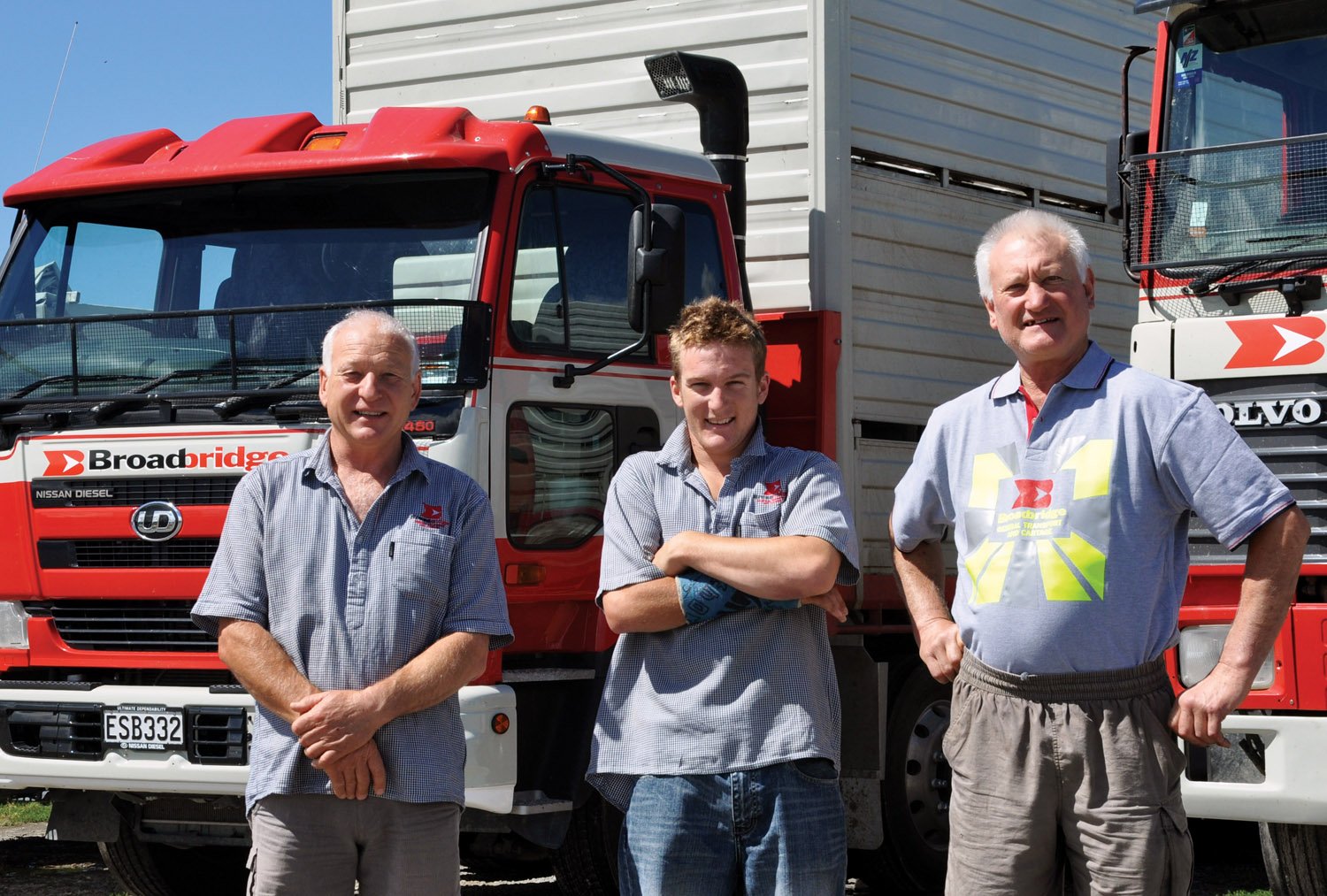
Weir, his son Adam and brother Leon Broadbridge are continuing a long family tradition in trucking.
Several years down the track, and whilst they aren’t multi millionaires (yet anyhow...), they have certainly broken the back of the job and are now on a much more stable and promising path. Over the last few years the company has been rationalised, the debt consolidated and refinanced, on far superior terms, and today, even with fewer trucks, the profit is the same, or better, than when the company had considerably more vehicles on the road.
A combination of careful management, sound financial advice (from a very good accountant according to Weir), and just sticking to the ‘knitting’ has seen the company move forward in leaps and bounds. Weir is the first to admit that complacency and taking your eye off the ball are what nearly scuppered the old C D Broadbridge company.
A fresh start
With a fresh new name, Broadbridge Transport, and a striking new logo (designed by another long term friend and helper ) featuring an arrowhead pointing to the direction ahead, and new resolve from himself and Leon, the future certainly looks bright.
Weir has been with the firm since he joined as a 17 year old in 1968. Not officially old enough to have a truck licence, Weir was allocated a Leyland Comet spreader and sent out top dressing. Obviously the local bobby turned a blind eye to this as Weir would have to drive to and from the jobs on the main roads.
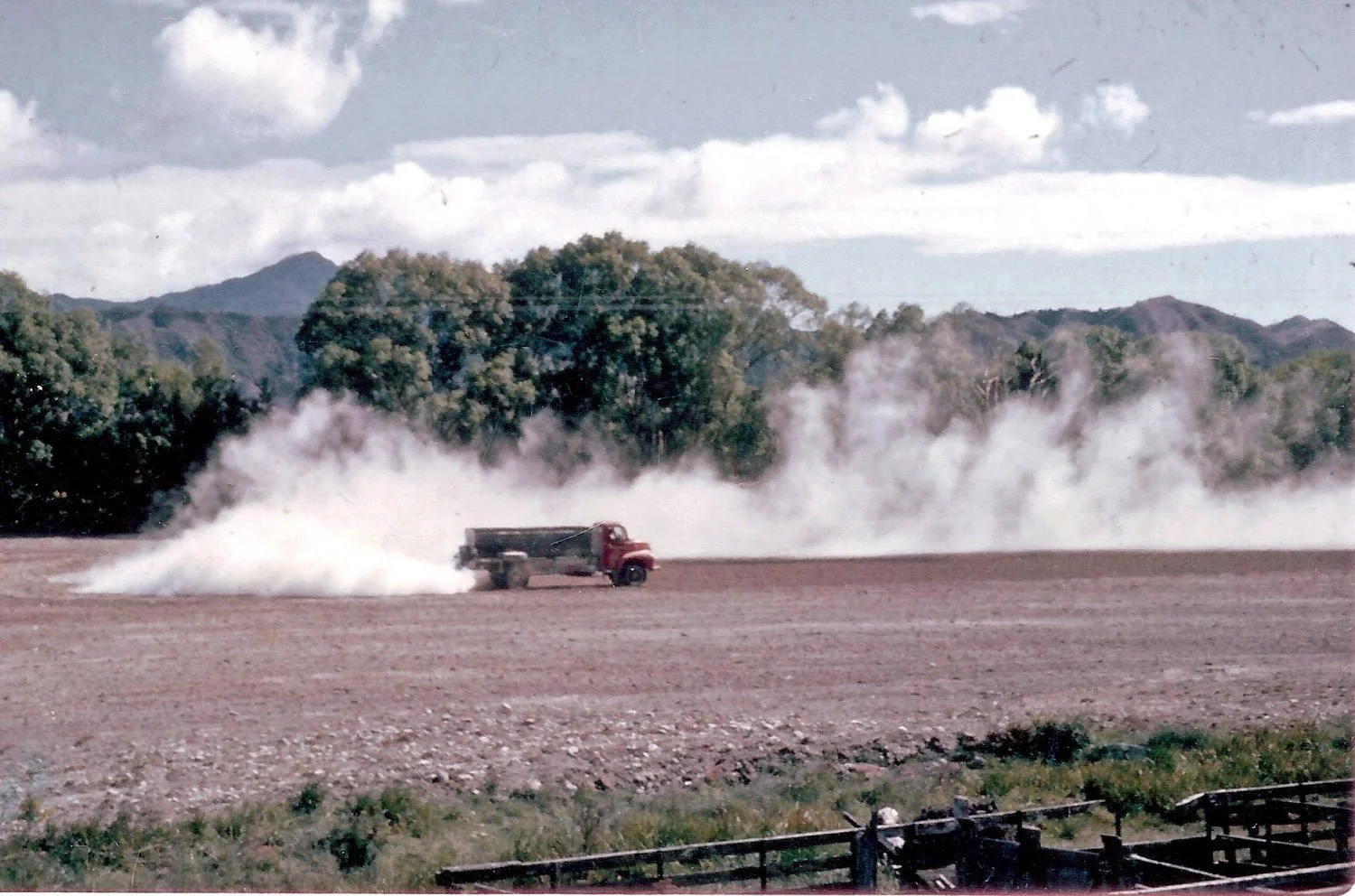
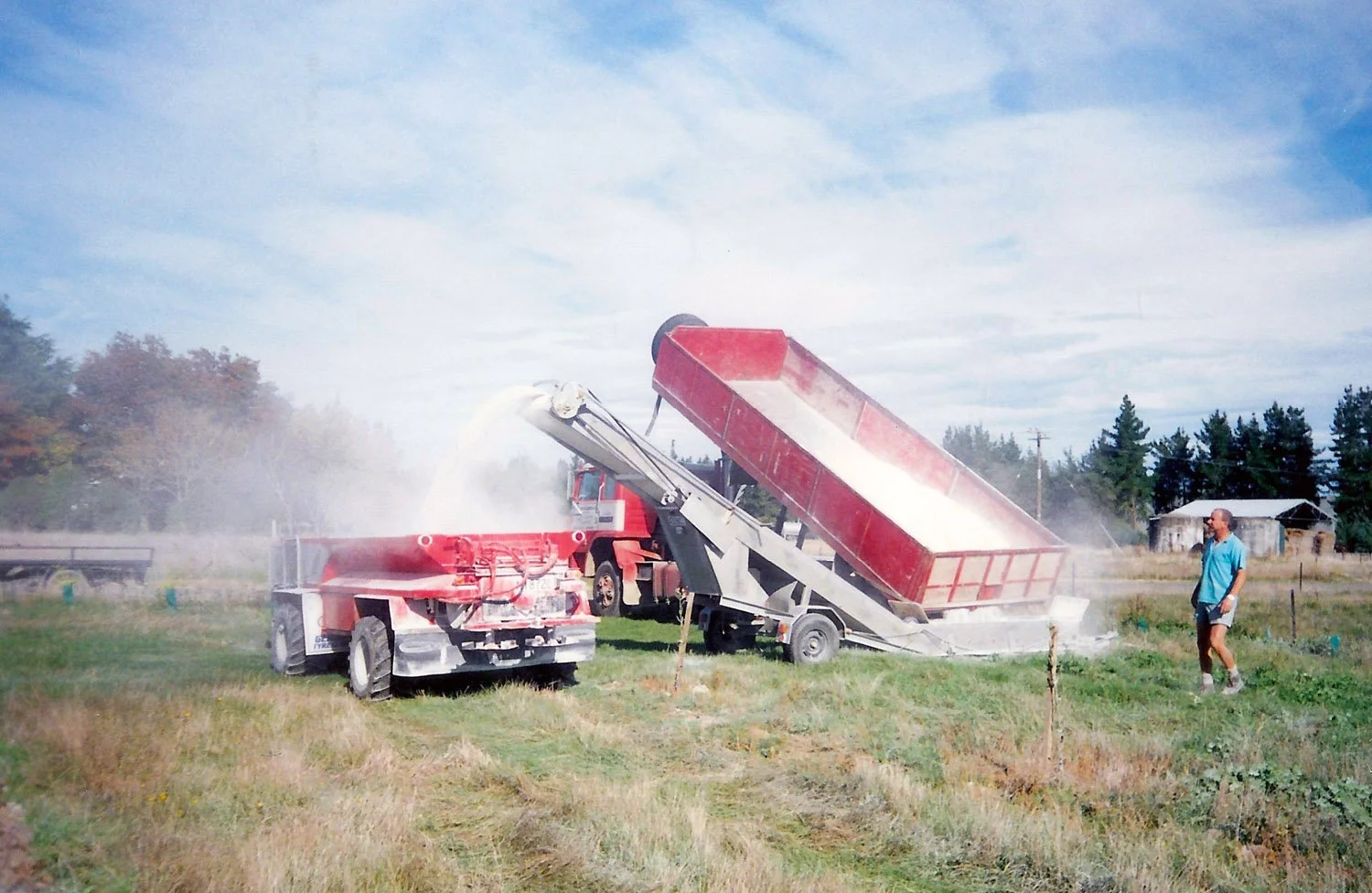
Broadbridges Leyland Comet spreading fertiliser.
Weir remembers the Comet had dud batteries, and he was told by his father not to turn it off or stall it. This had a twofold effect, it made him work all day long without stopping, whilst ensuring he had excellent control over the vehicle – the old man must have been rather cunning.
Brother Leon joined the firm much later, after initially working for the New Zealand Railways. Leon is a trained fitter and turner and is currently the firm’s mechanic and engineer. Leon spent 17 years away from the family firm, 10 years as an engineer at a tannery in Wanganui before returning to look after the firm’s equipment (he was busy changing a turbo on a Volvo when we called).
The next generation
And the next generation is waiting in the wings, learning the ropes, just as his father did so many years ago. Weir’s son Adam is currently a driver for the firm, although at the time of our visit he was working in the office due to an injury sustained motorbike riding. At 21 Adam has plenty to learn, but has the right attitude, having spent two and a half years as a tractor salesman, and six months driving for another livestock carrier before joining the family business.
The story, however, begins much further back. C D Broadbridge had its roots firmly established half way down the Wairau Valley, between Blenheim and St Arnard, at ‘Coldstream’, the family farm near Hillersden. After returning from the Second World War, where he served in the RNZAF Fire Service, Cyril Broadbridge received his transport licence, allowing him to operate as a general carrier, in 1946.
Touting for business
Cyril must have been working on establishing the transport business for some time. A letter found in the company archive dated 20/6/46, from Blenheim carrier Joe Robinson, provides an estimate of what Joe thought the income and cost would be for a year’s operation. Helpfully Joe concluded, ‘If I can be of any further help to you I will be only too pleased to assist’. Imagine a competitor offering a rough budget to a new entrant to the transport industry today!
Cyril, and his wife Hazel, along with Cyril’s brother, Noel, commenced operations on the 14th of January 1947 with a brand new International KB 5 truck (purchased for £1,250). An ad in the Marlborough Express placed during December proudly announced, ‘Having received my motor truck, I will be commencing business as a general carrier from January 14, 1947. For prompt and efficient services ring 10A Hillersden’.

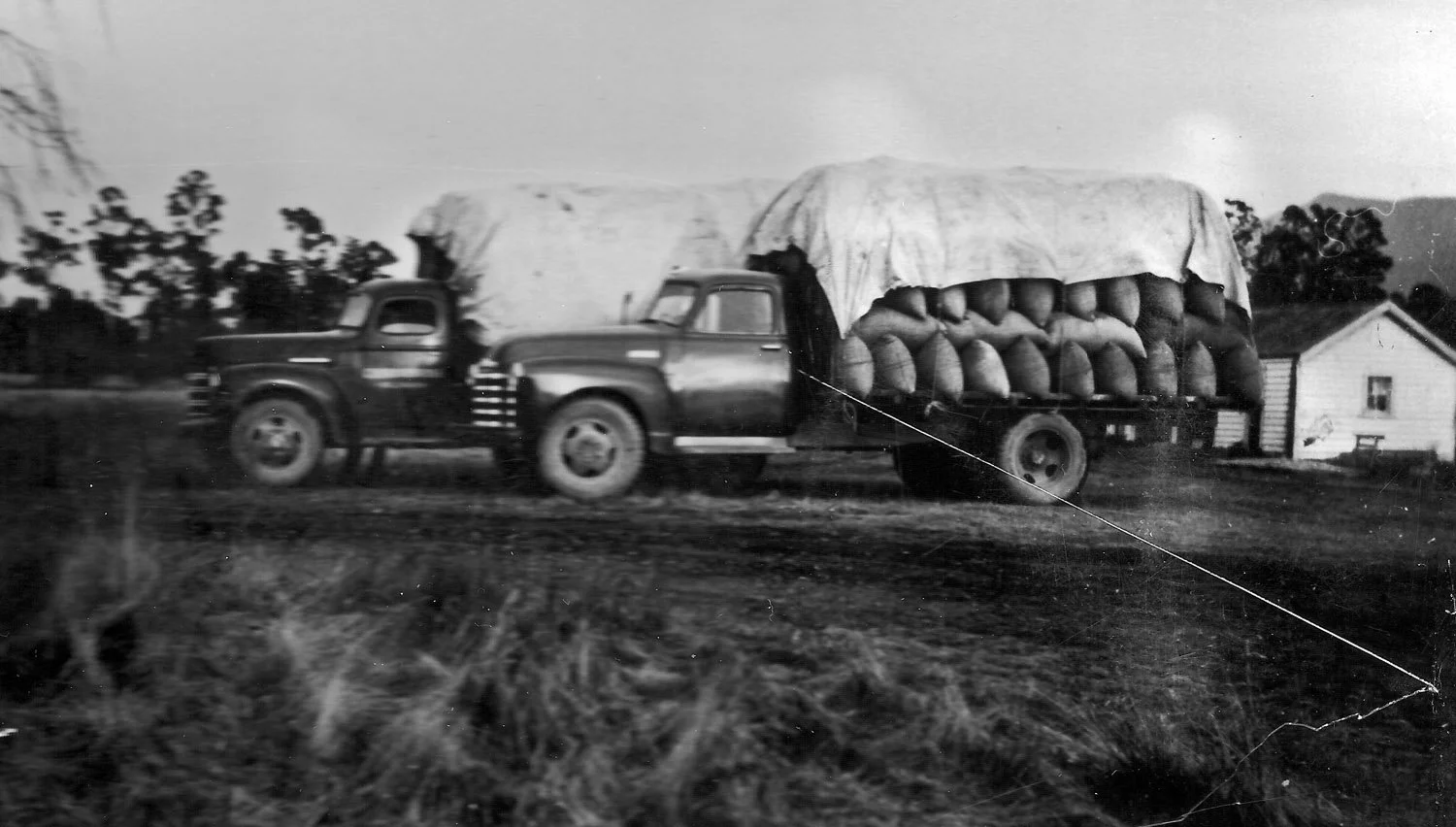
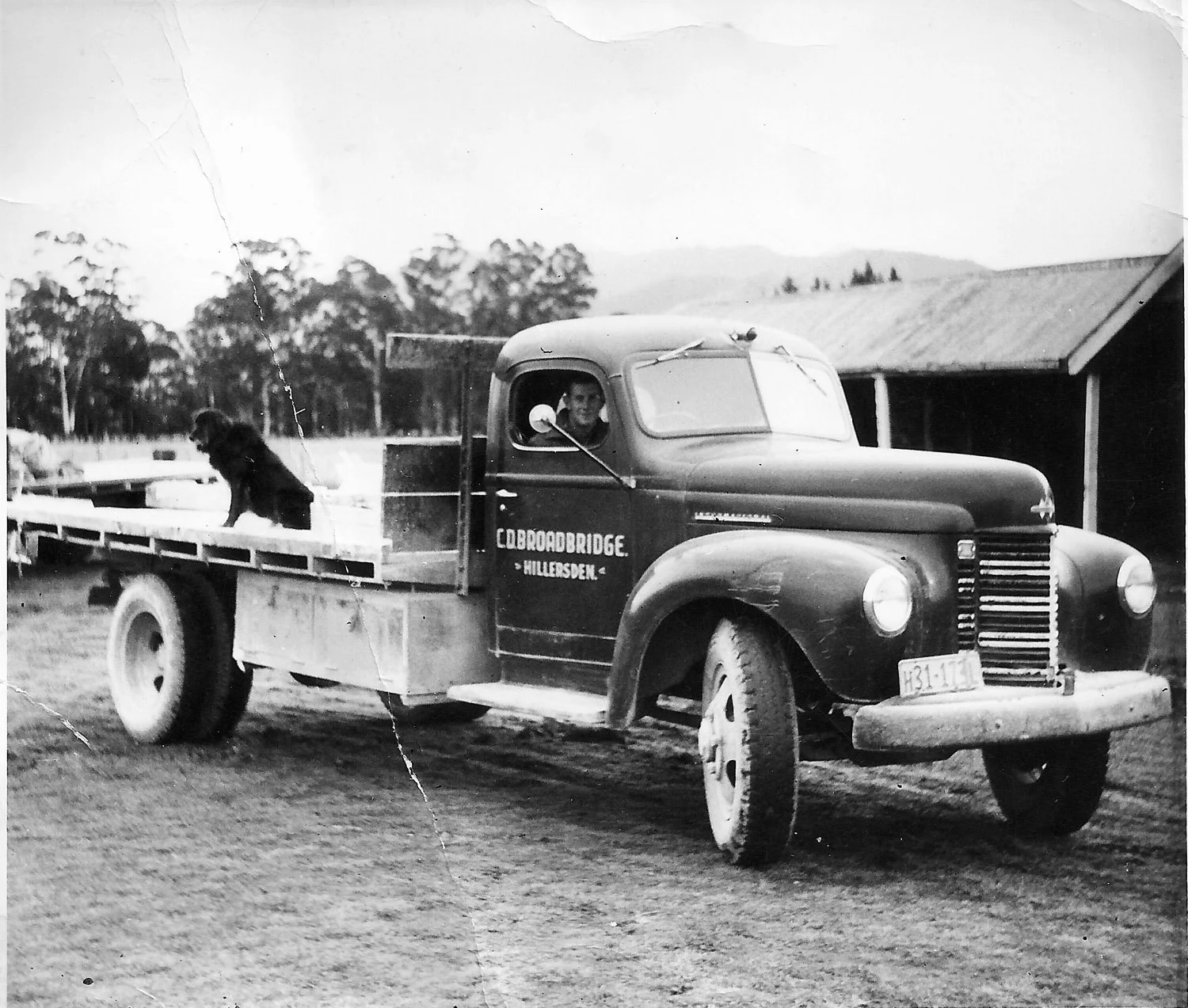
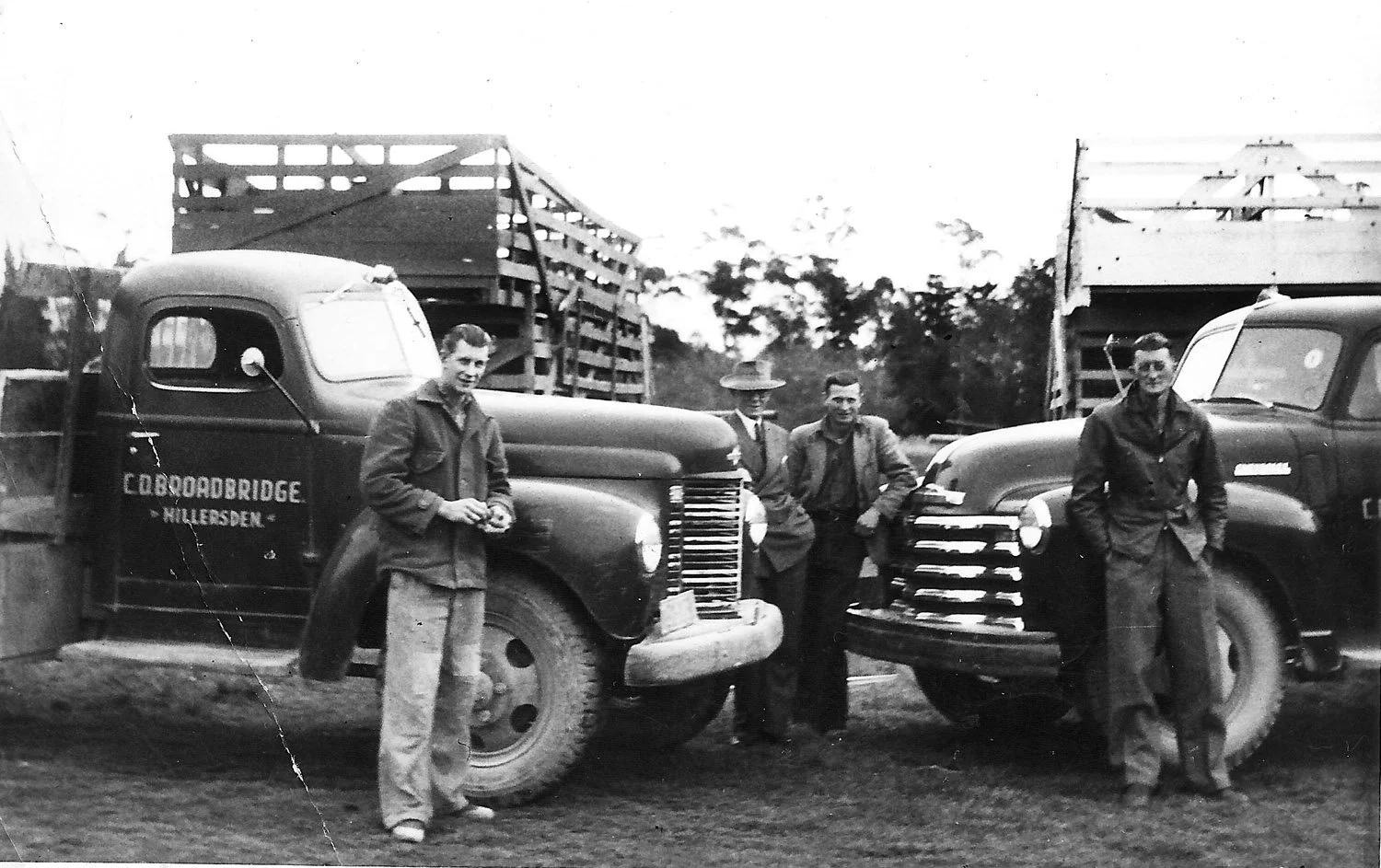
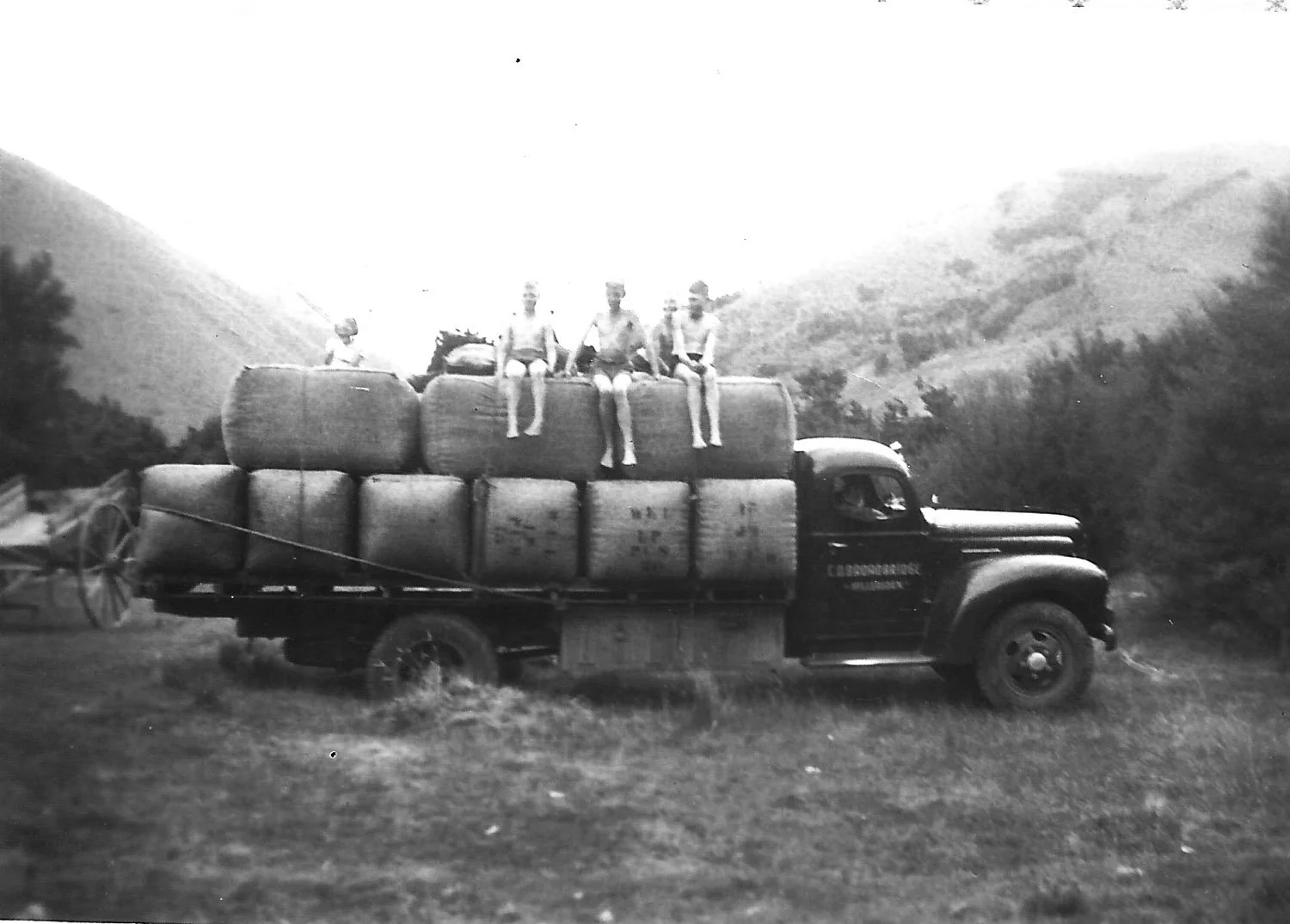
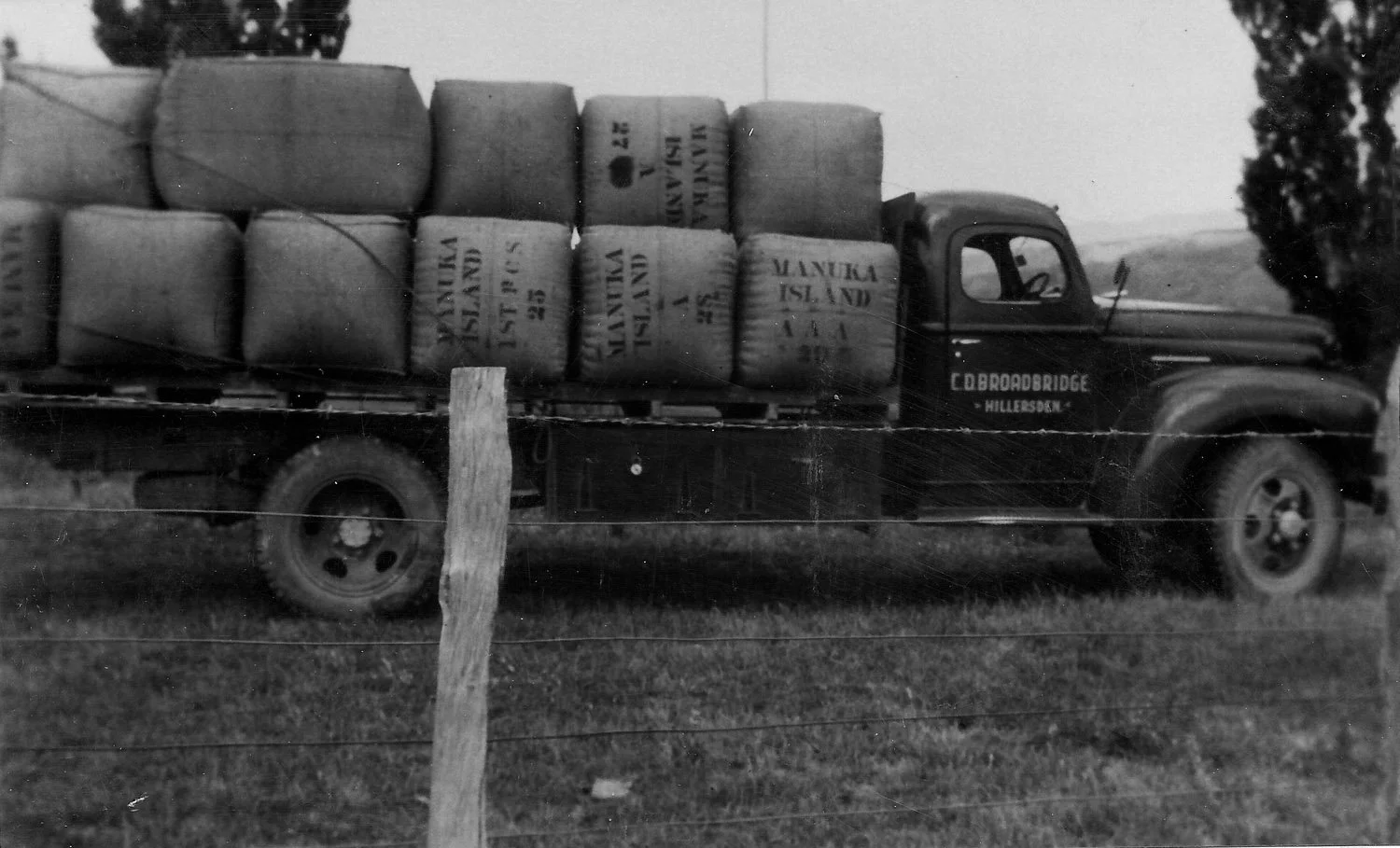
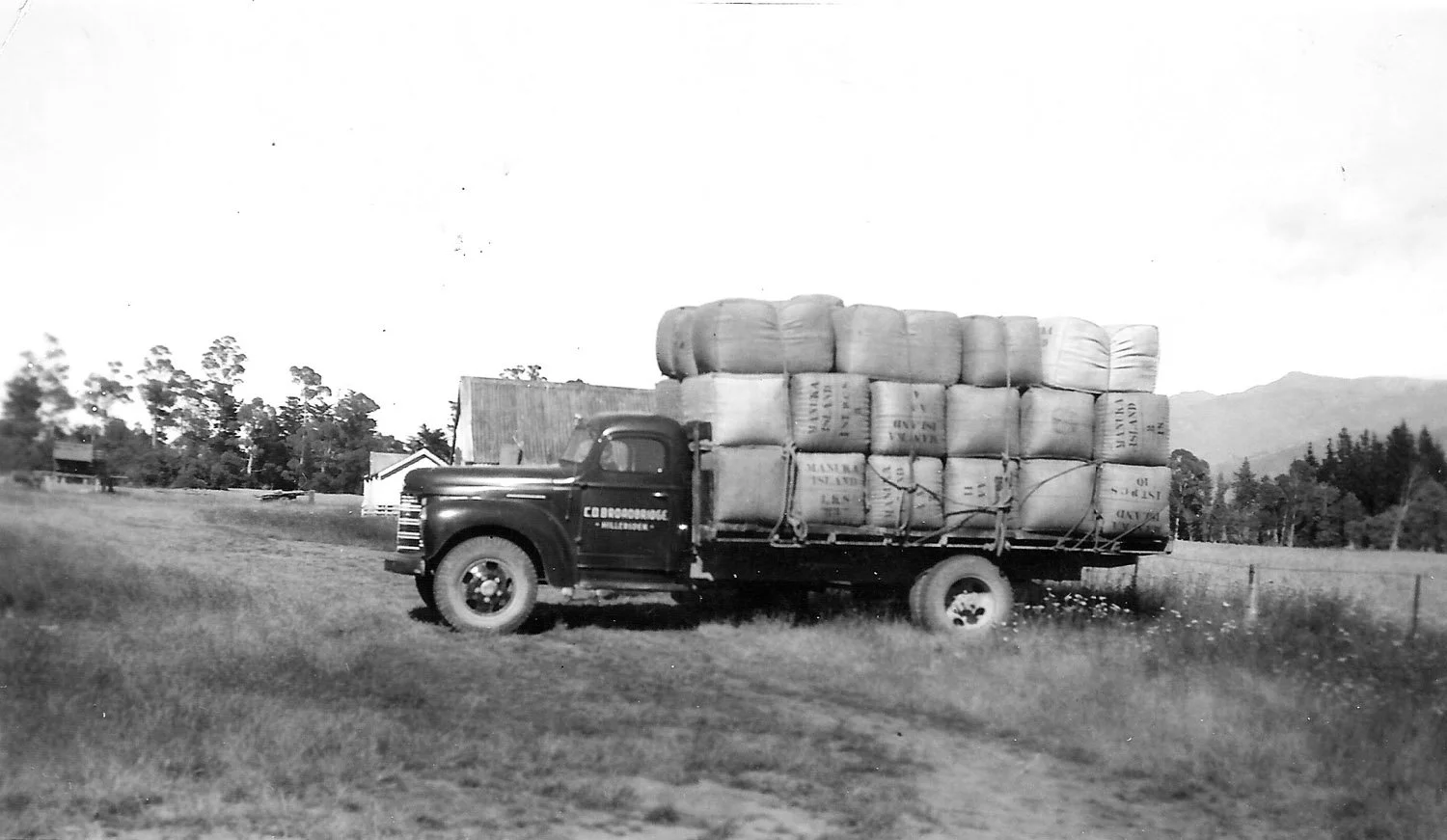
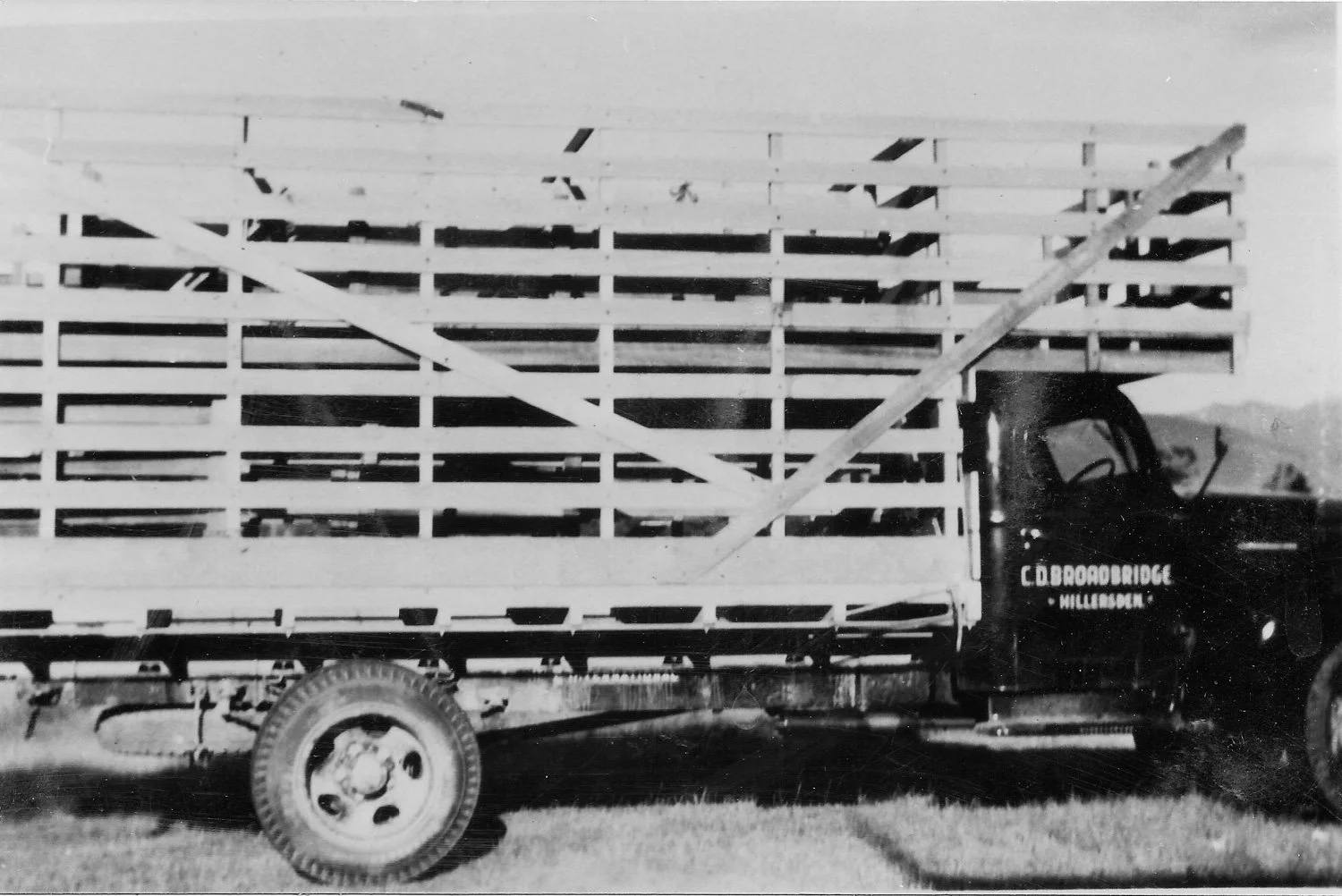
Like many a keen transport entrepreneur of the time, Cyril had traded in his precious 1935 Ford sedan, the family car, on the new International with local International Harvester dealers W E Clouston and Co (Cloustons now form part of PGG Wrightson). Weir pointed to the fact that for many years afterwards there was no family car – just the truck. There was hardly a need for a car as the transport business ran seven days a week anyway.
Family Stalwart
And, as was the tradition in those days, Hazel was left at home to not only raise seven children, but to answer the phone, chase up new clients, organise the work, dispatch the drivers, and run the office. Not only that, but she would cook for the family and the drivers to boot. A strong willed but willing worker, Hazel was widely recognised and respected by the local community for the efforts she put into running the business right from the start.
One of the best yarns relating to Hazel’s involvement in the business is about her running out of petrol. Hazel was less than a mile from home when she ran out. No way was she was about let on to Cyril what had occurred, nor would she walk the last few yards home to show her ‘inadequacy’, so she rang the boys who were, by now, well ensconced in the new Renwick yard.
Weir remembers, ‘We had to dispatch a driver from here with petrol to fill her up again’. No consideration was ever given to cost or time involved, she just needed the petrol delivered, NOW!
Getting going
Getting the new transport operation up and running must have been a major undertaking. Cyril and Noel would work day and night driving the International, filling the day with local work and tripping down to the West Coast and back during the night to collect coal. The change in lifestyle must have been most profound for Noel, who had given up a cruisy number on the Wellington trams.
Working from the back of beyond without electricity could only be described as for the hardy, electricity was only brought up the valley to Coldstream in 1954. Broadbridges carted the usual rural contractors fare, wool, hay, livestock, grain, fertiliser and coal which was all hand balled onto and off the trucks.
As with similar rural operations, the work was often seasonal with big highs in the summer and the usual lull during the colder months. By today’s standards the loads weren’t big, but the work was heavy with much hard manual labour involved.
The Broadbridges must have created quite an impression with the locals. Livestock agent for Cloustons for 43 years, Hugh Byrne, is reported to have recalled his association with the Broadbridge brothers, ‘The boys operated a tremendously efficient service, they were always on time.’
Adding more trucks
Work must have been progressing well because by 1948 the company had purchased its second truck, a second hand Chevrolet from the local Shell agent in Grove Road Blenheim. As part of the ongoing growth, Cyril built the company’s first wooden stock crate, a double deck construction, which he completed in 1949.
As if that wasn’t enough, the company branched out again in 1950 with the purchase of a second ex Shell truck, this time a Ford V8. By 1951 the company had grown to the point that Cyril and Hazel formed a limited liability company. This was also when they took on their very first driver, a chap by the name of Ian Gleeson.
Selling the farm
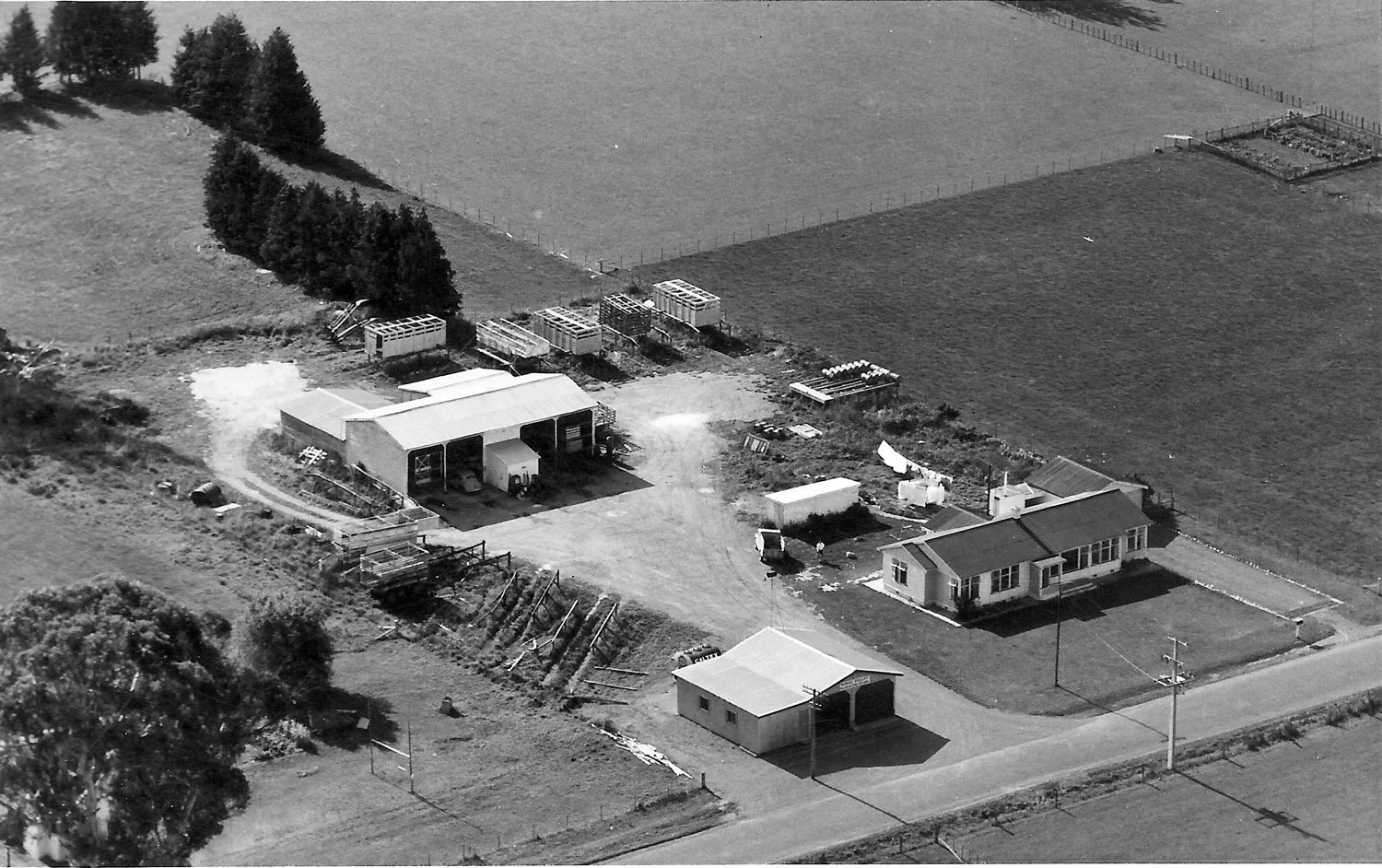
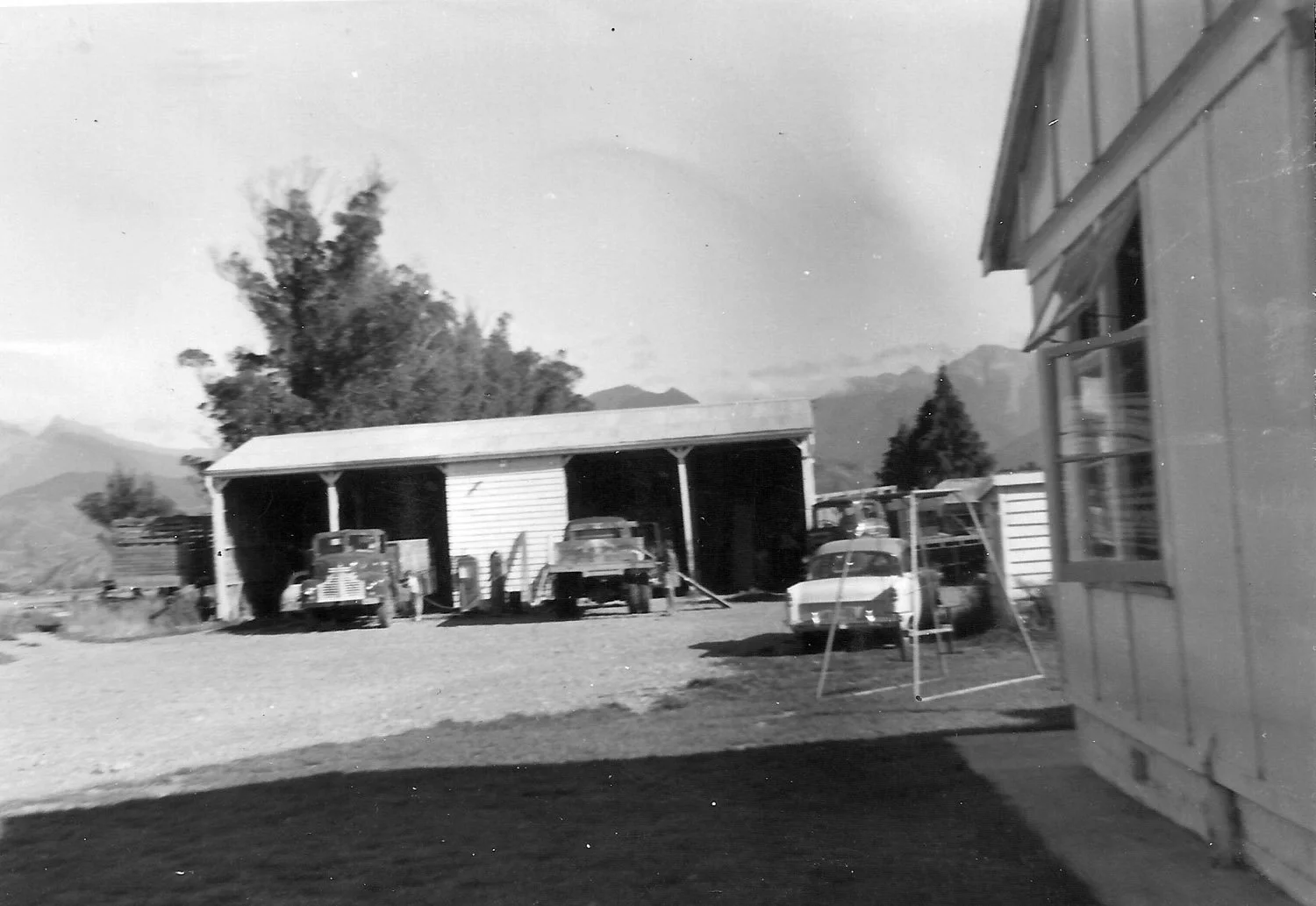
In what now would be called an ironical twist, the family farm, Coldstream, was sold in 1952 to aid in the purchase of two more trucks, Austin Loadstars. It would appear that this thinking is completely at odds with how most current businesses would choose to operate, but obviously suited Cyril well. The depot had to be moved and its new site was 6.4 kilometres up the road at Broadliegh, where the old Wairau School had previously sat, and was completed in 1953.
Cyril had been very aware of the company’s location, and the Wairau Valley was not his first choice, he had always wanted to start the business in Renwick. It would take until 1971 before he was able to realise this particular goal.
Ground spreading begins
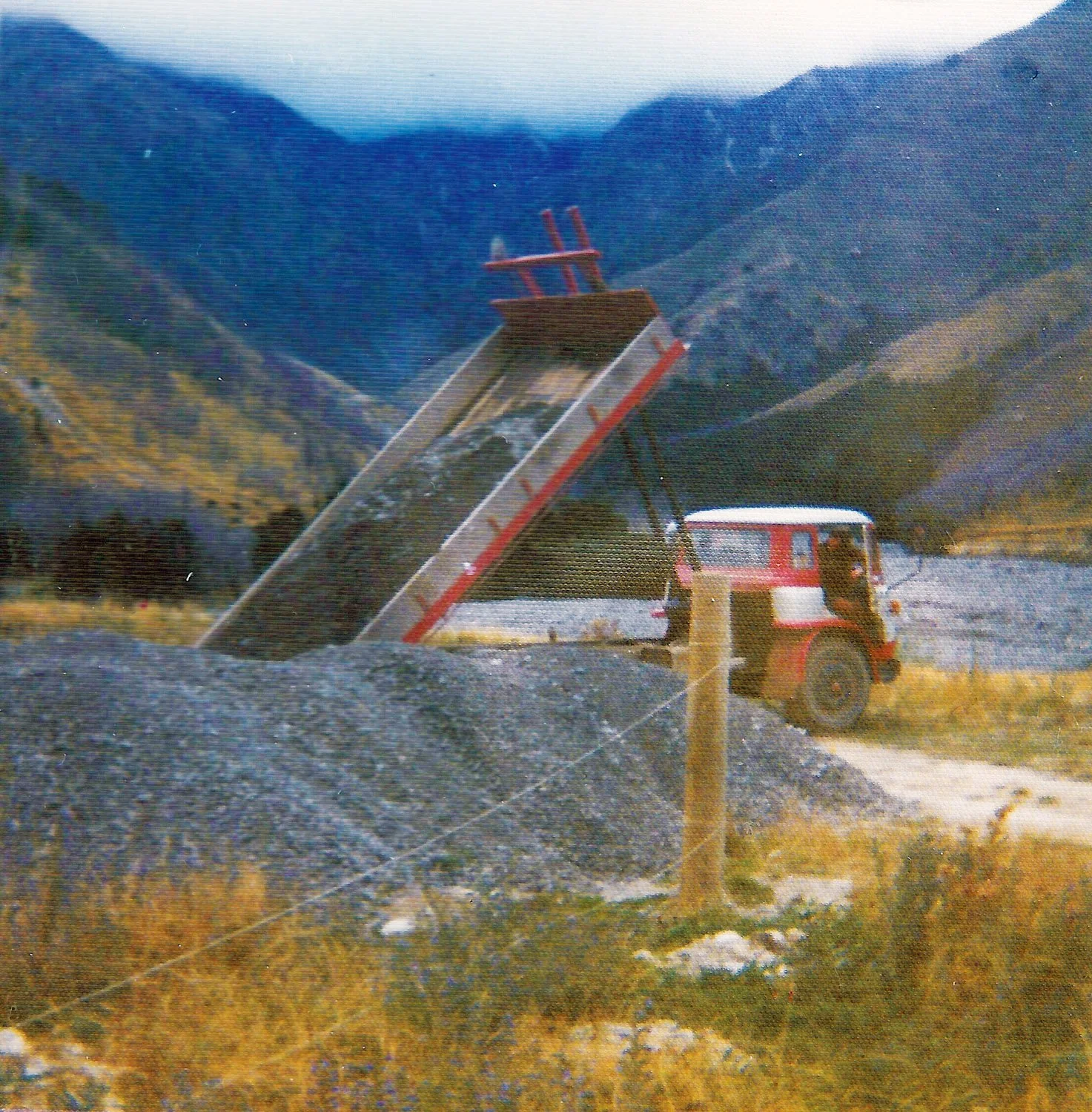
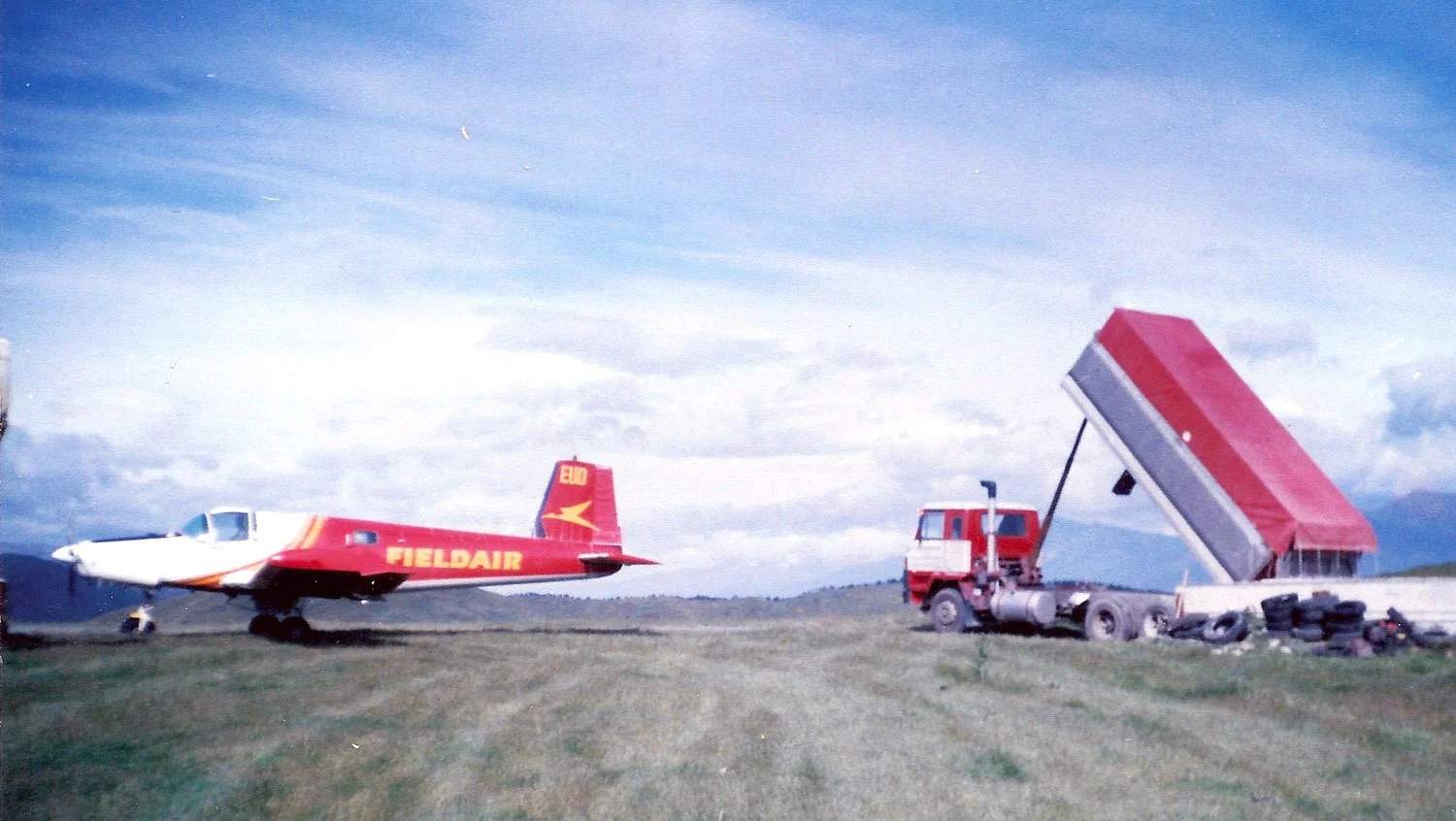
Not missing a trick, Cyril purchased further trucks in 1956. The company’s very first bulk spreader was commissioned at this time, along with a third Austin. The company’s involvement in spreading stretches right through to the present day, with a bulk store and fleet of different size machines able to distribute this vital farming product.
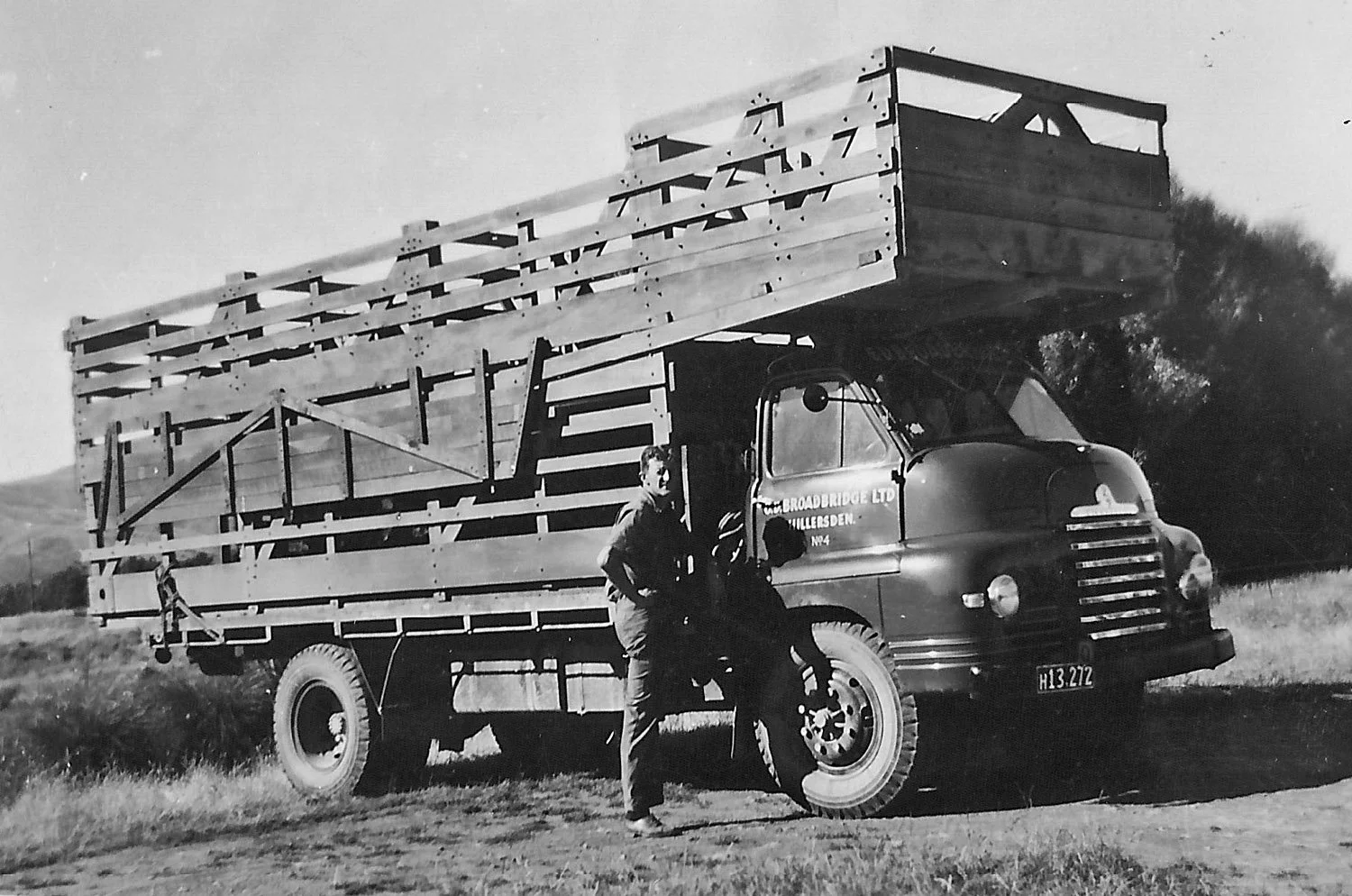
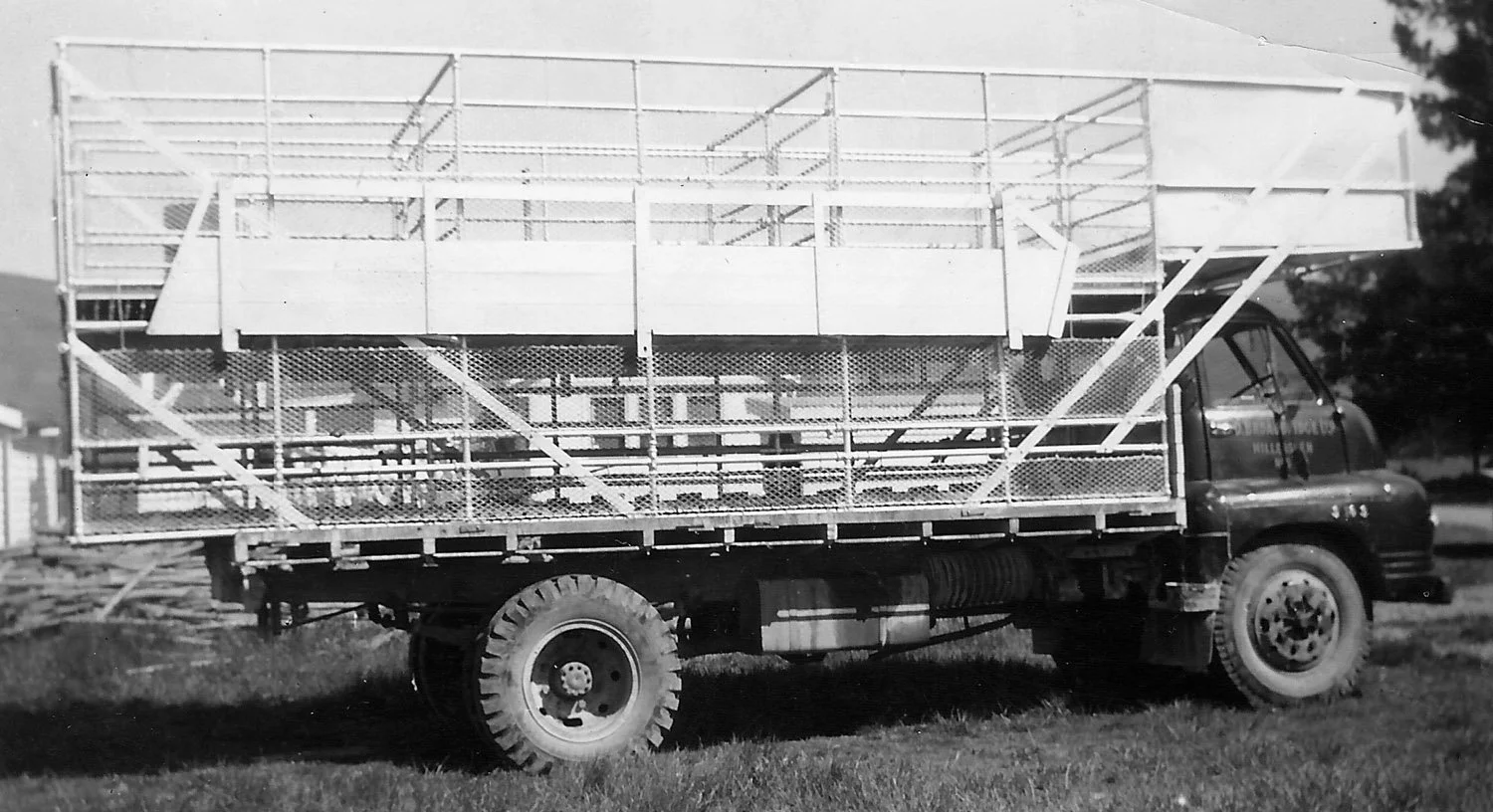
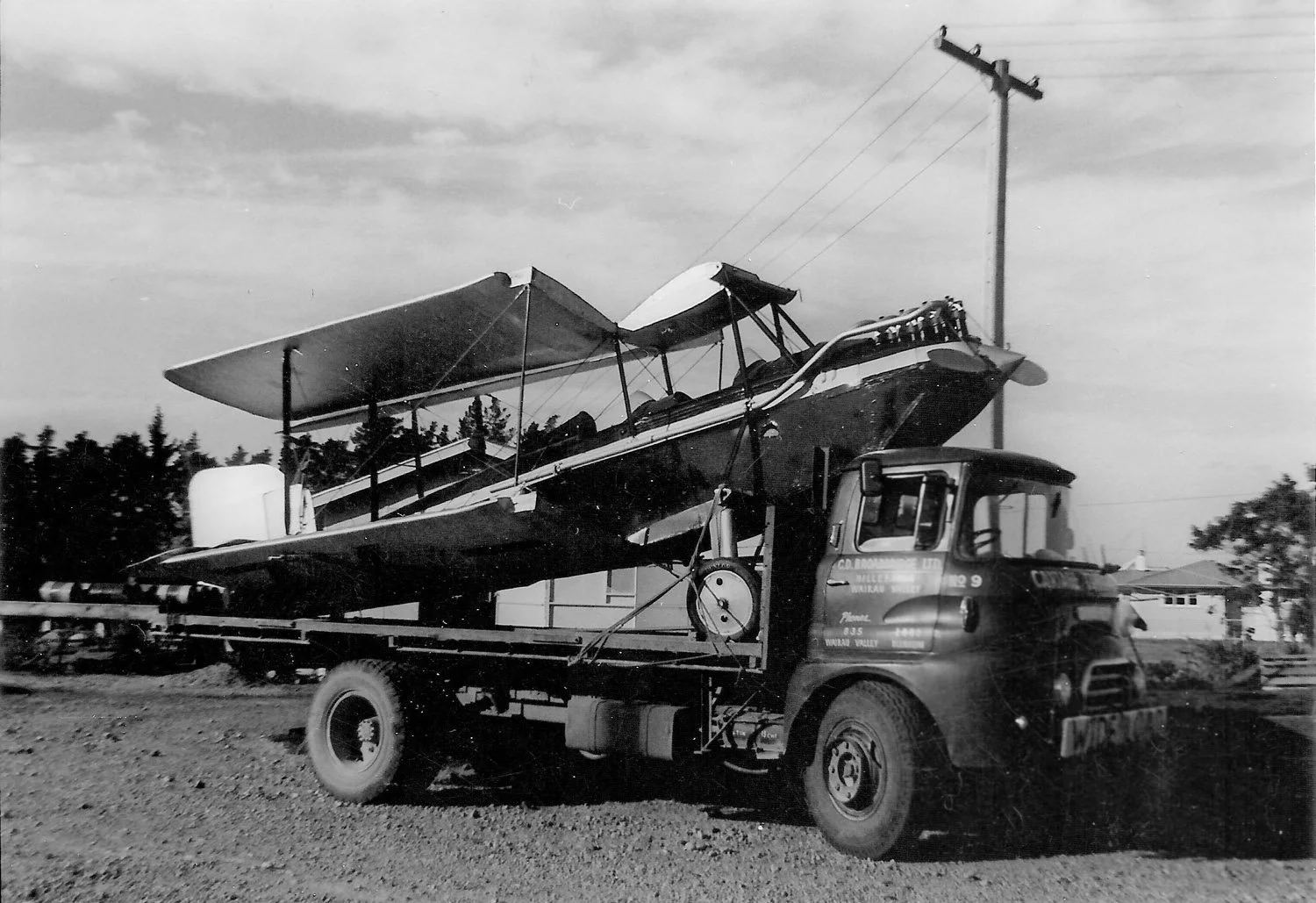


Cyril invested in the Birch Hill Limeworks, even carting all the timber in from Murchison to facilitate the construction of the plant. By the late 1970s Broadbridges owned the limeworks outright, securing their source of supply. Another milestone was the appointment of the company, by Caltex, as the rural distributor for their oil products.
1964 saw a fifth (and last) Austin enter the yard. An S model Bedford, and Leylands were also pressed into service during the fifties and sixties.
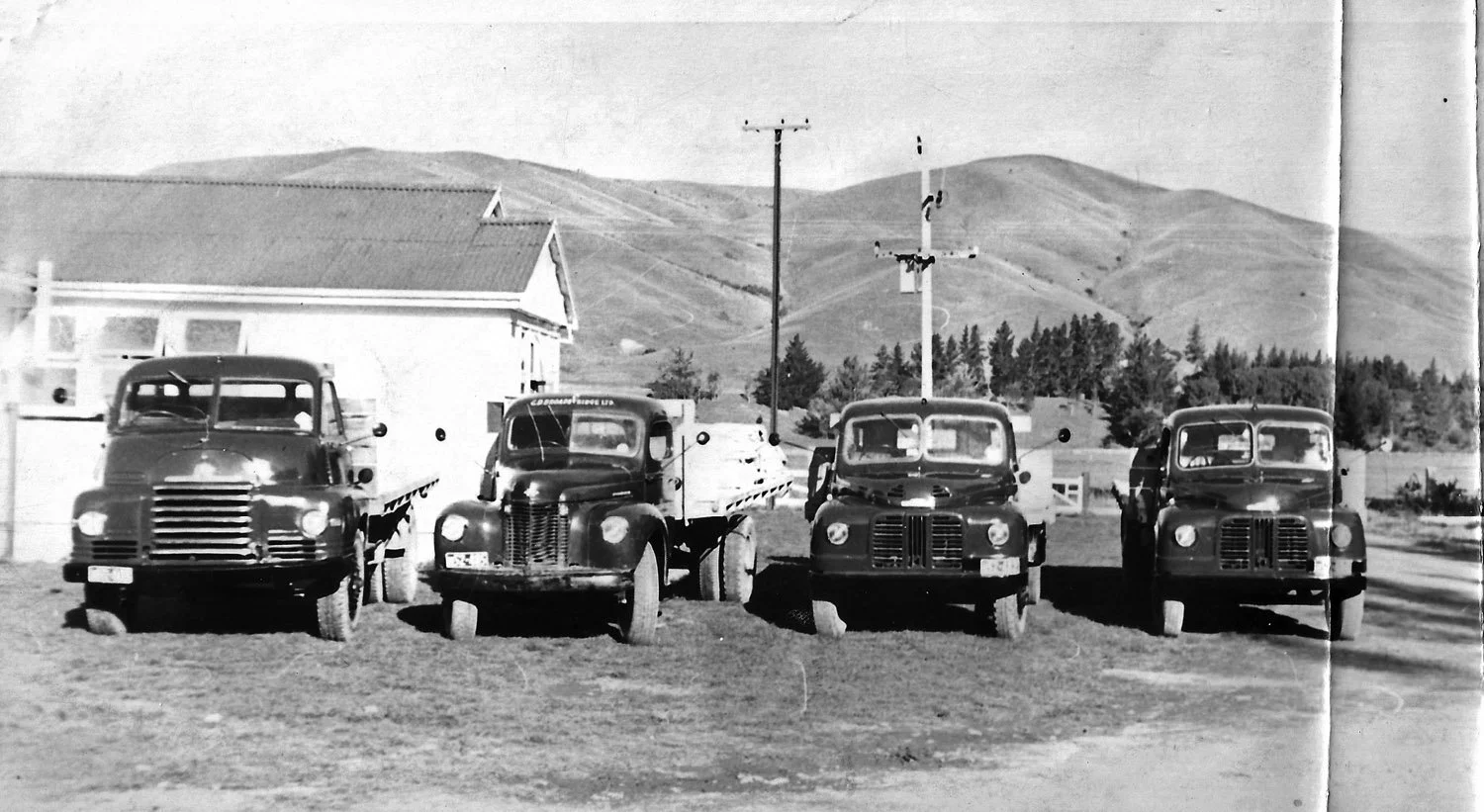
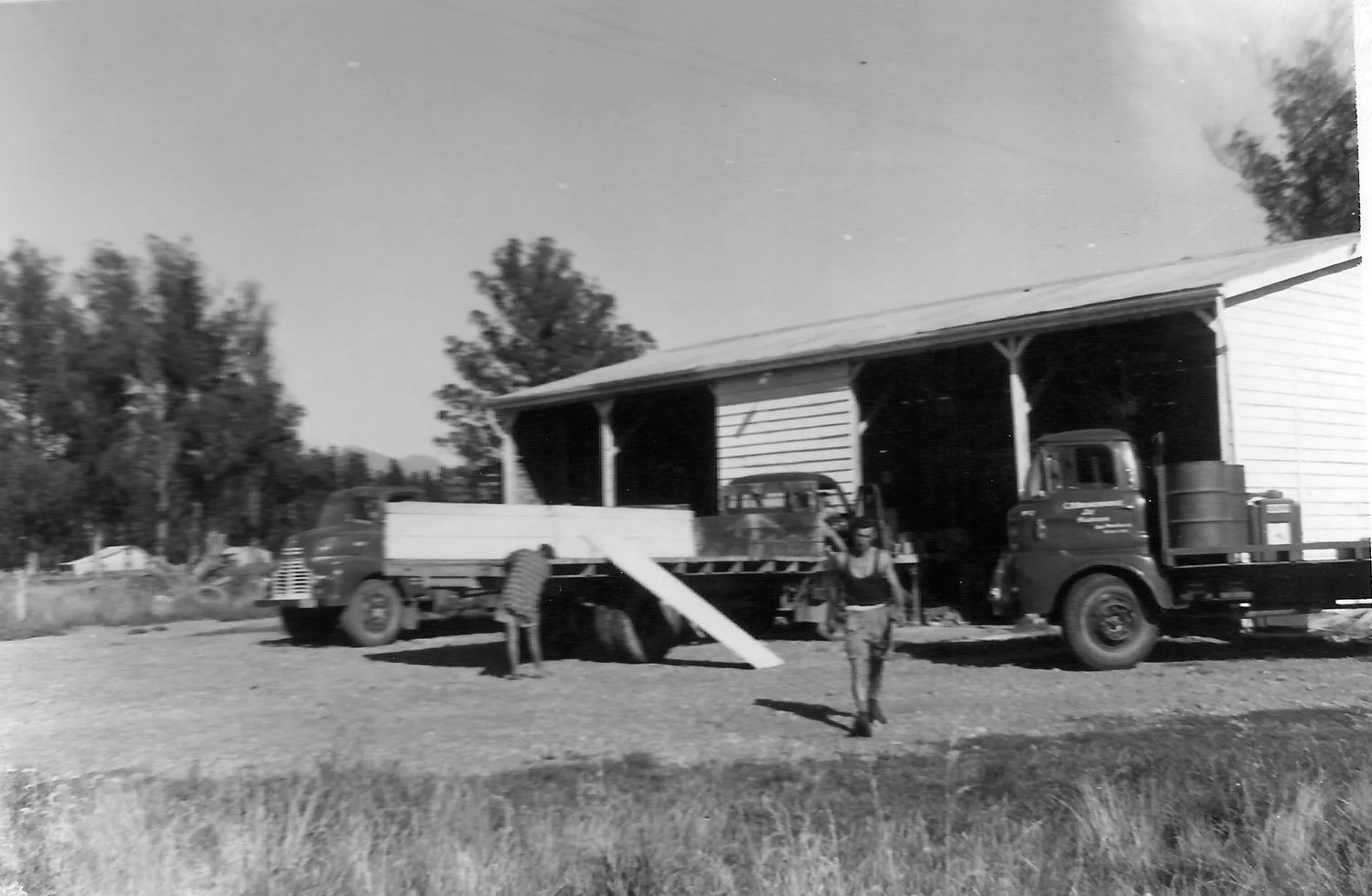
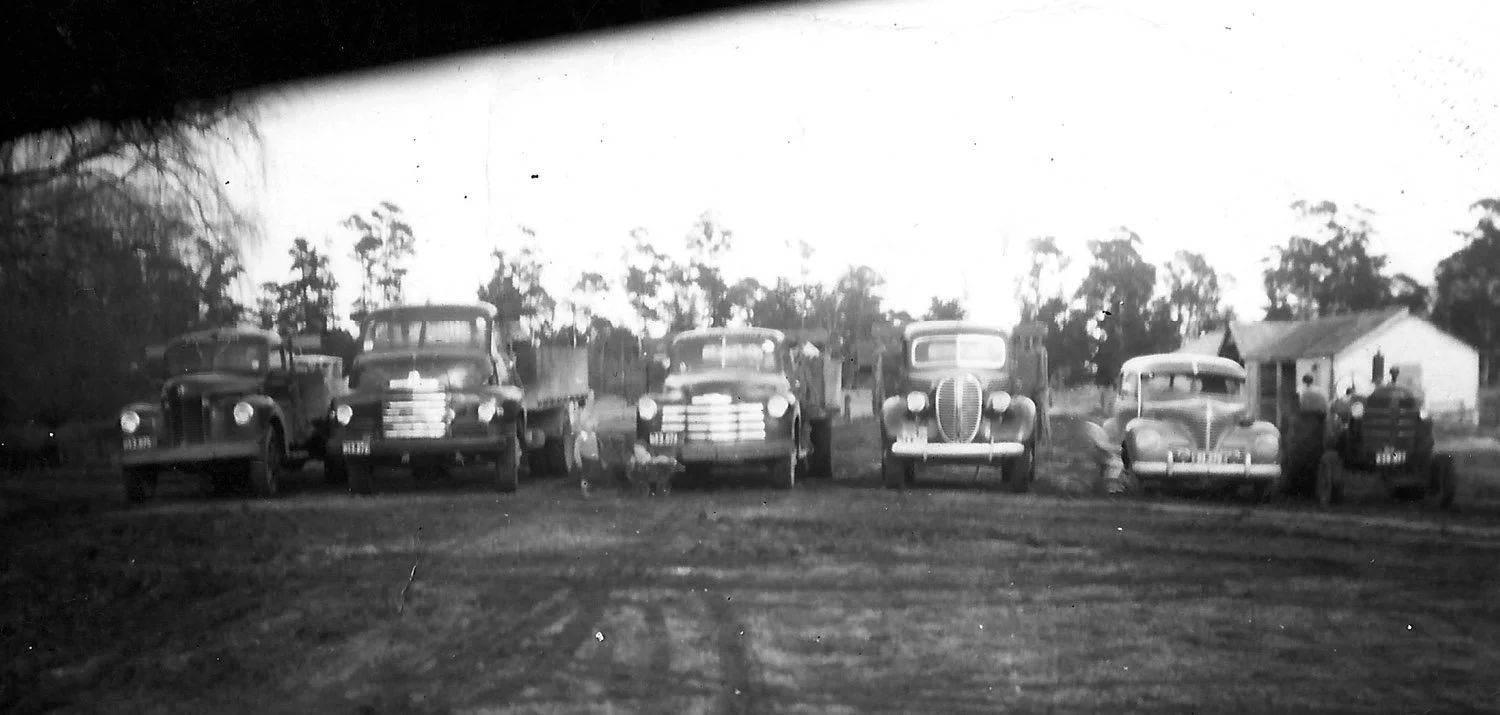
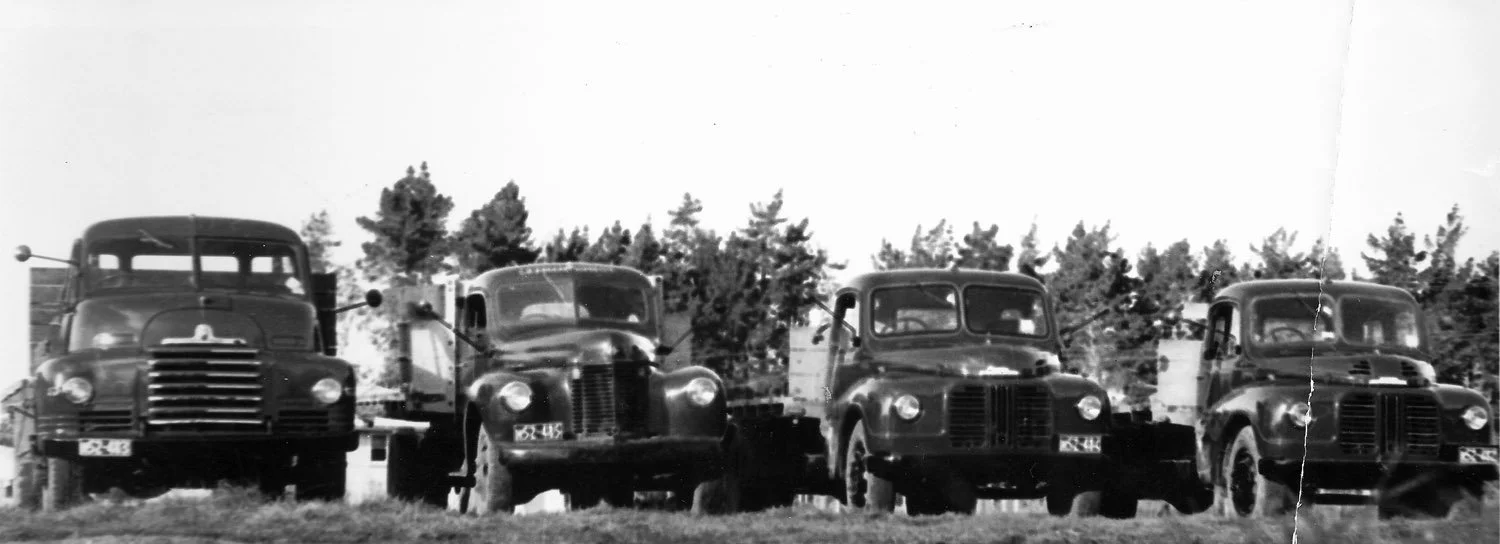
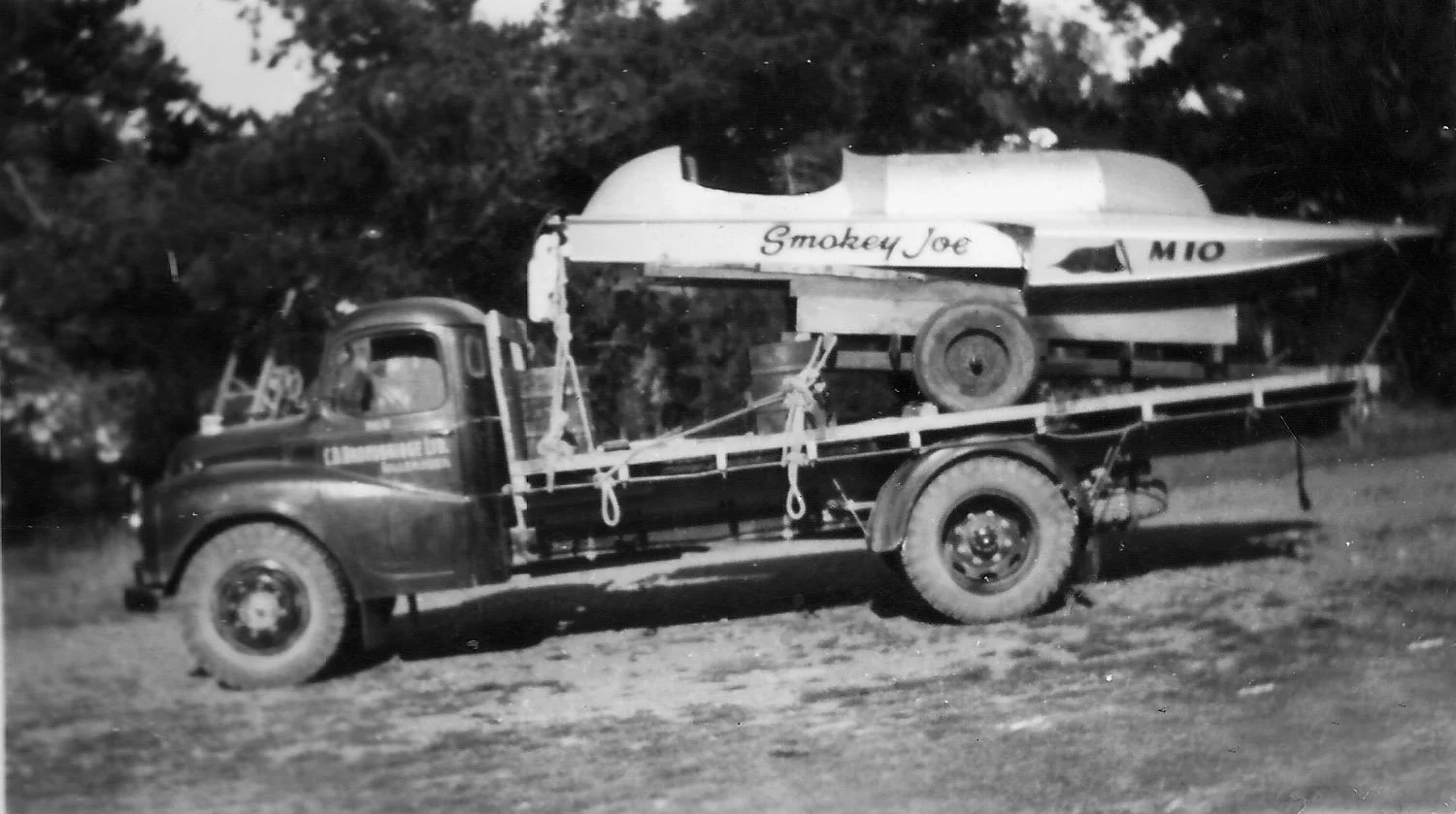
The major change at the end of this period was the opening of the yard in High Street, Renwick in 1971. Getting permission to locate some of the trucks in Renwick was the usual rigmarole of court appearances and heated opposition, not only from their competitors but also the local branch of the Road Carriers Association. This yard is not so fondly remembered, as there was no toilet facility.
Fire fighting background
Remembering his days in the RNZAF, and noting the need for a fire service in the Wairau Valley, Cyril was instrumental in creating the new Fire Brigade in 1960. Not only did he become heavily involved in the creation, but the company cut up one of their trucks and replaced the deck with a tank. This truck was then gifted to the local brigade. The fire station was, naturally, situated in the front of the old Wairau School yard.
Weir was to become a member of the volunteer brigade from 1968 to 1971, and ensures that any of his current staff who wishes to be involved with the volunteer fire service are actively encouraged and supported.
Bringing in the boys
Cyril and Hazel Broadbridge were doing well, with a modern fleet of trucks (for the era). The fleet totalled thirteen in all (TK Bedfords, D1000 Fords, Commers, a LAD cabbed Albion and 702 Austins), by the late 1970s, Cyril was looking to take a reduced role in the company, he was hoping one of the boys would step up to the mark and take over running the operation. It must have come as quite a surprise when three put their hands up.
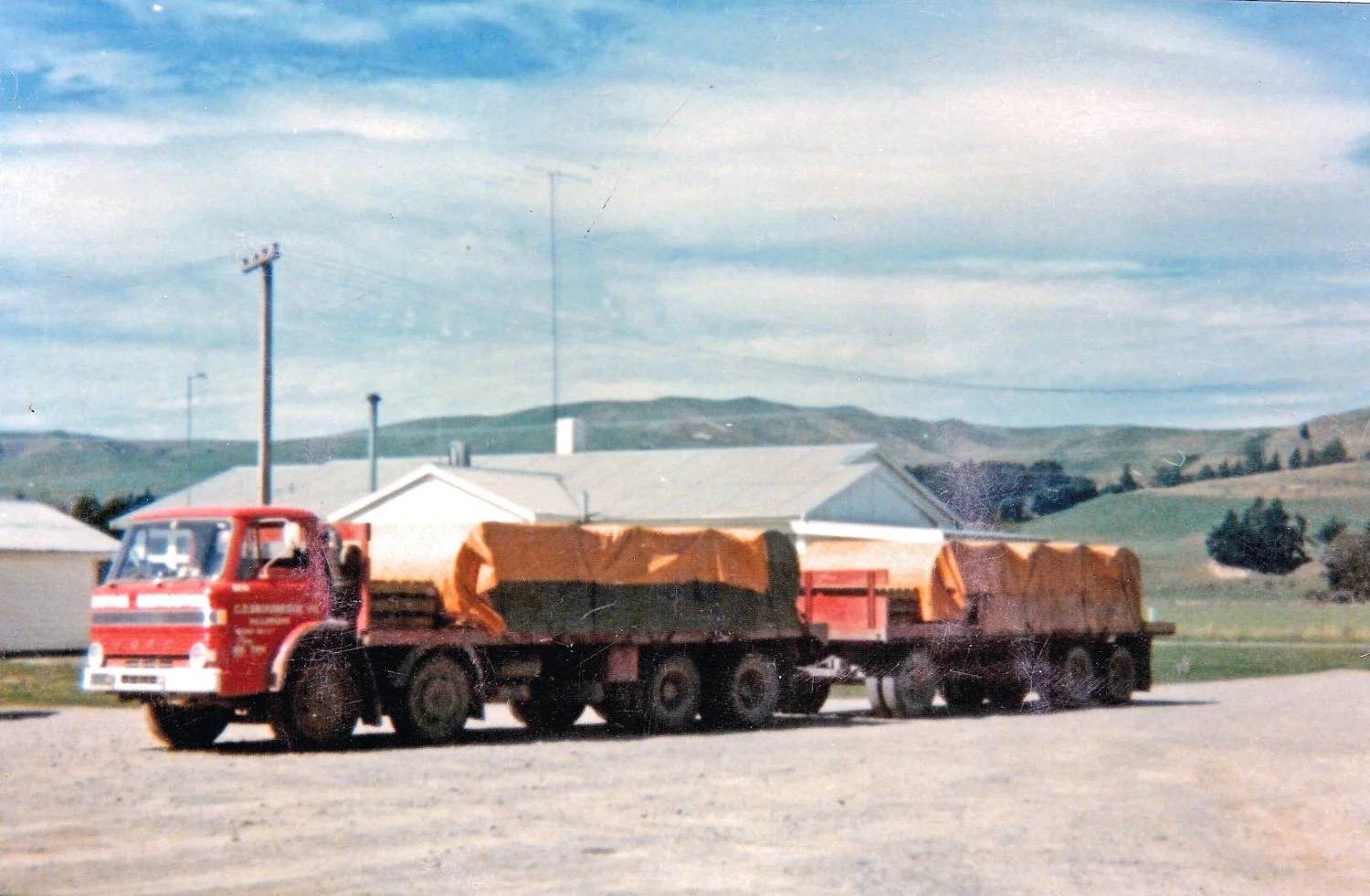
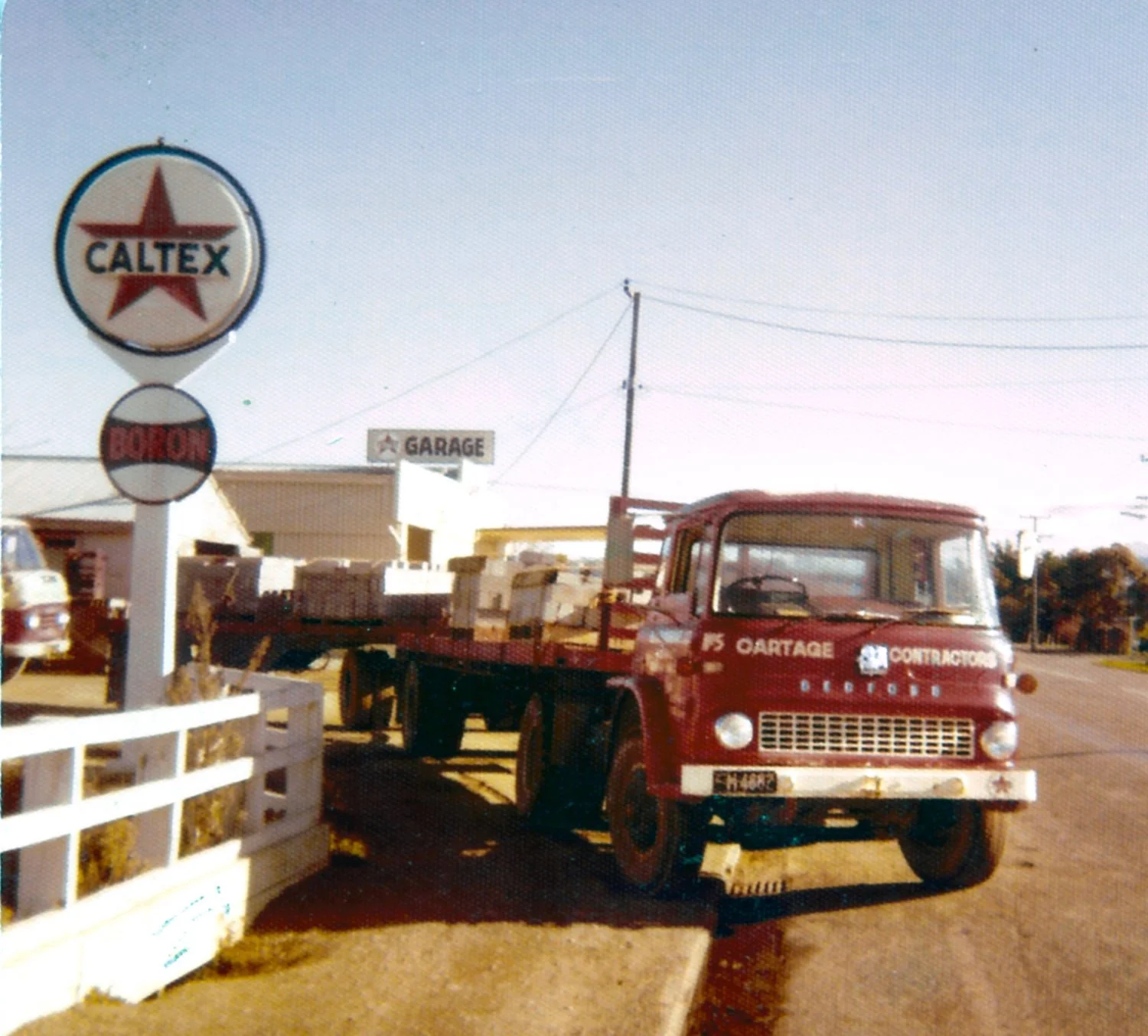
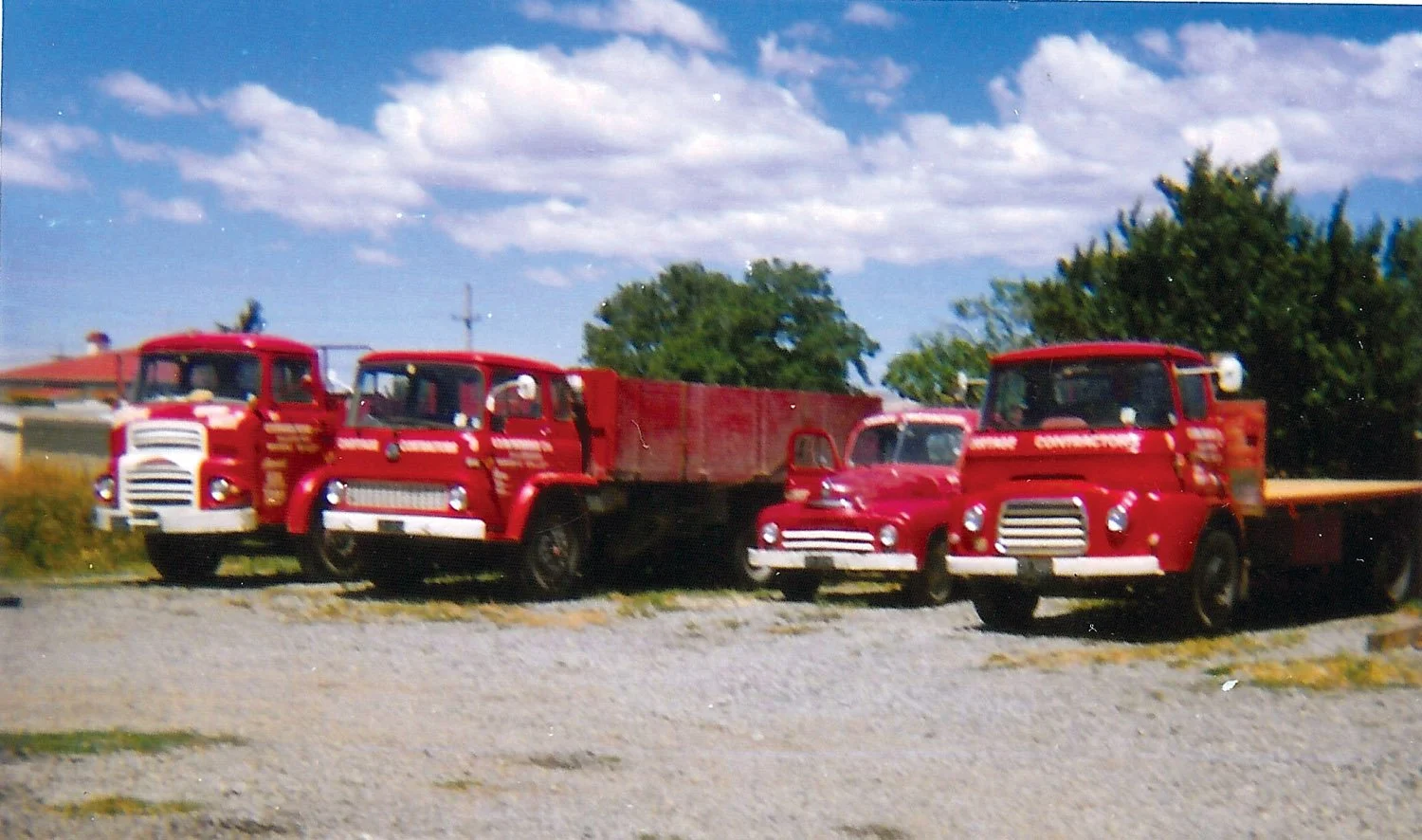

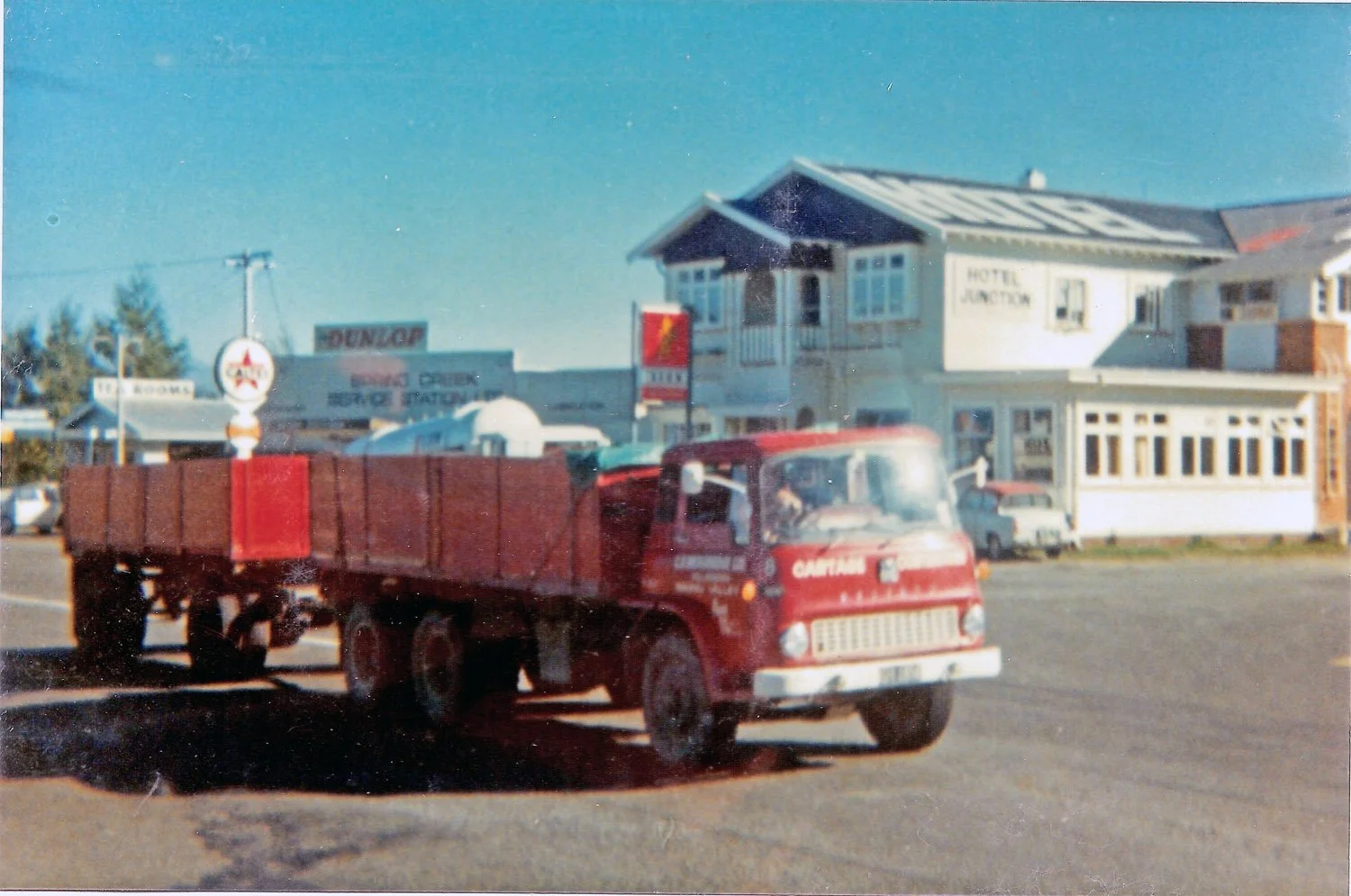
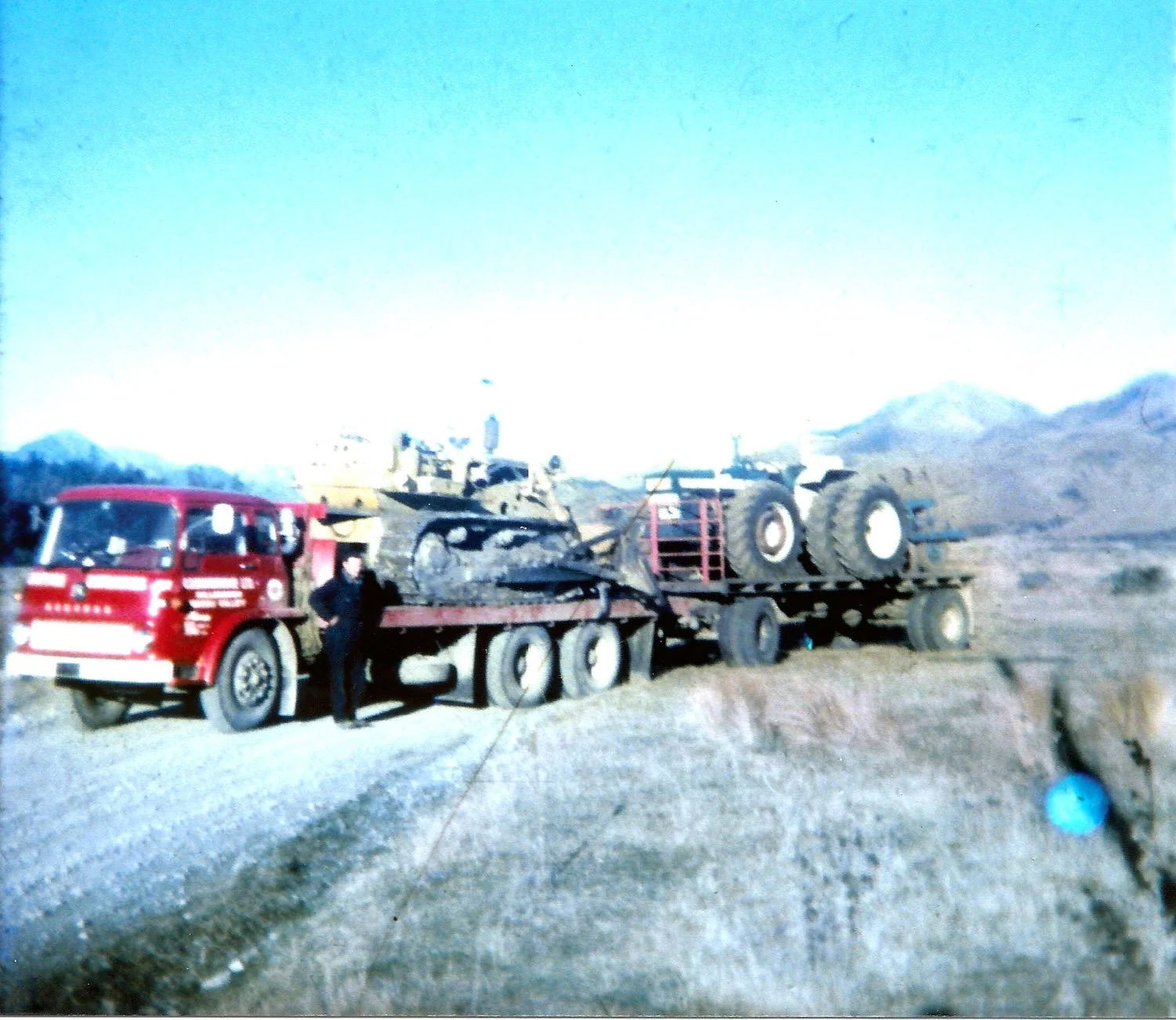
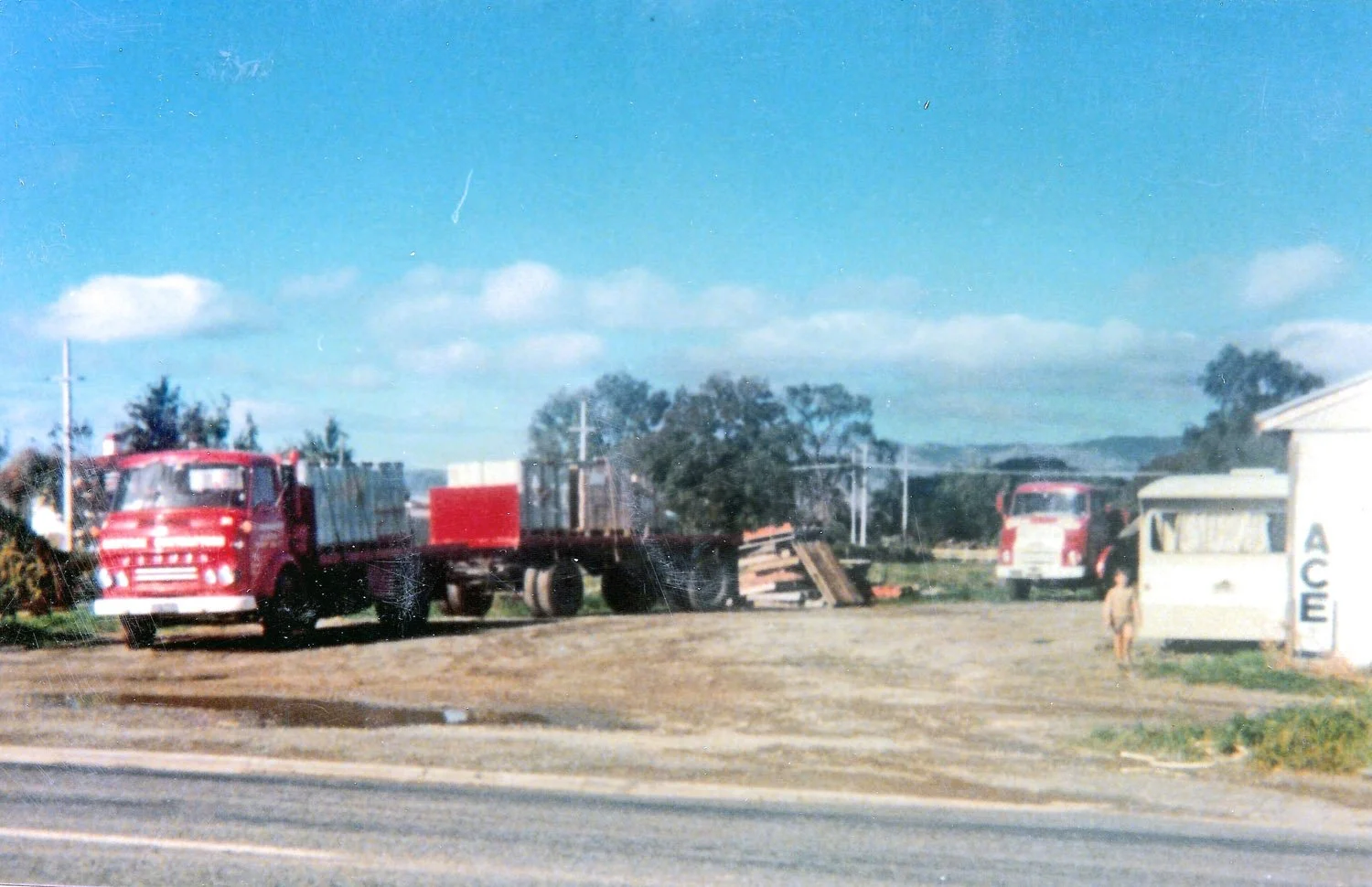
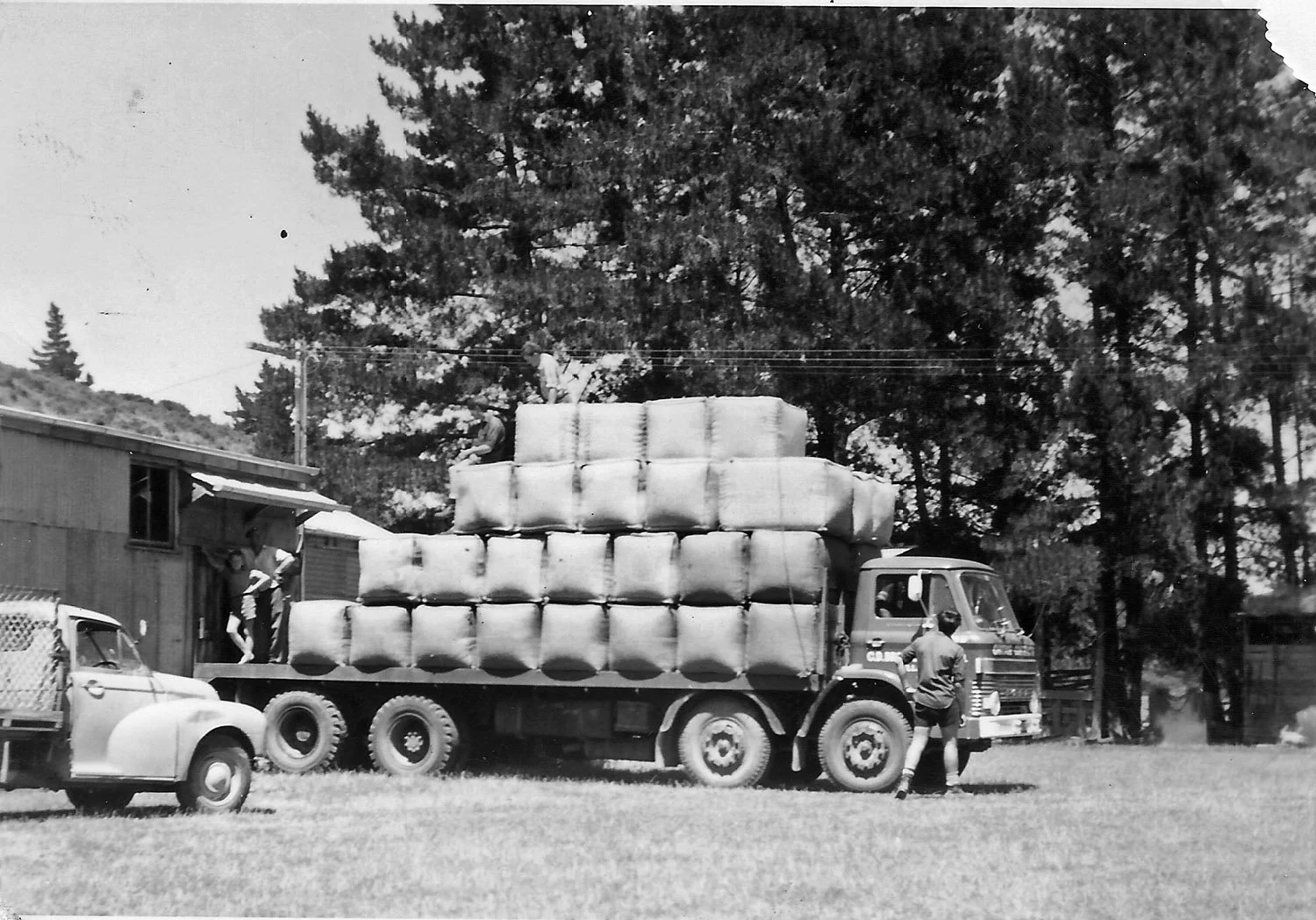
As Weir remembers, history repeated. Cyril was not about to hand the business over to the boys on a platter, and made them buy their way in. To raise his share of funds to buy into the business, Weir had to sell his prized possession, his car, too.
Today Weir is the sole remnant of the original partners, but another brother, Leon, has stepped in to take a share of the business with Weir. Another brother, Ross, has stepped out of the business, taking over the waste operations from Broadbridges and operates his own successful business under contract to Fulton Hogan. The two businesses work closely together sharing staff, maintenance and joint contracts.
Bringing in the big gear
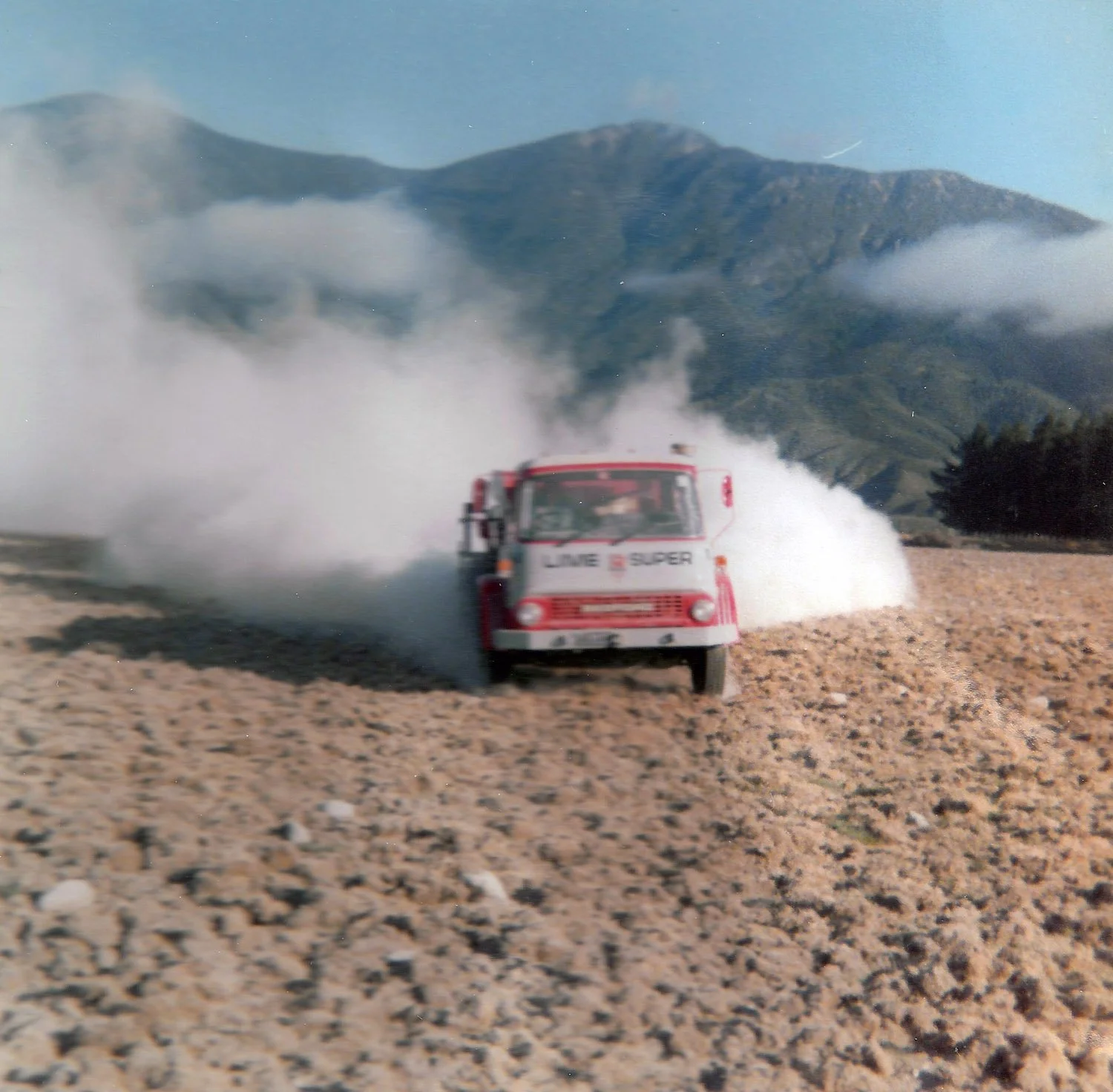
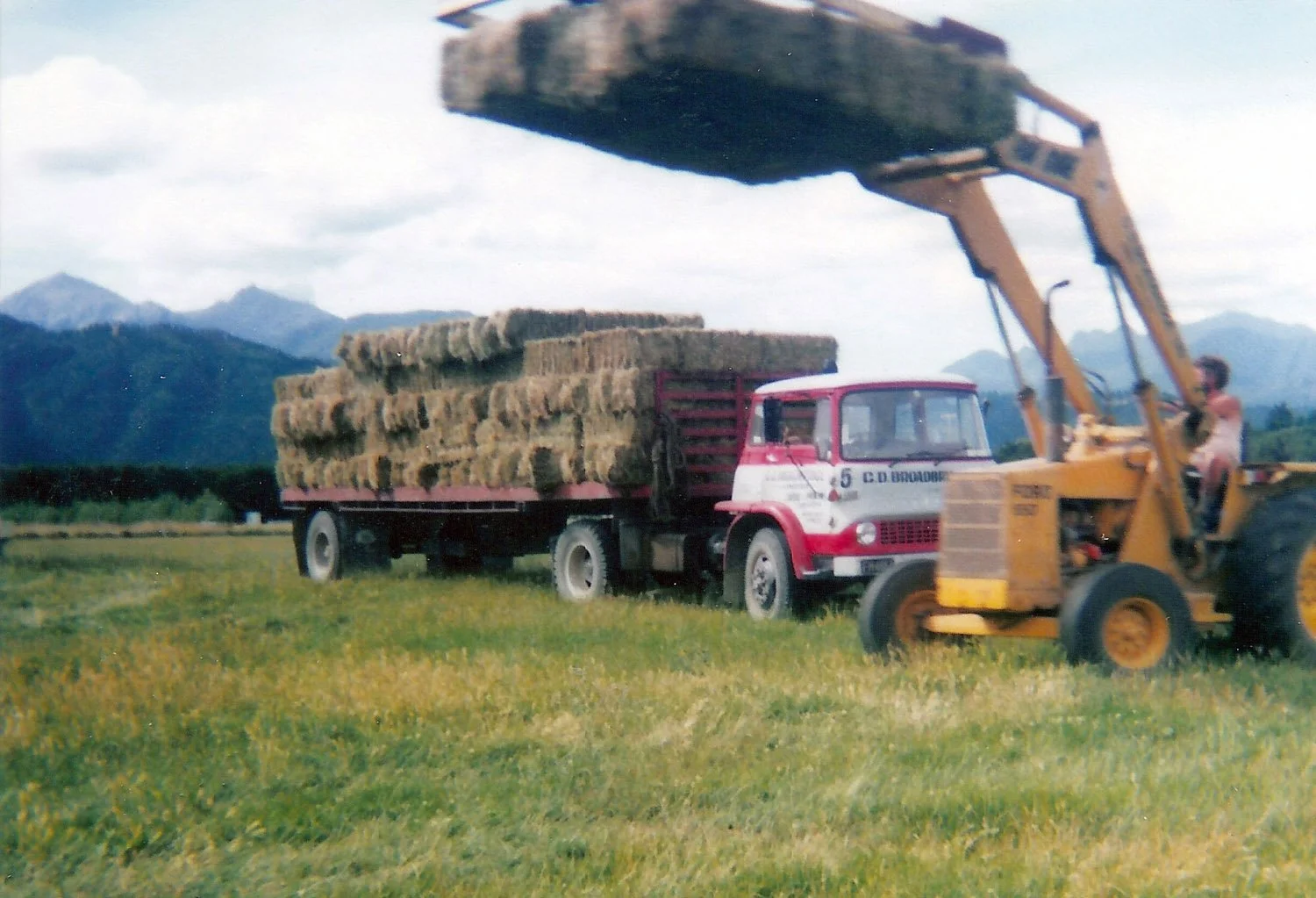
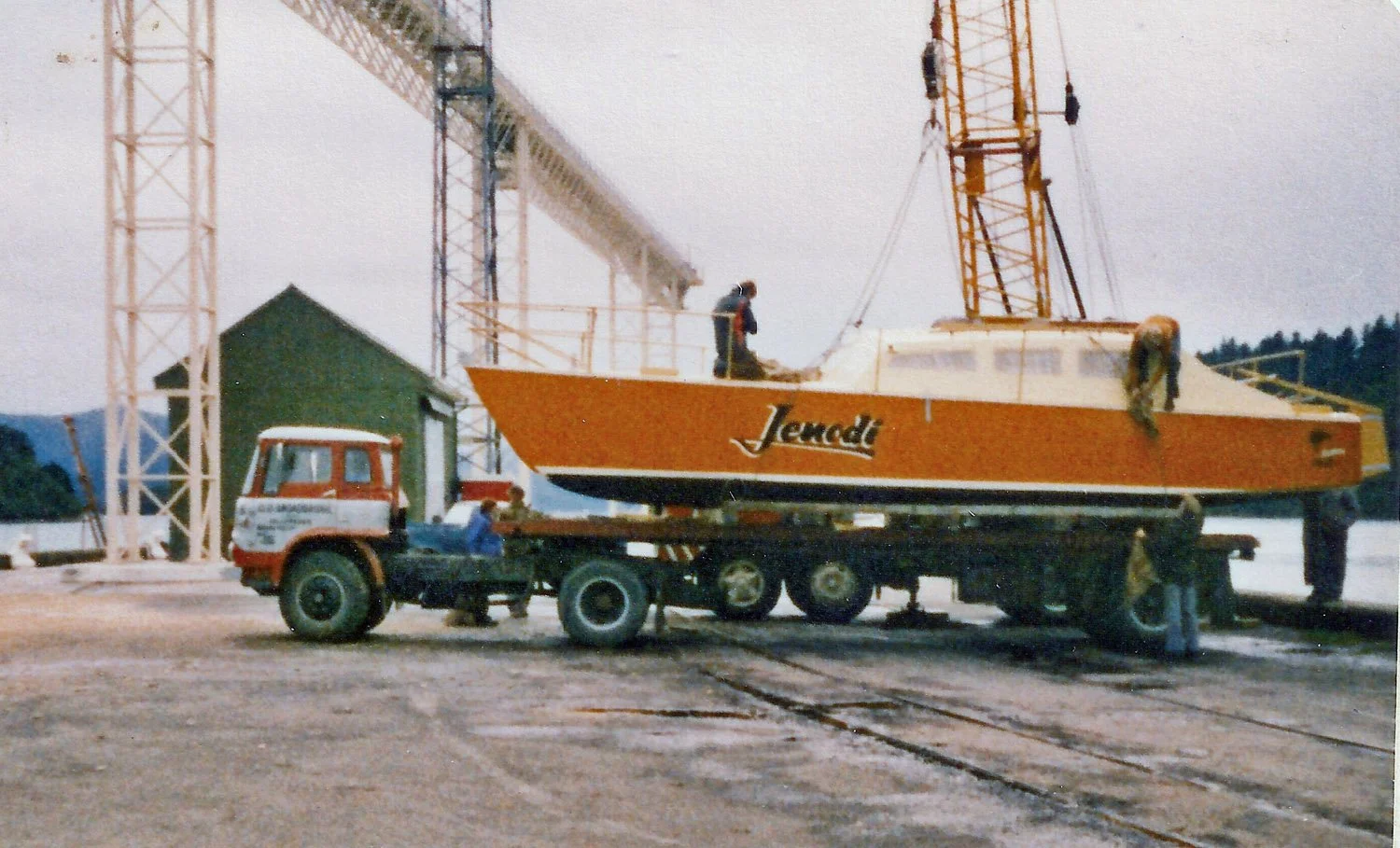
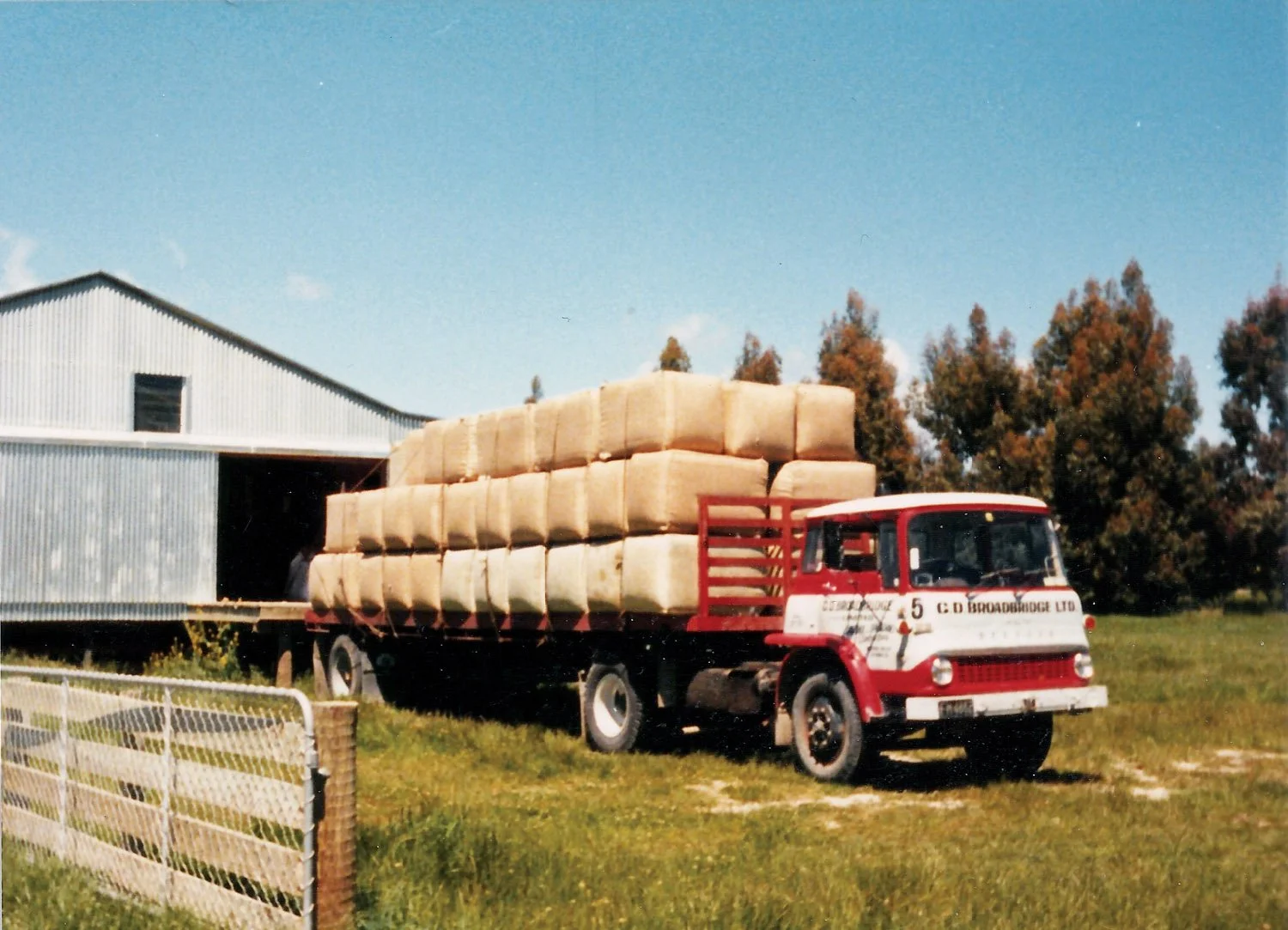
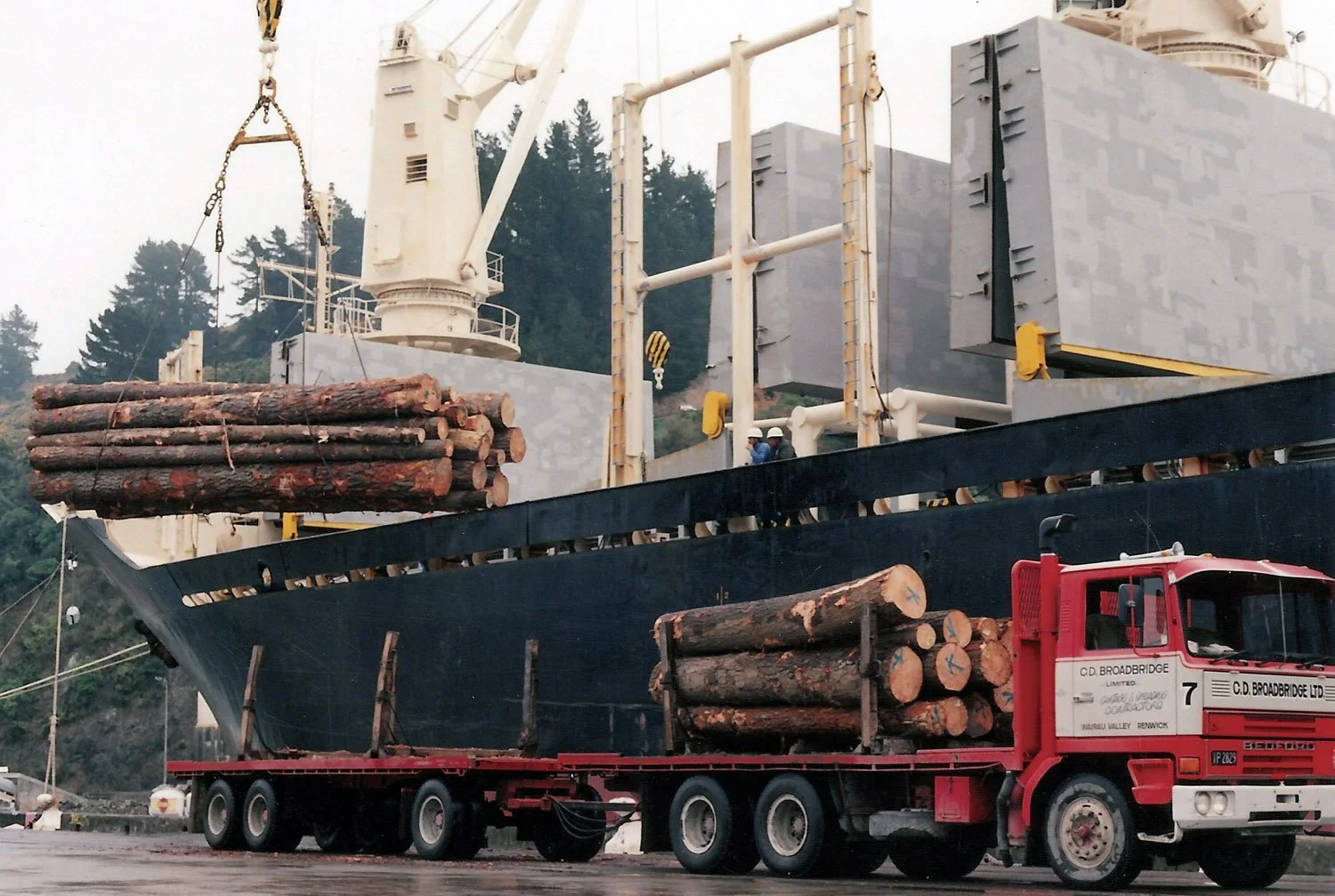
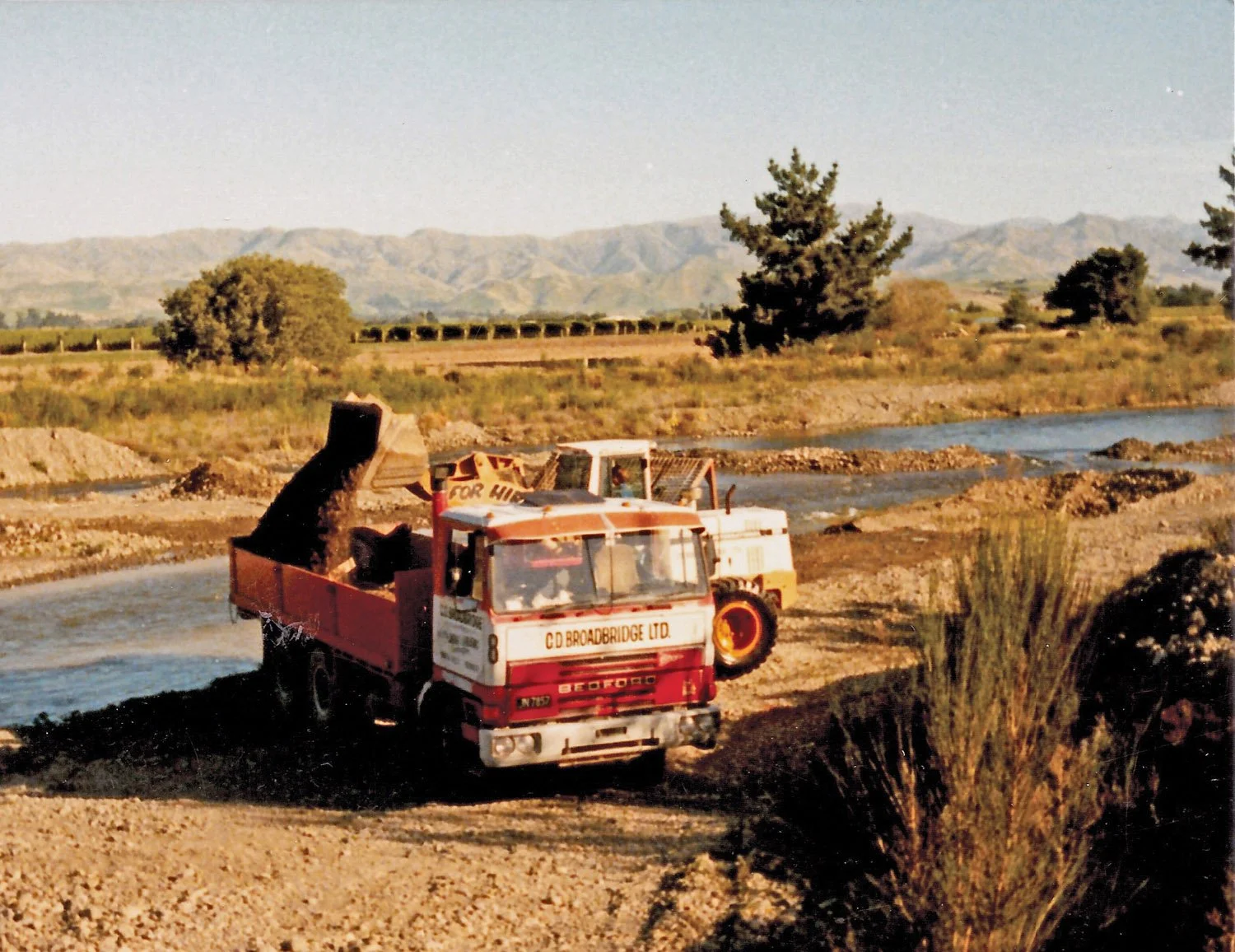
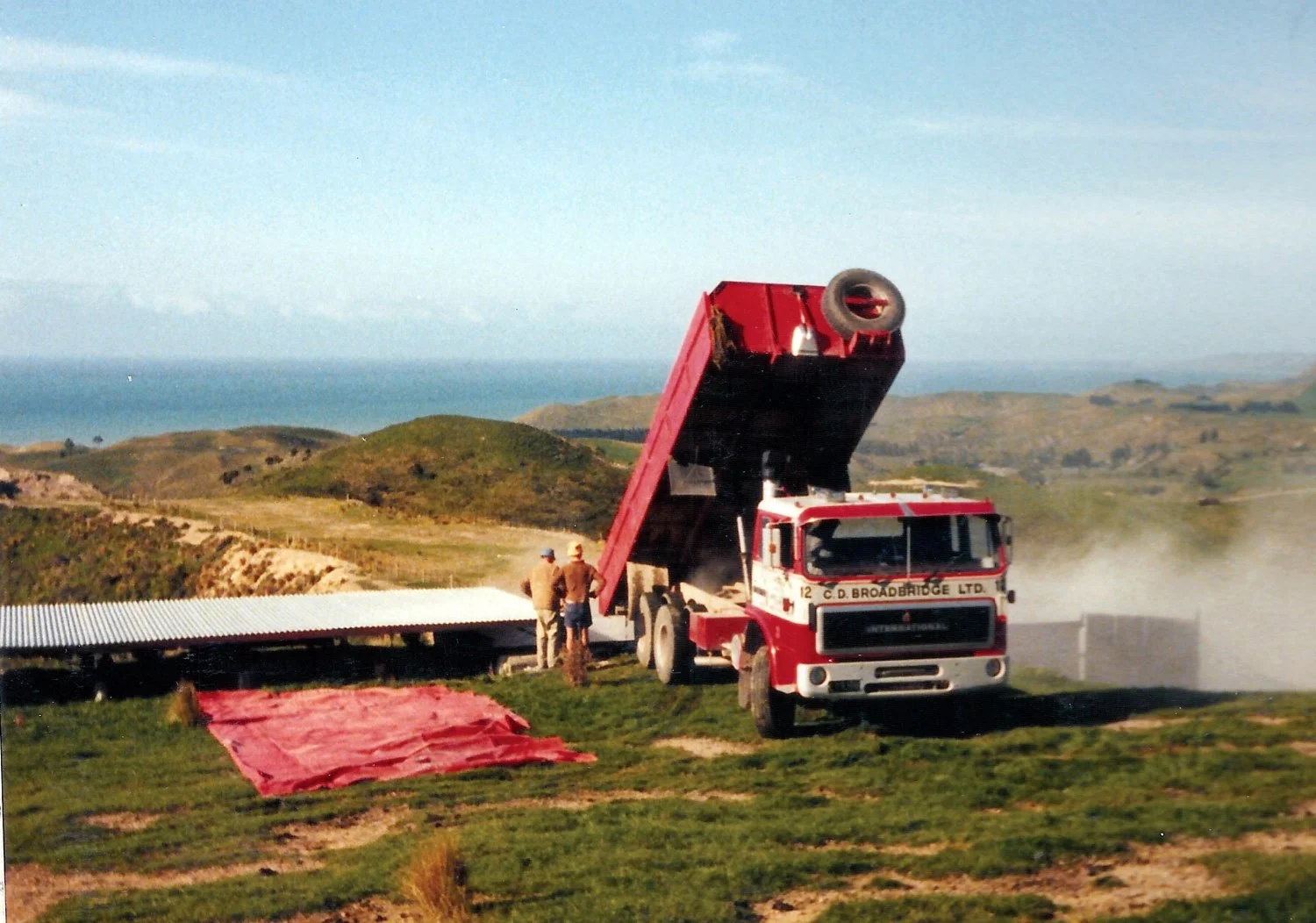
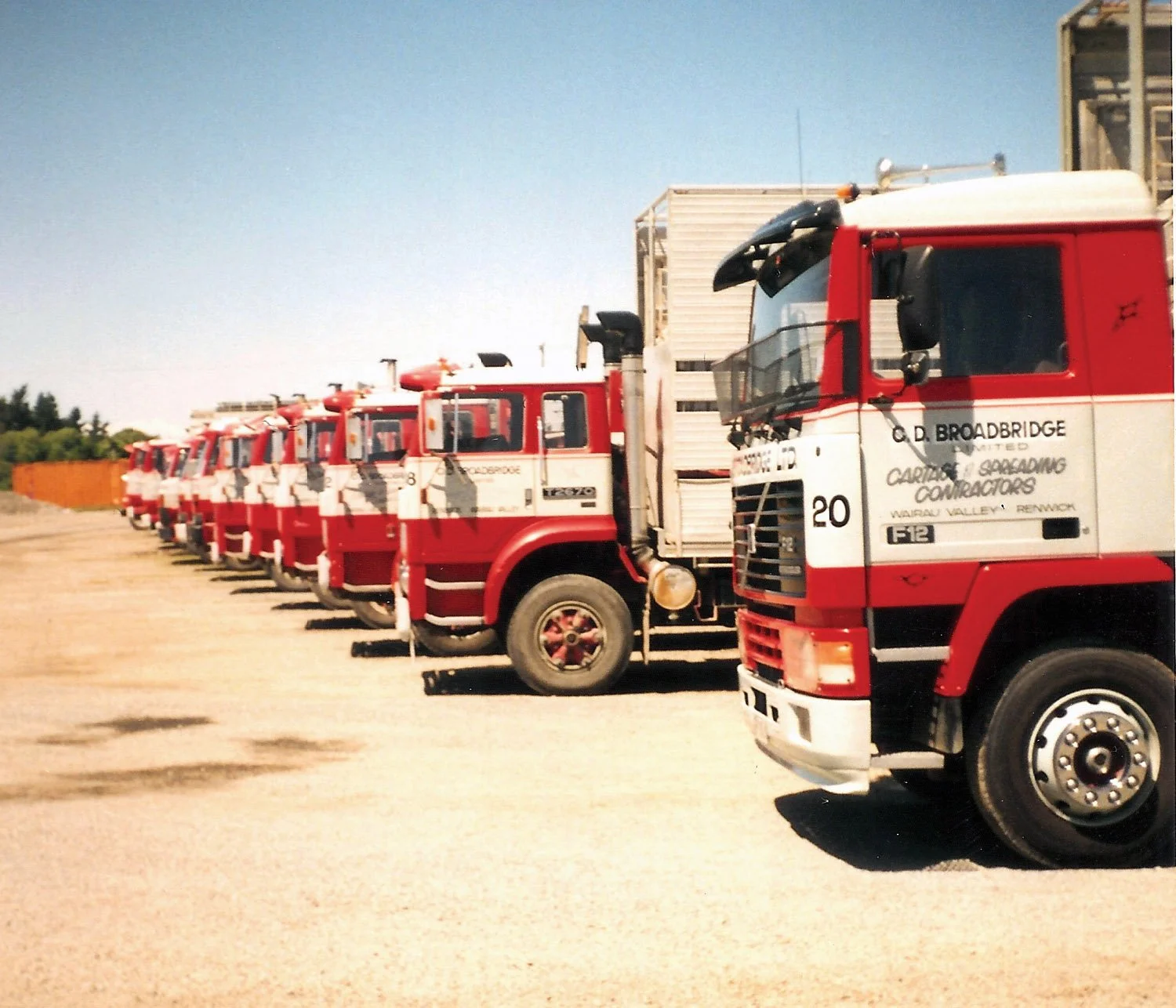
The late seventies the period when trucks grew from the size of the humble TK Bedford four wheeler, into the larger, more productive, units we are familiar with today. Although limited to 39 tons during this period, the first big truck was also a Bedford, one of the mighty TMs with the wide cab and the big 318hp V8 Detroit Diesel engine. The TM Bedford was the first of many to wear the now familiar red and grey Broadbridge colour scheme.
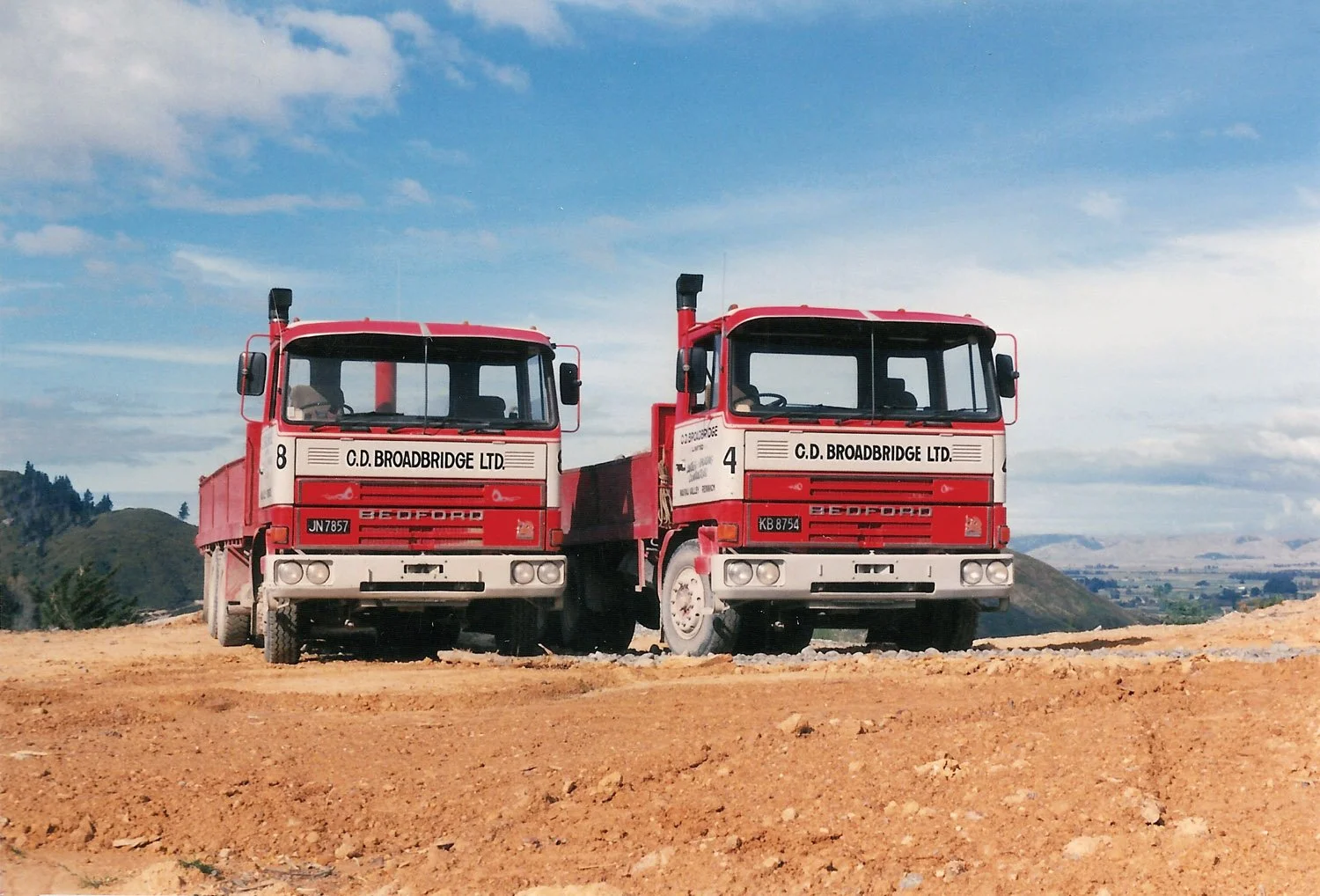
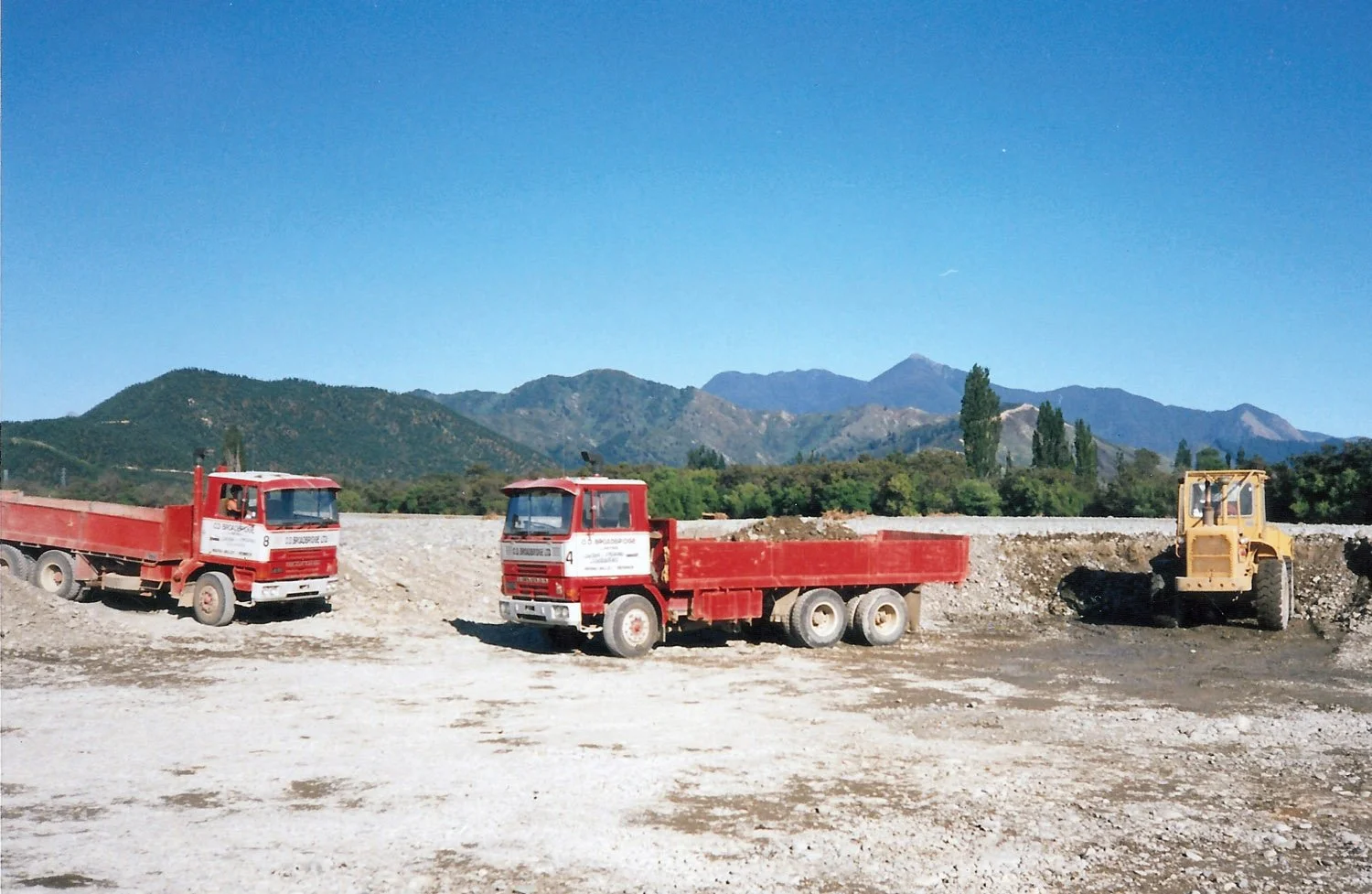
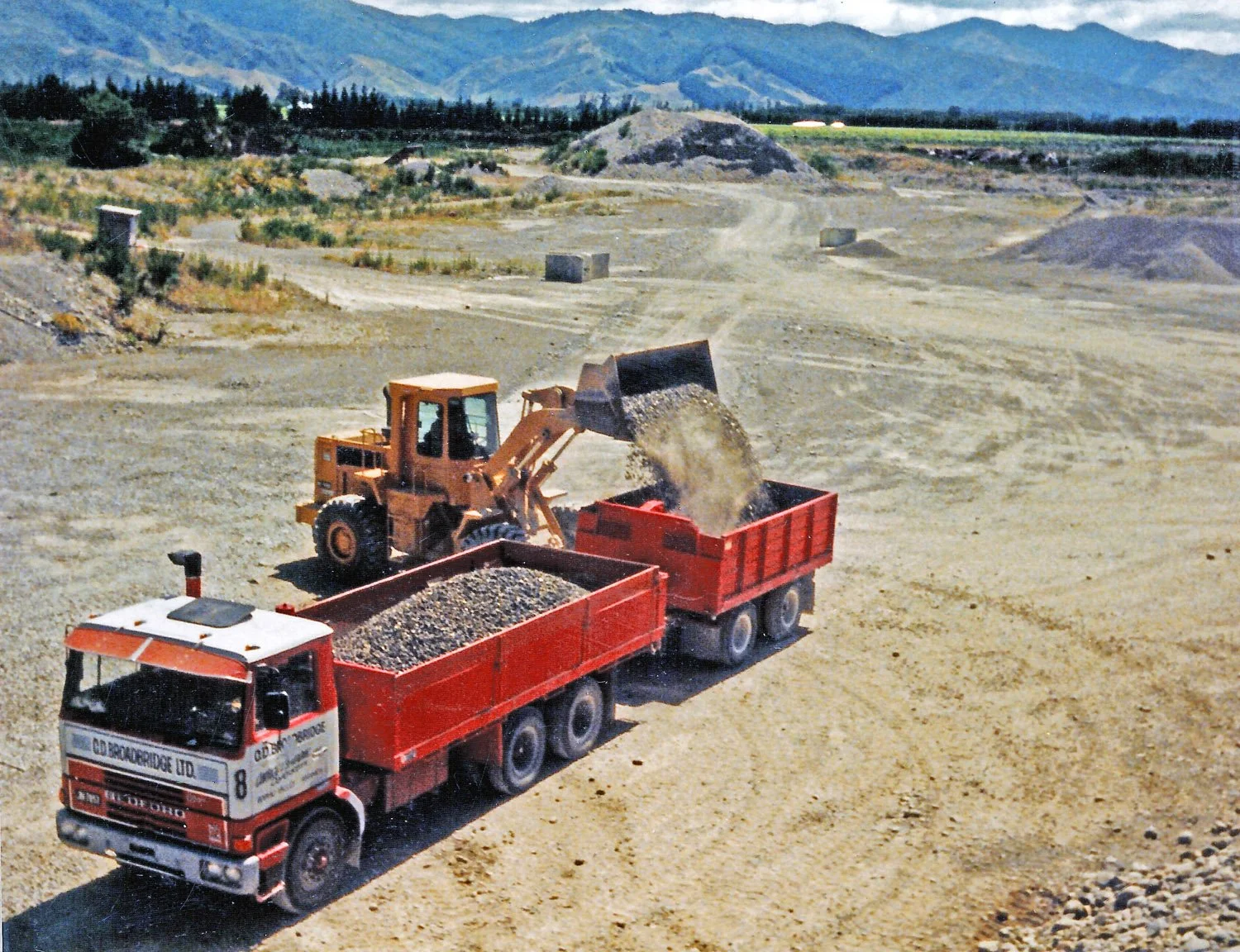
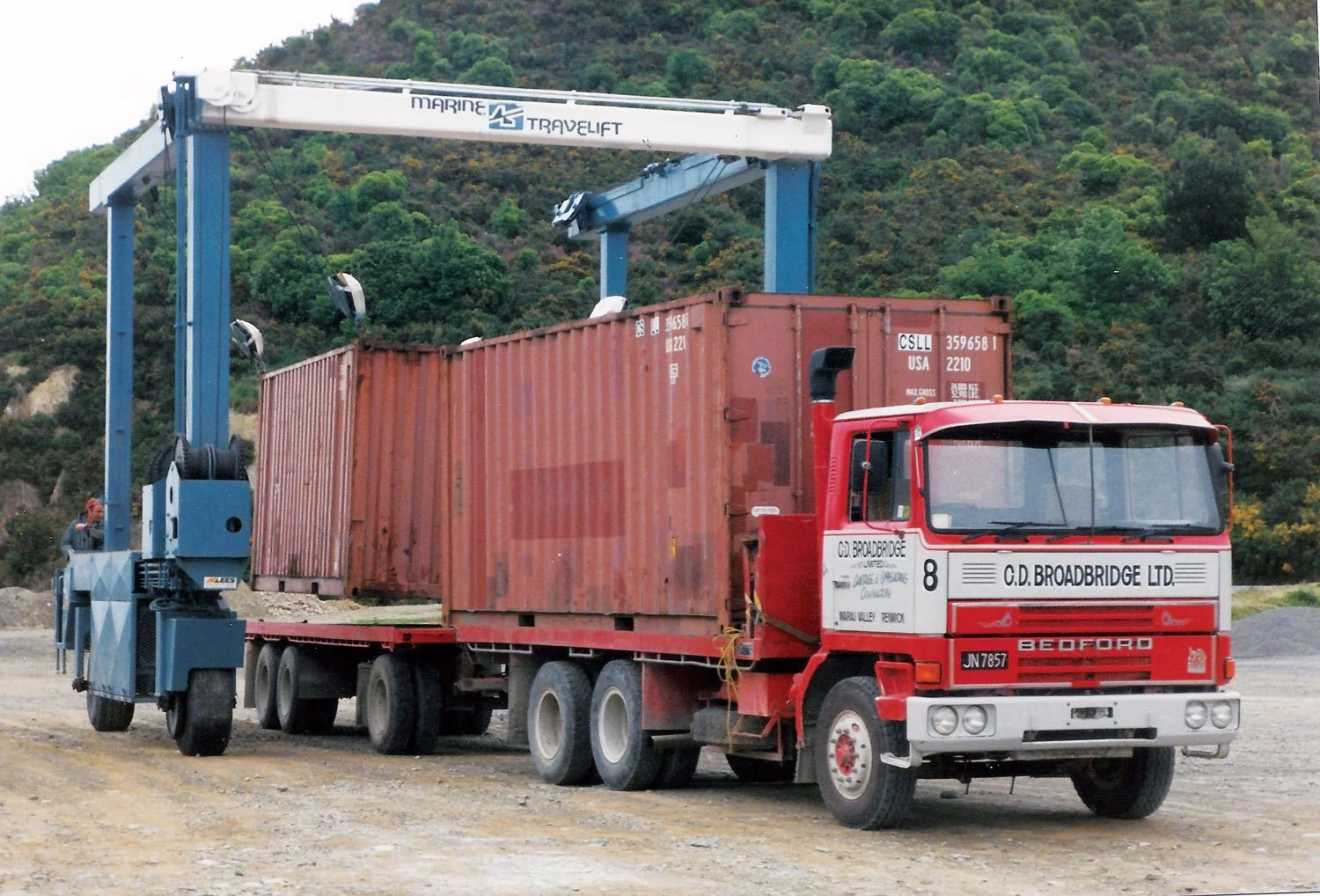
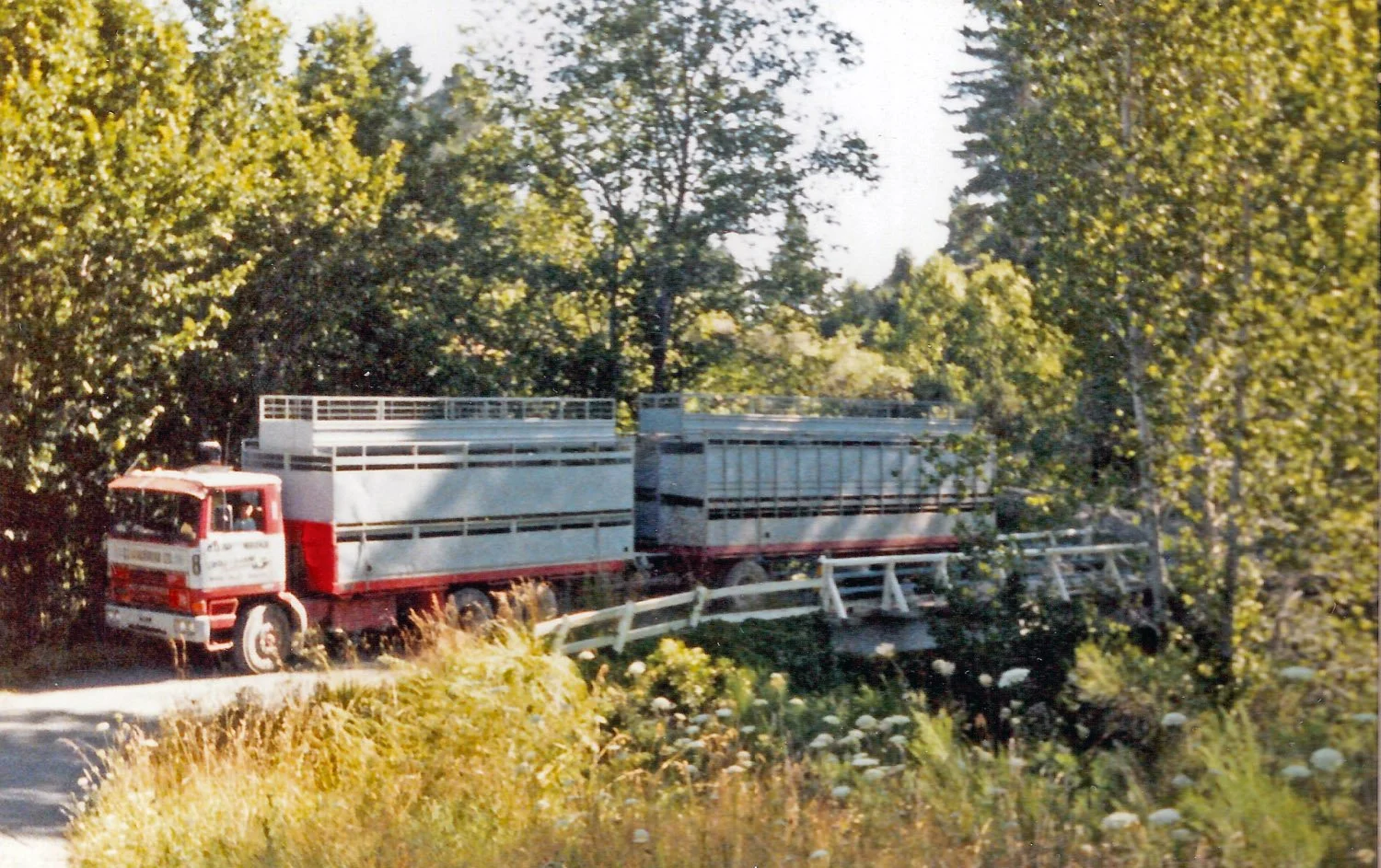
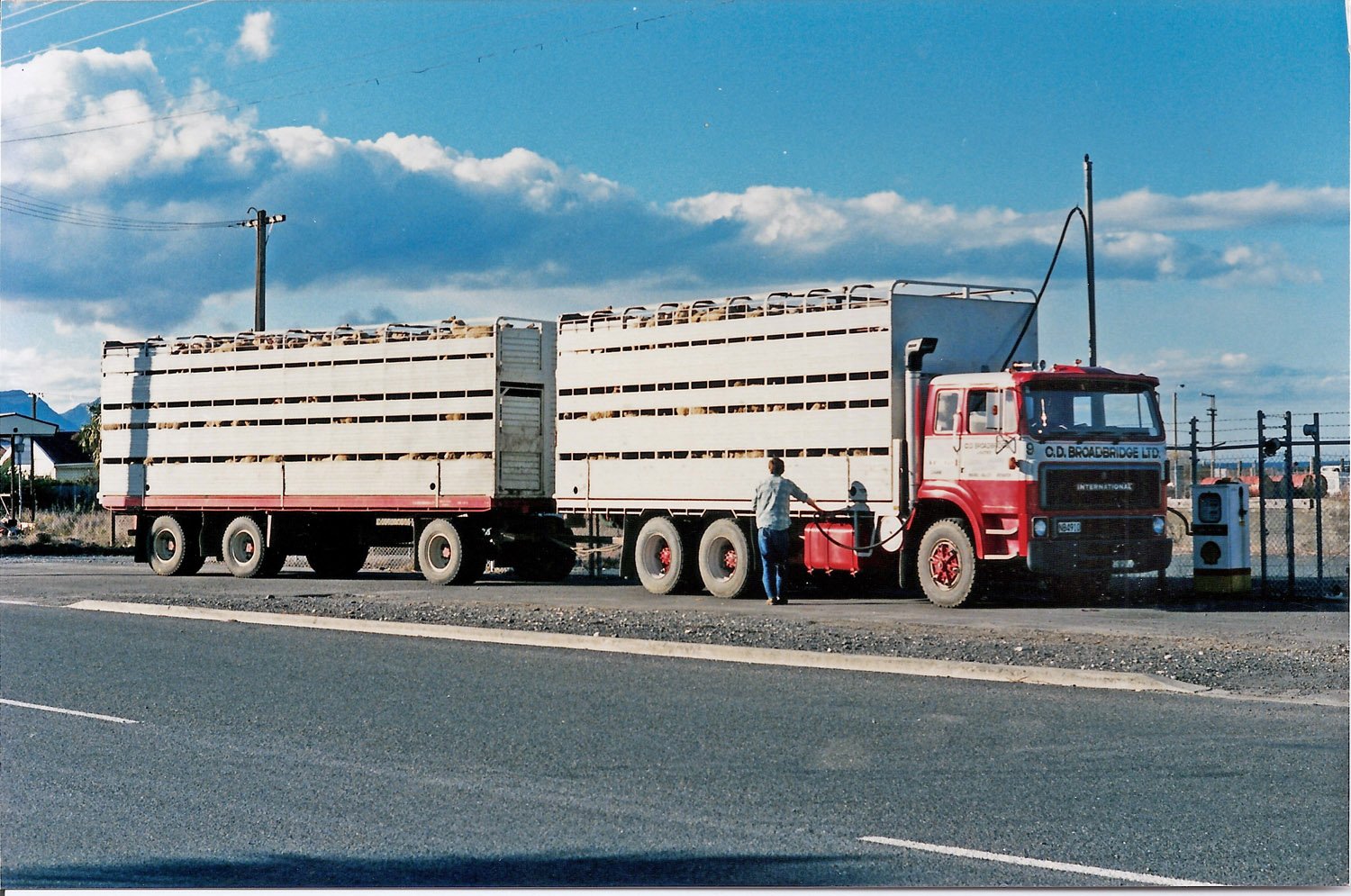
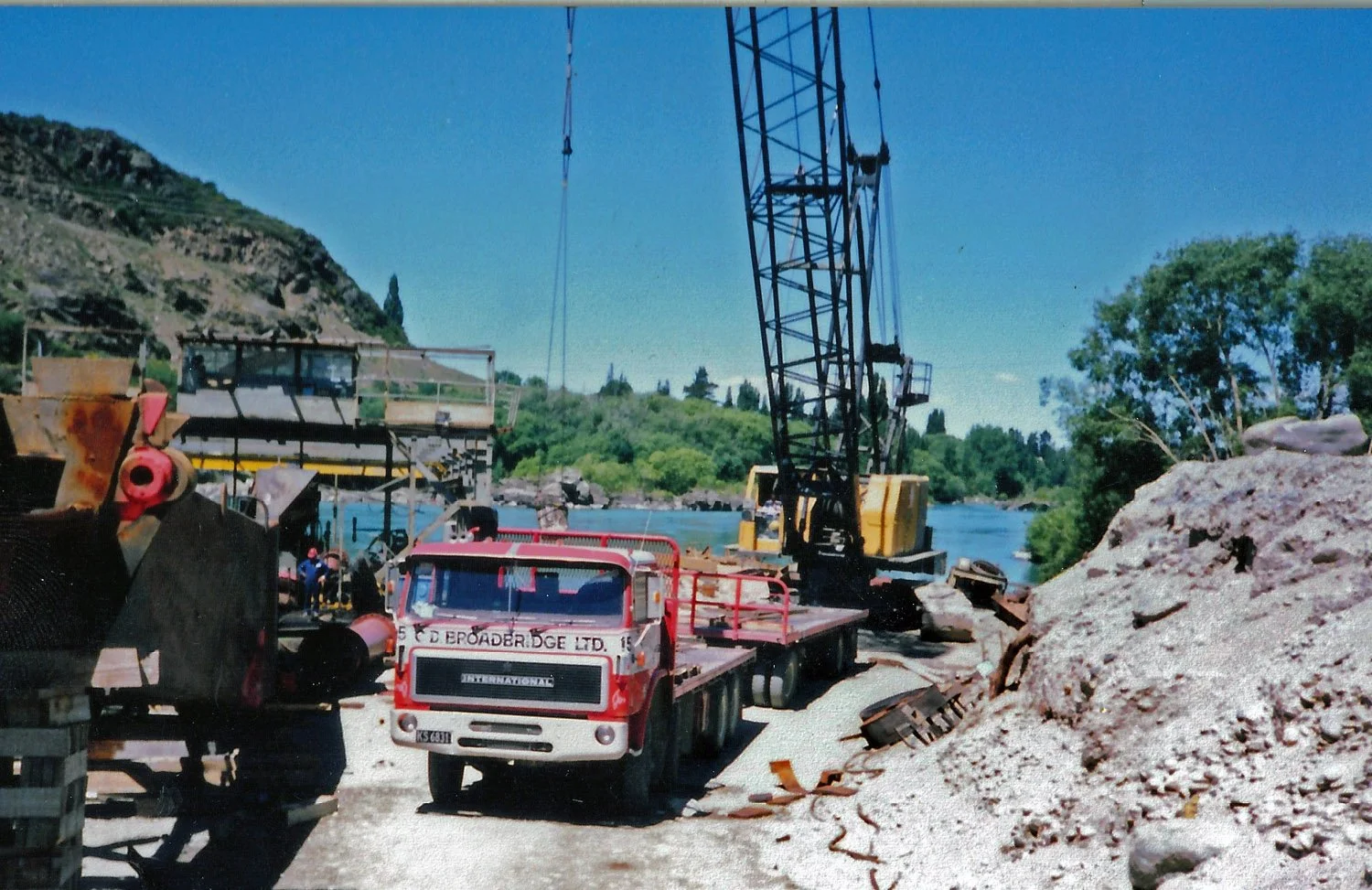
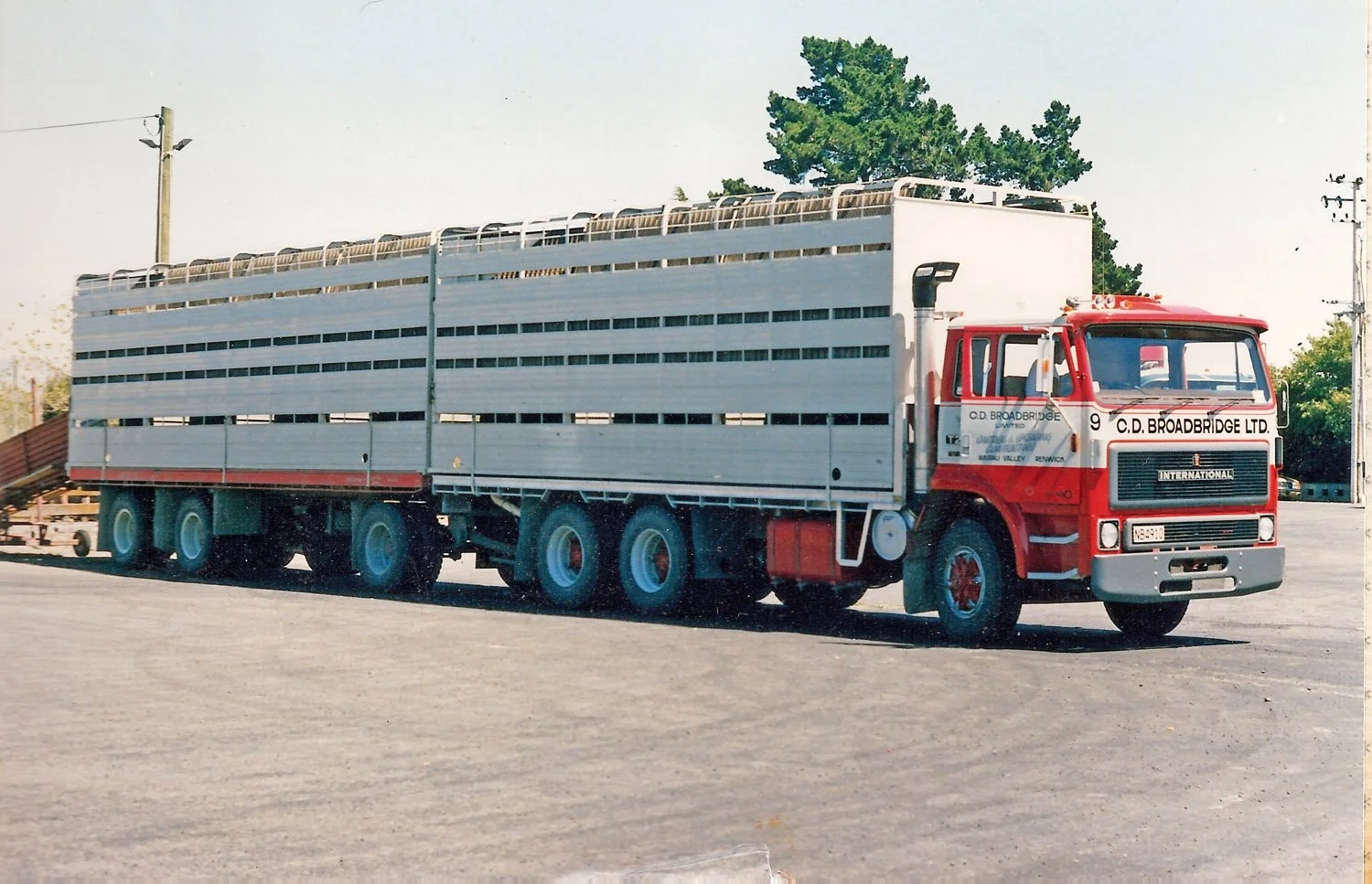
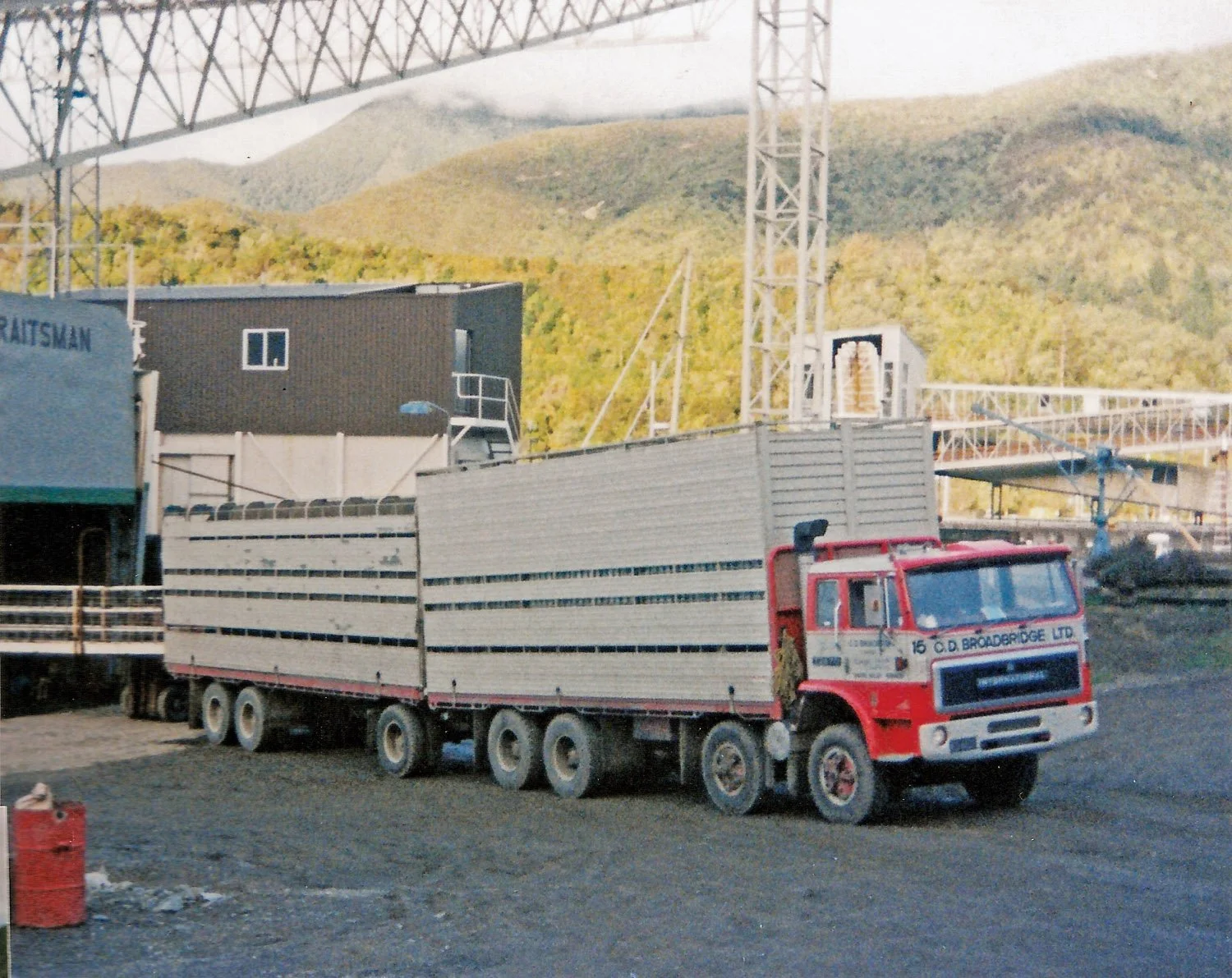
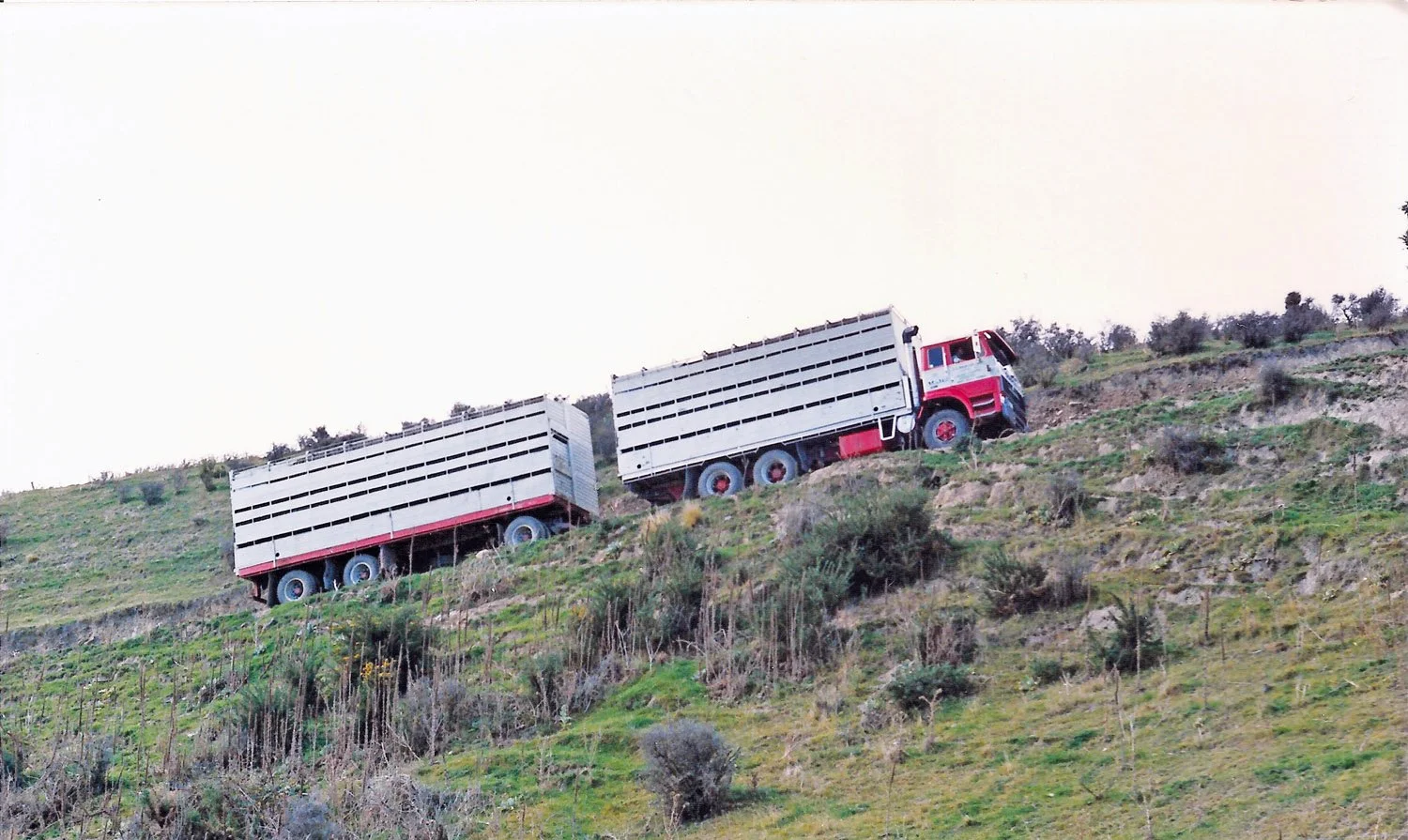
Not to be outdone, two years later, in 1979, a Cummins Seddon Atkinson appeared in the yard with the first set of 2/3 deck combination stock crates and a brand new trailer. International T-Lines also joined the fleet, first at 350hp and then 400hp when the bigger engines became available. Hino, Isuzu and Nissan would follow.


Yet another new yard
By 1983, the company had out grown its High Street location and the final yard relocation was about to occur. The new yard, located on State Highway 63 (the West Coast road), was almost entirely built by the company, and the staff, when work was quieter. Pictures show the trucks and machines being used as lifters, platforms and scaffolding during the erection of the workshops, offices and bulk store.
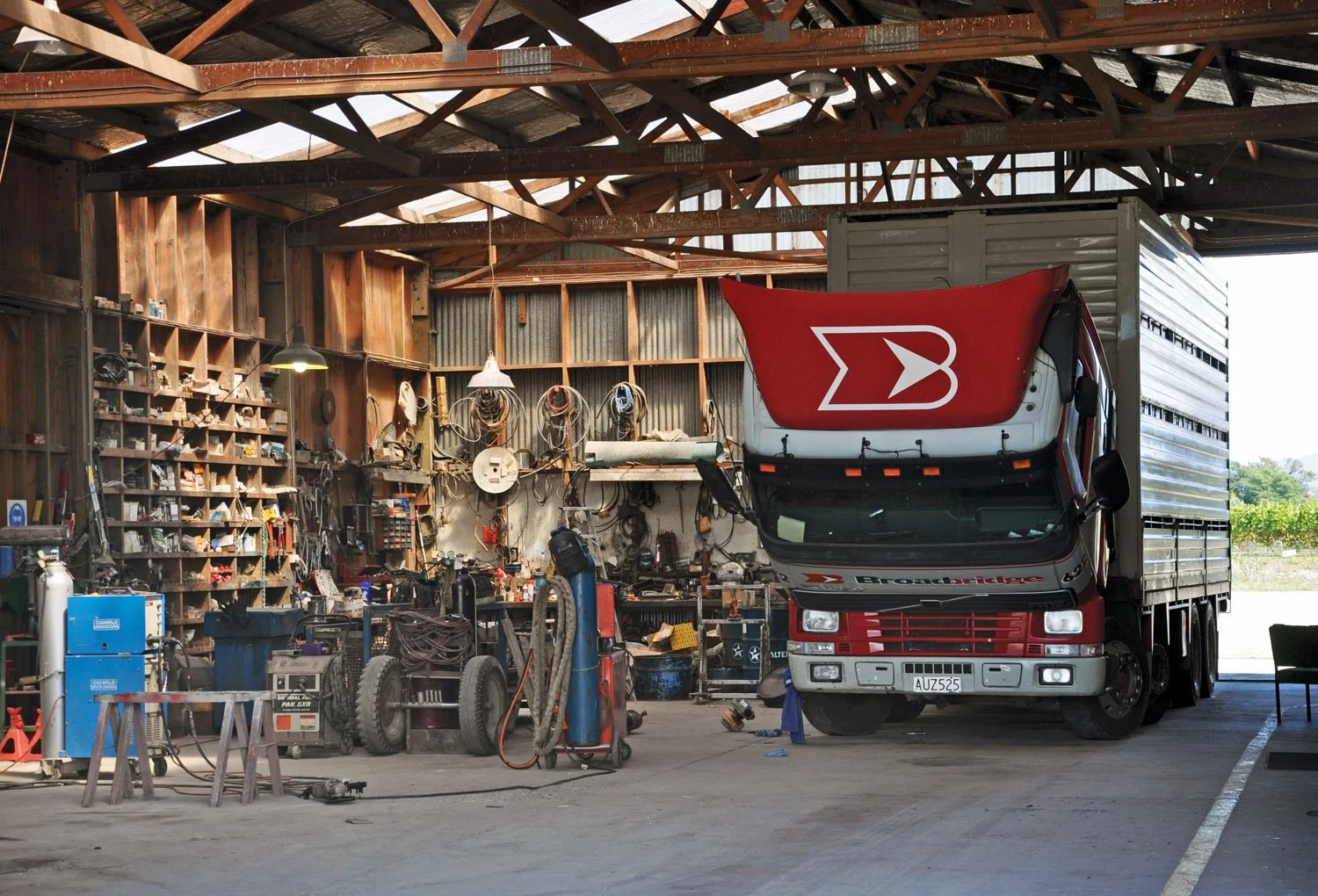
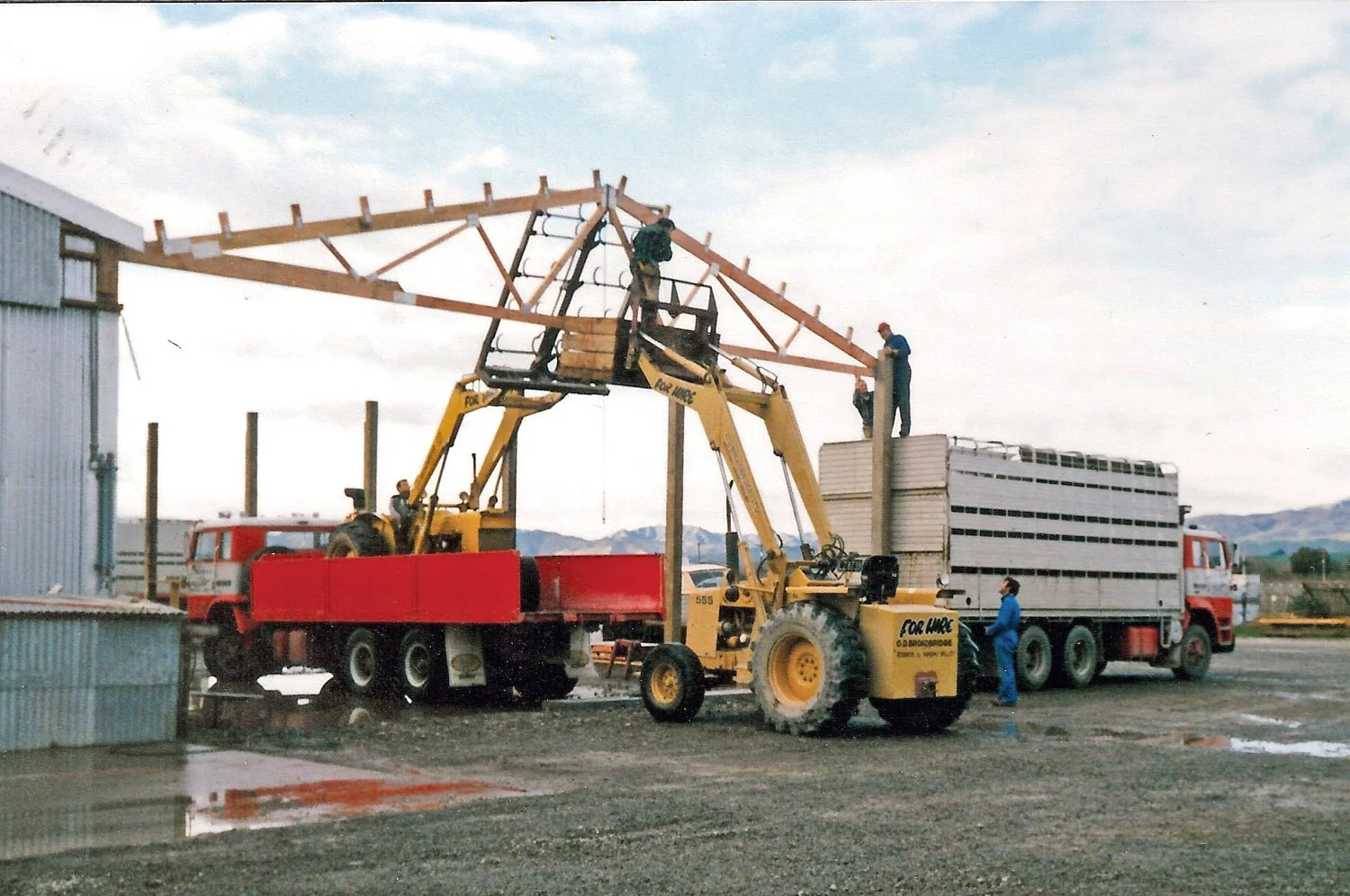
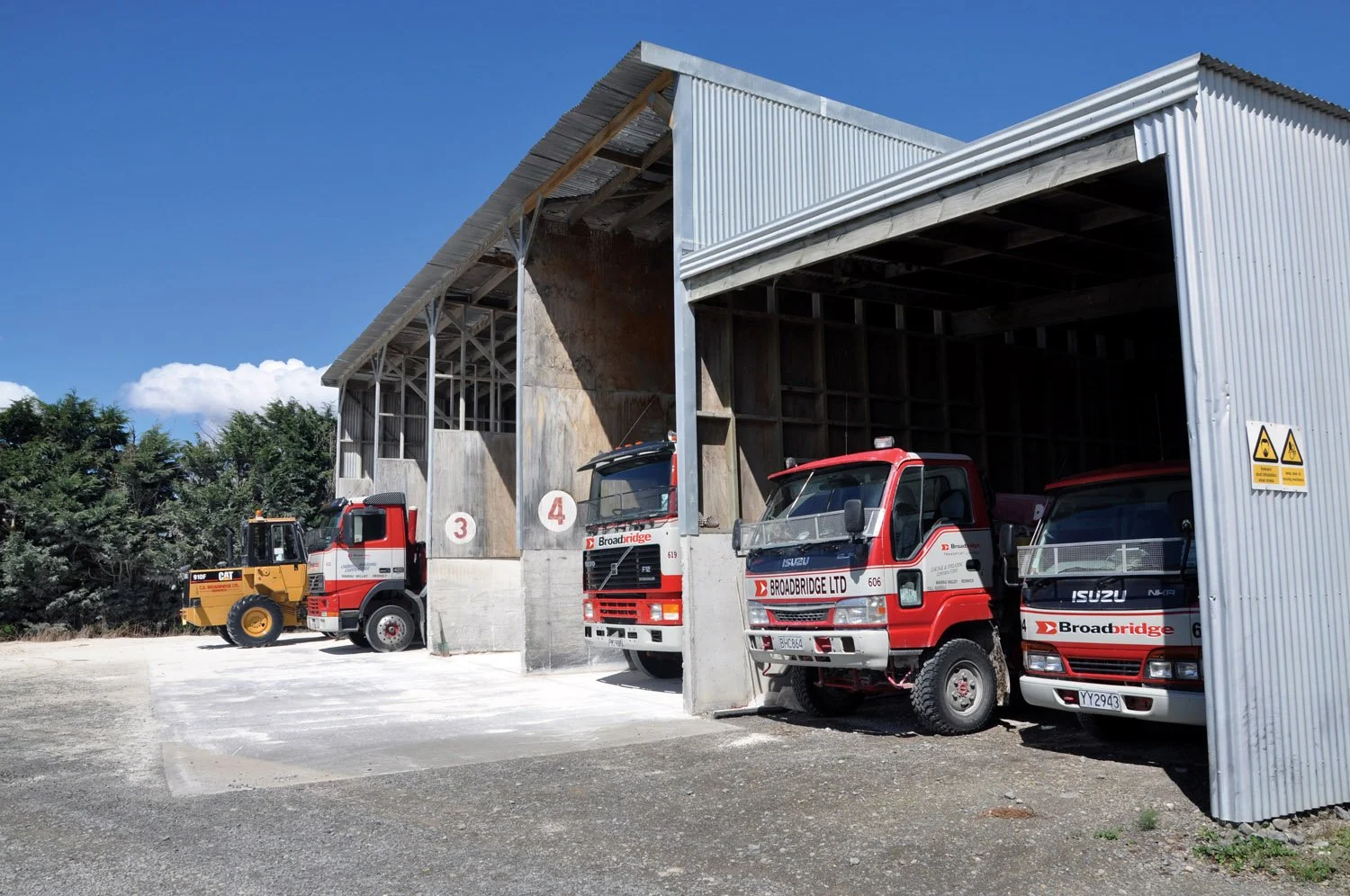
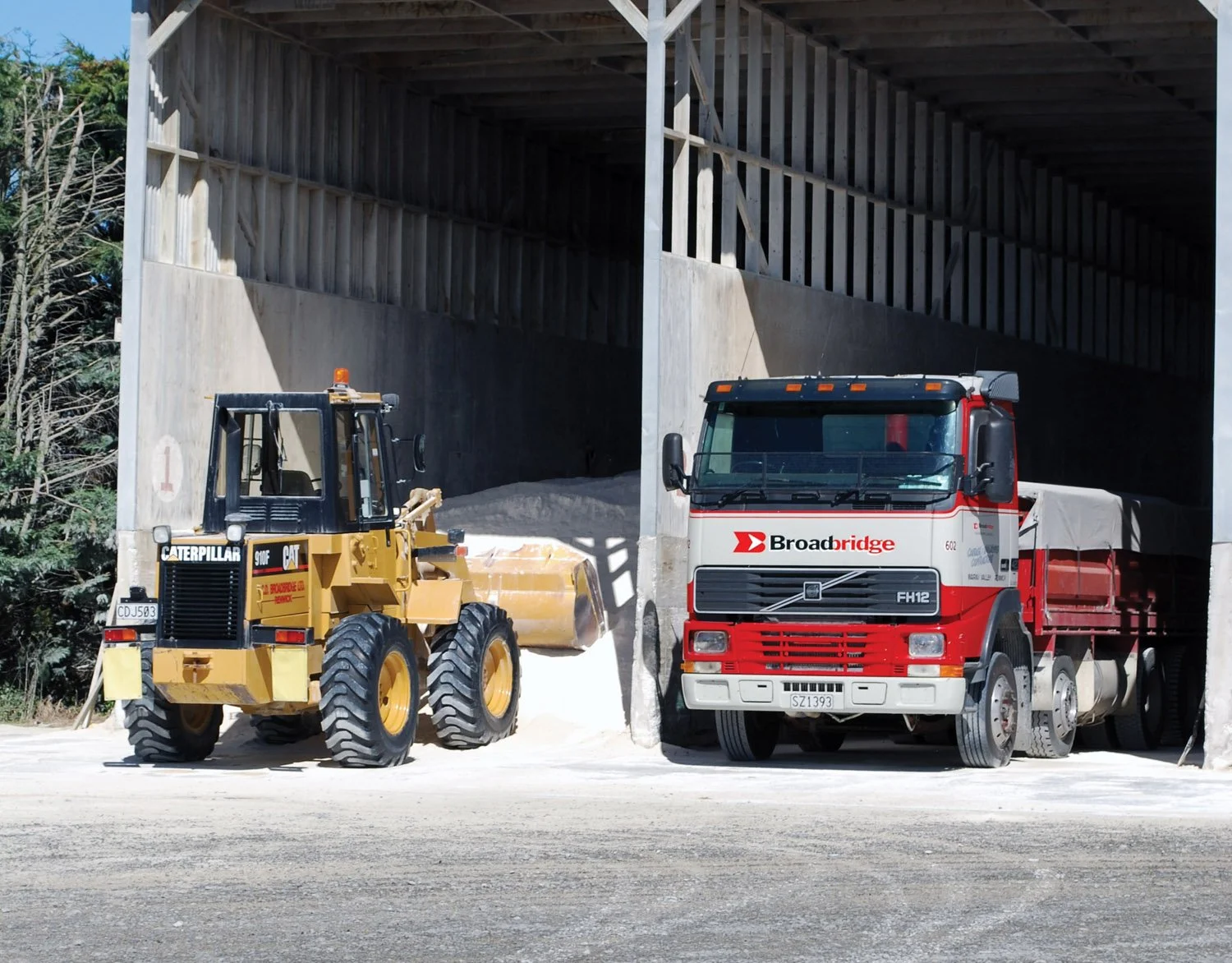

The 2.4 ha site has proved a worthwhile investment, housing the growing and contracting fleet over the years. There is a large four bay bulk fertiliser store with a storage lean to on the end, a large workshop and engineering shed, well appointed offices, smoko room and, of course, proper toilet facilities.
With such a large site, much of the area is superfluous to Broadbridge’s needs and as a result, a number of other complimentary contractors and companies now lease sections of the yard. The shared yard houses Alexanders (who store their trucks, a container wash, and containers), Mike Costello Contracting, Siteworx (2006) Ltd, and Bensemen Contracting. To manage this, the yard has been separated out from the transport company and operates as a standalone entity.
Changing freight patterns
With the boys now firmly in charge, the company continued on its growth path. The mixture of freight commodities began changing during this time, with the traditional wool, fertiliser, hay, livestock, grain, fruit and vegetables quietly diminishing as grapes began to take over the harsh landscape.
This brought about a change in the load pattern, with timber and wire becoming a major source of backloads out of Christchurch. Whilst the grape industry has brought about great changes around the Blenheim area, it doesn’t provide the firm with a great deal of ongoing work once the vineyards have been established, except for fertiliser spreading and a six week period when the grapes have to be carted. Broadbridges continue to deliver a significant amount of timber for the ever increasing number of vineyards.

This small Isuzu is negotiating the narrow lanes between the grape vine rows.
Likewise, there has been a change in the face of the livestock cartage. Lambs and sheep were the majority of the business in the past, however there has been somewhat of a shift to cattle cartage. Wool has diminished significantly, with nothing like the volumes being delivered to Christchurch as in earlier years, reflecting the gradual change in farm usage.

Over dimensional work
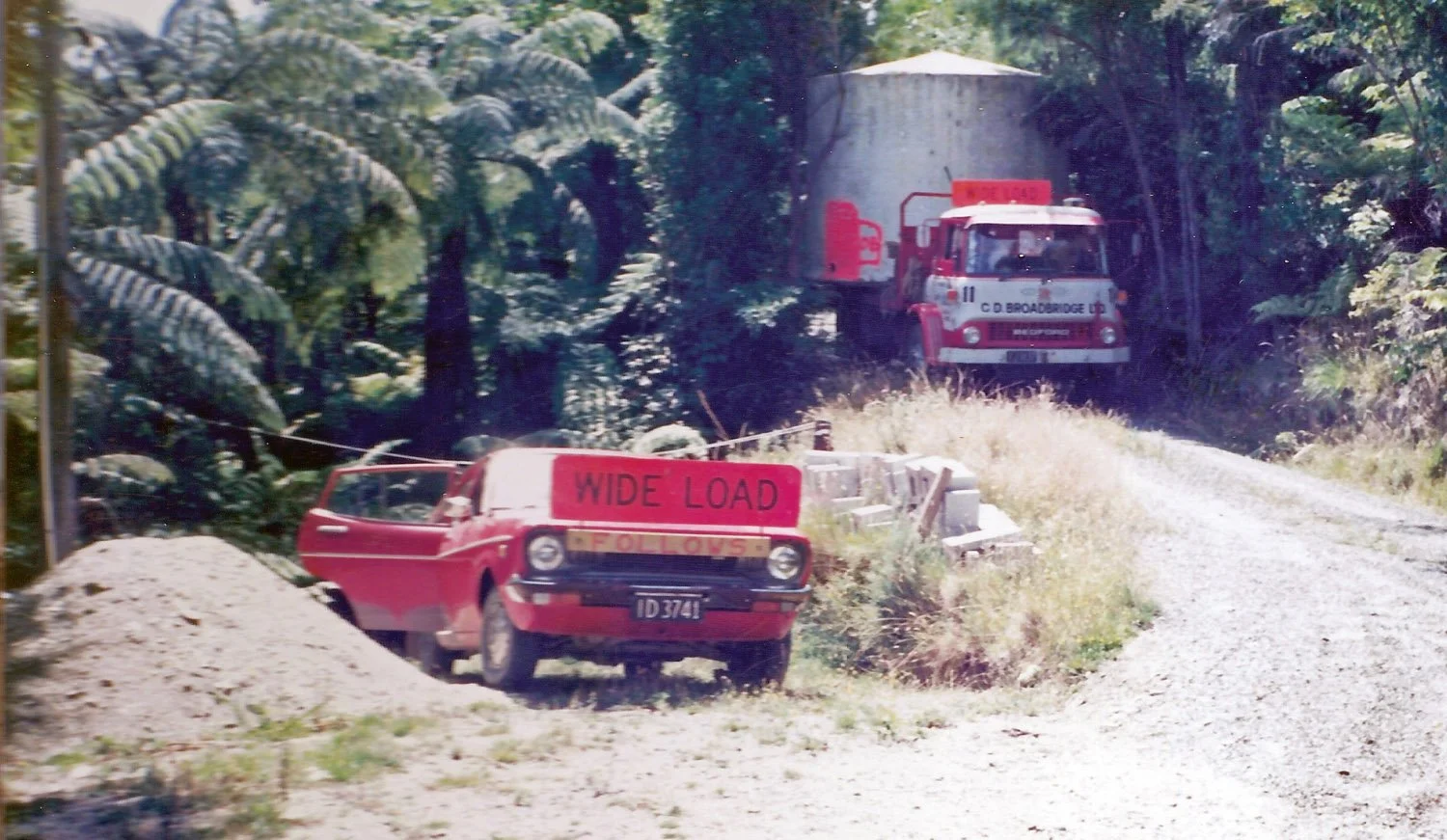
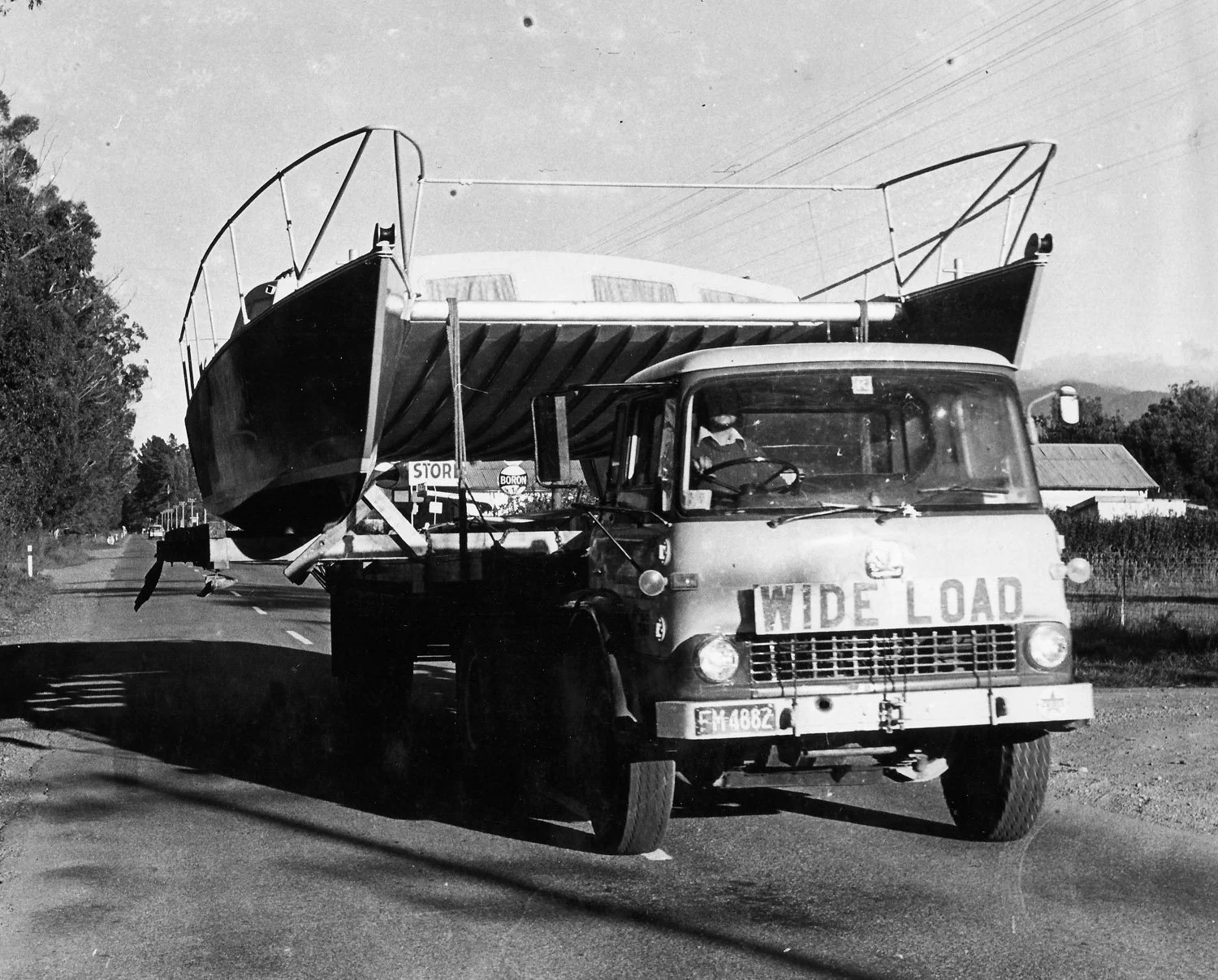
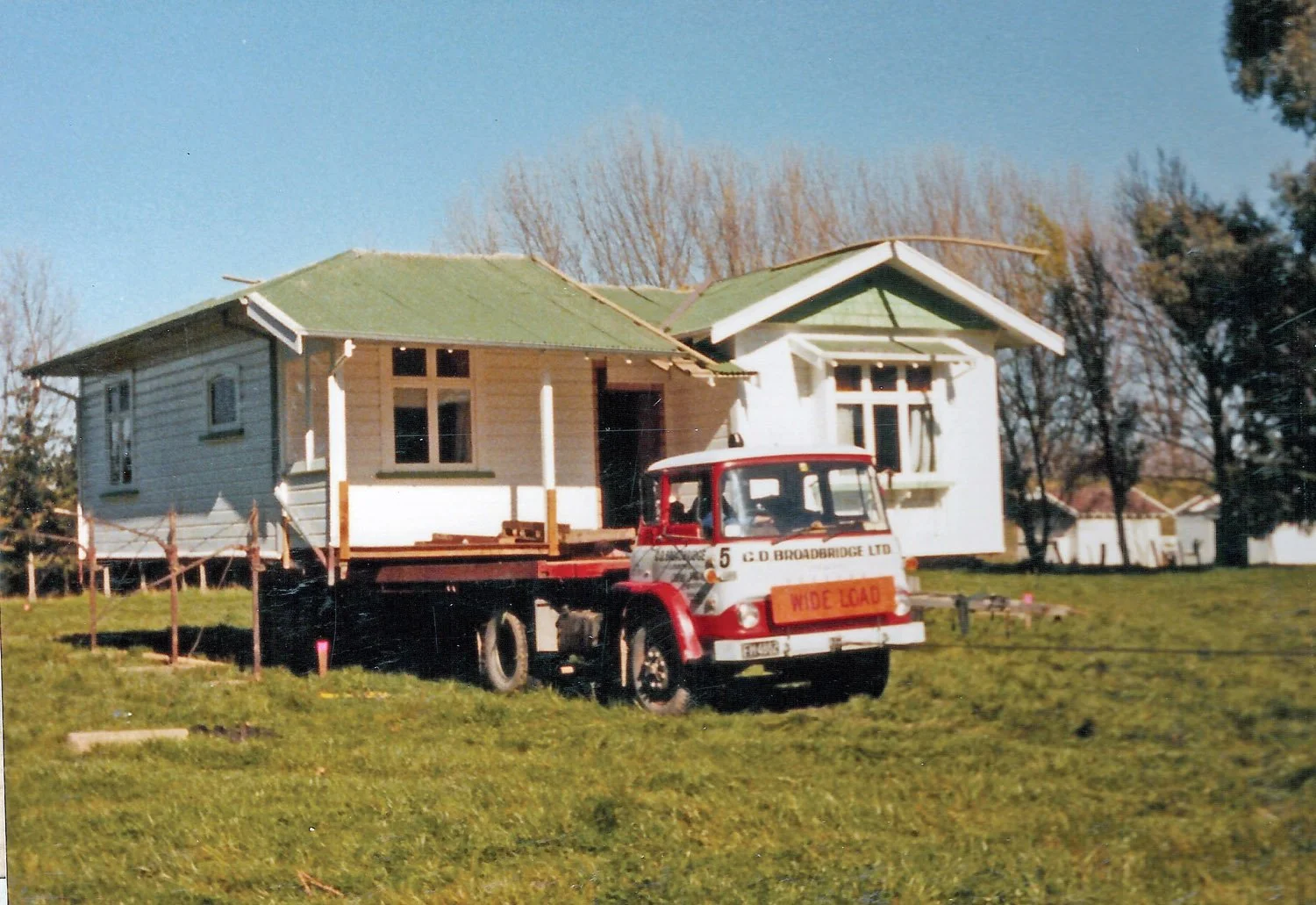
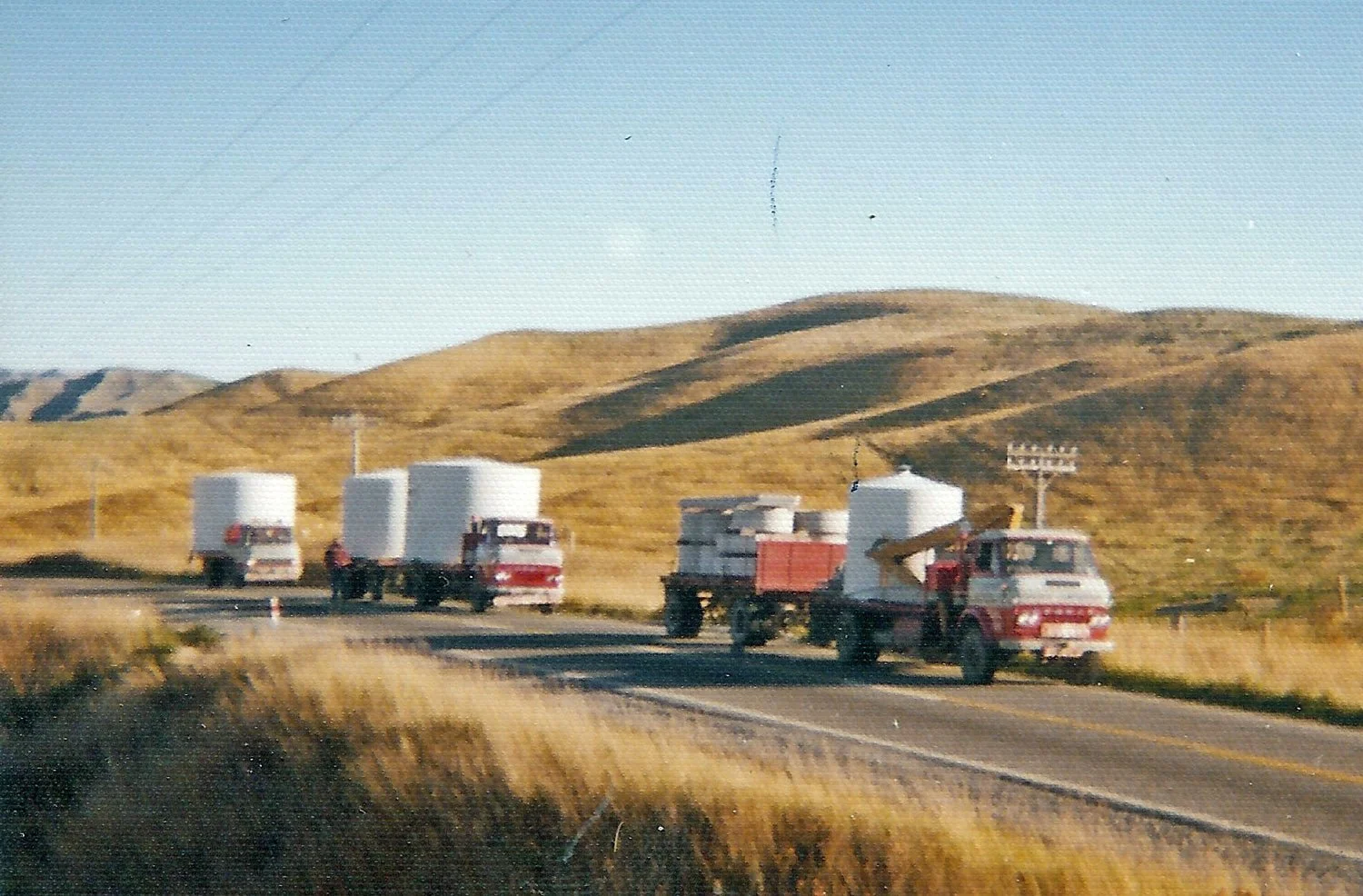
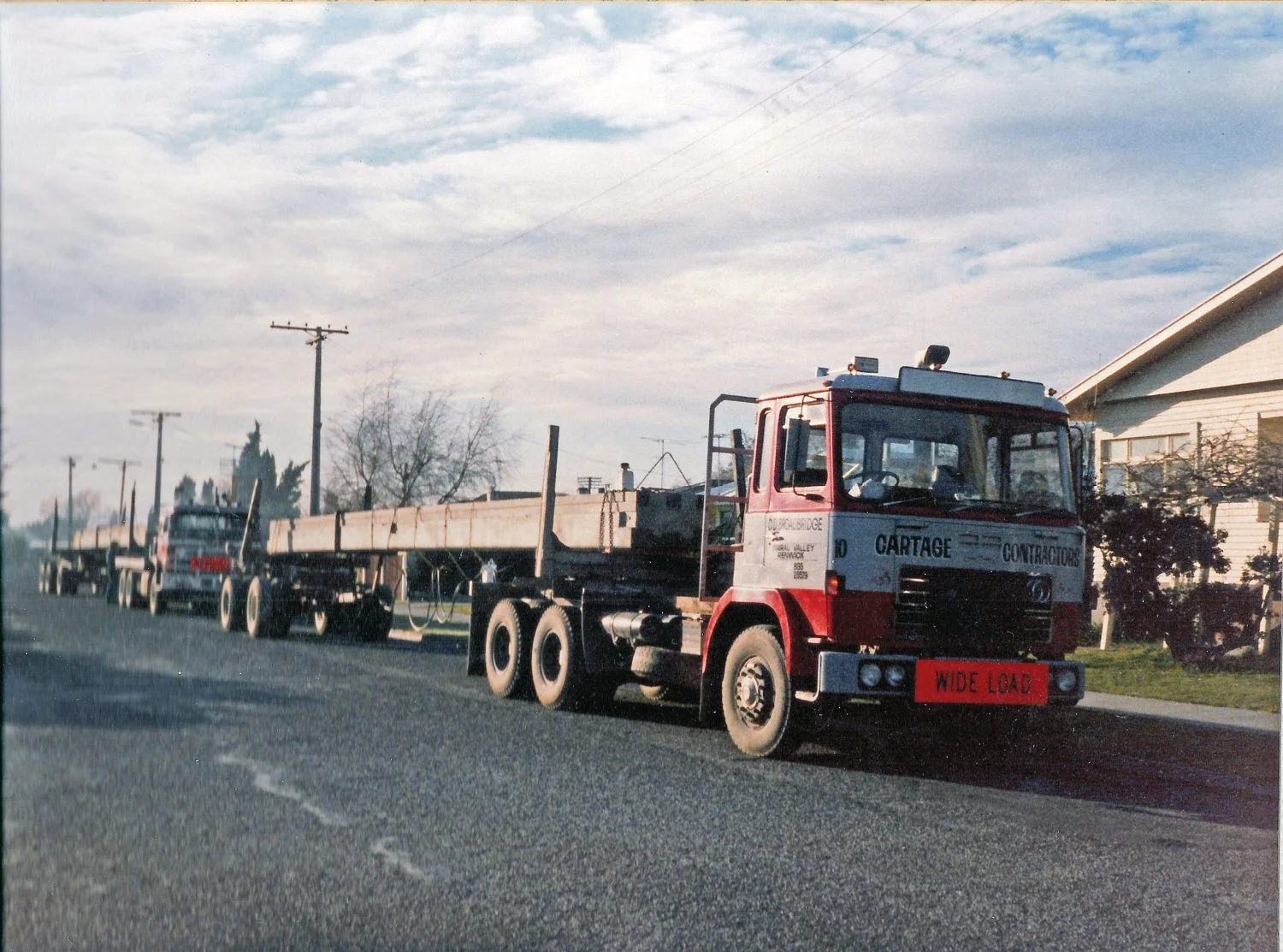
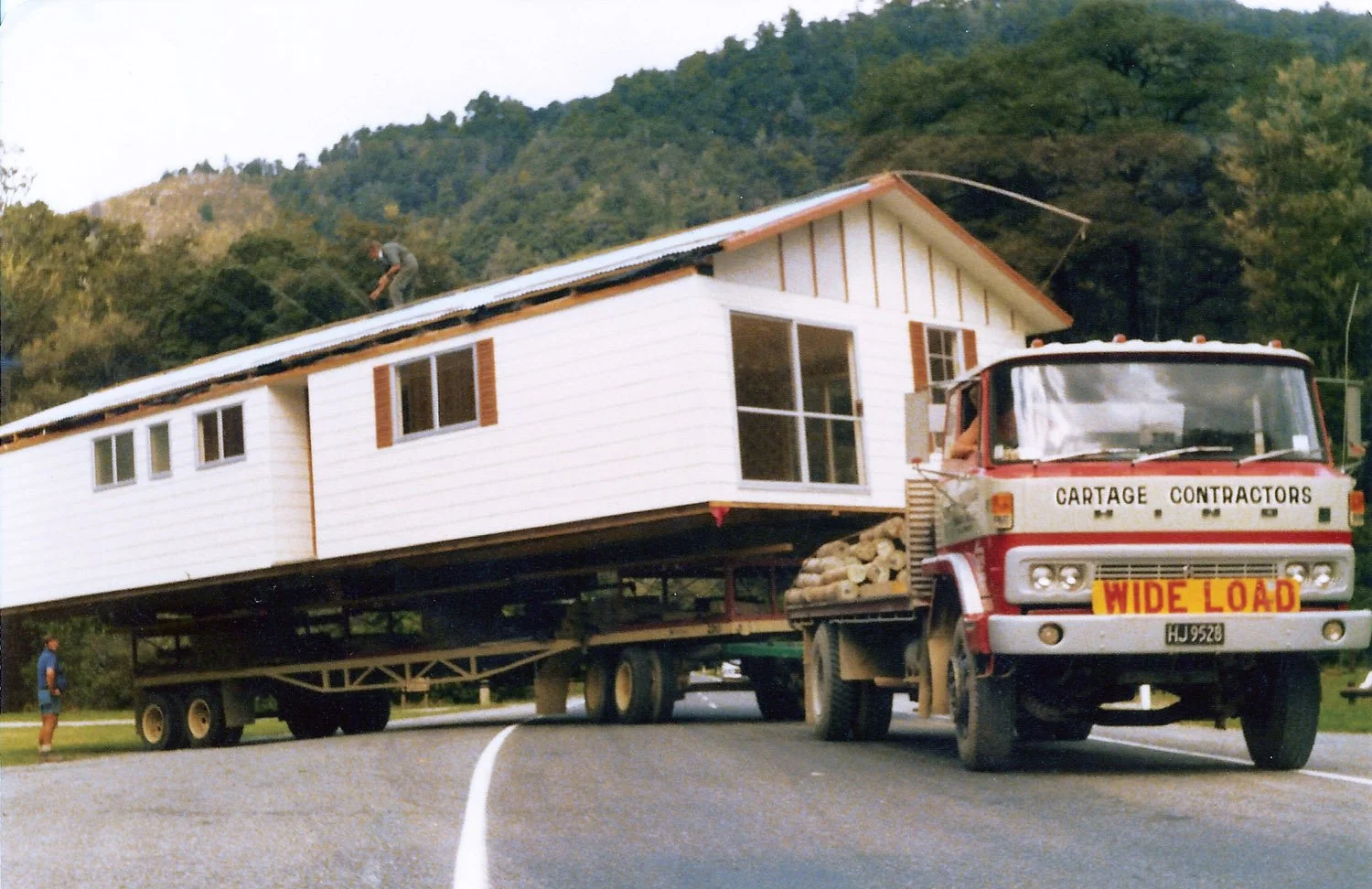
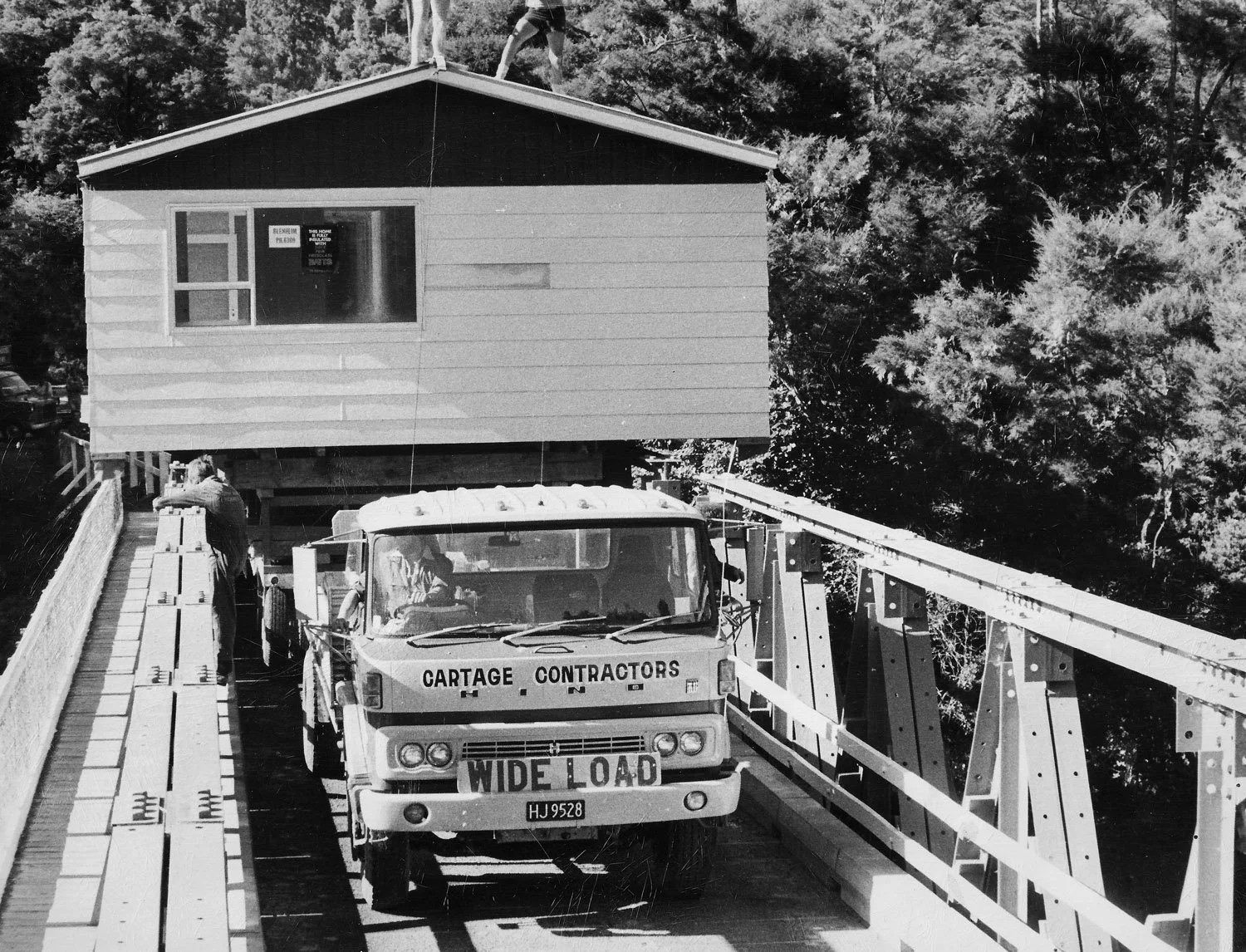
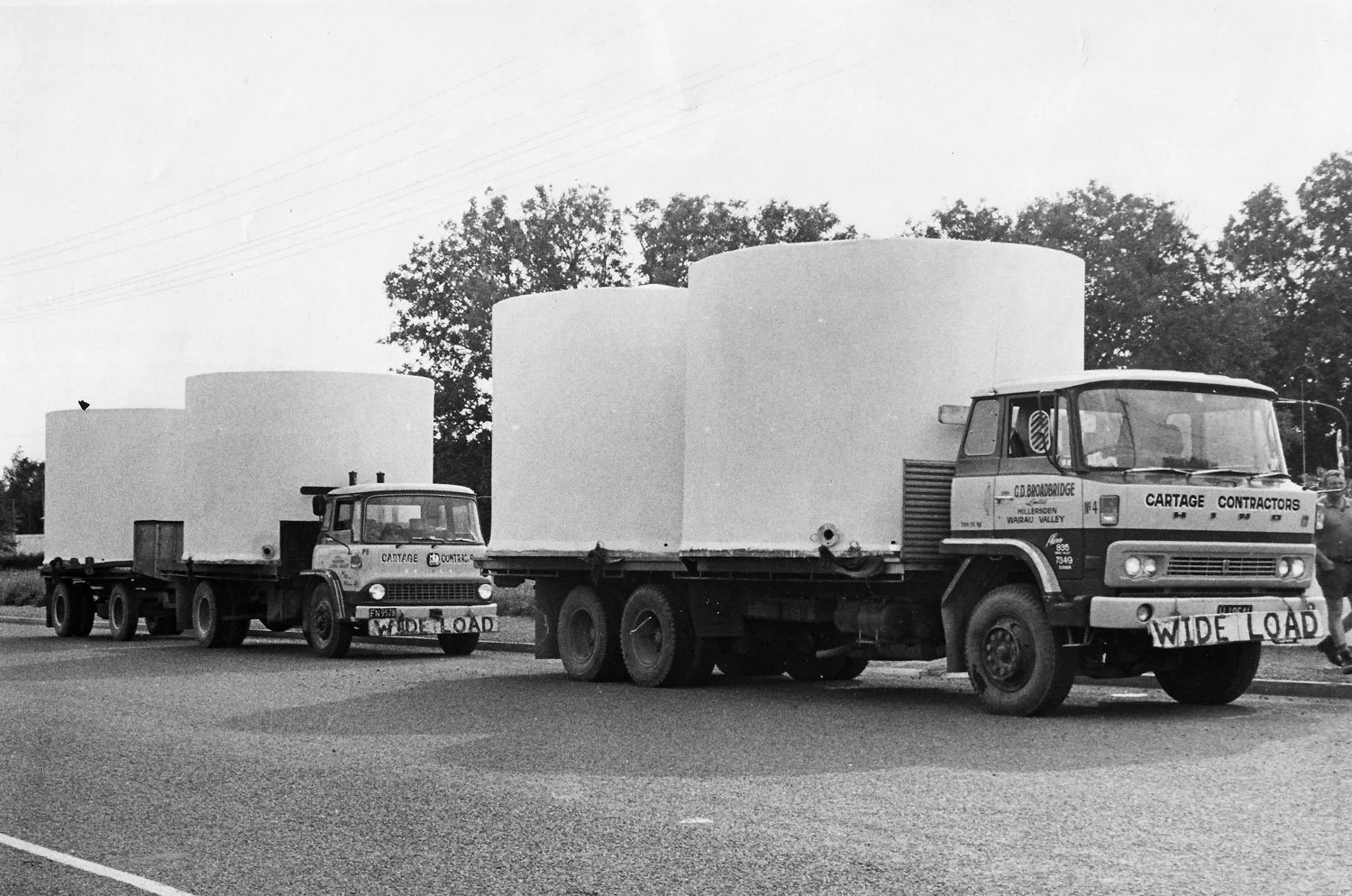
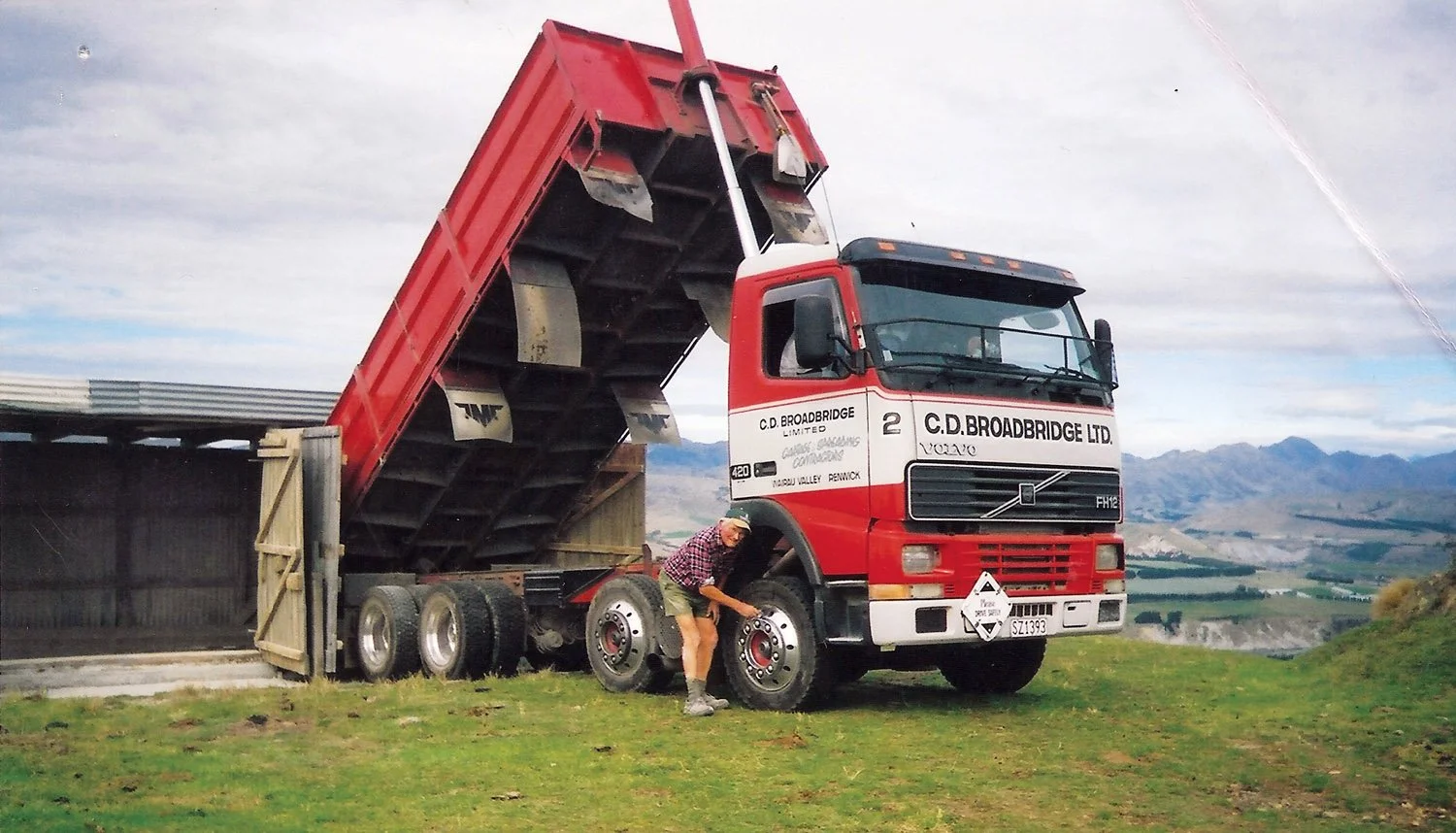
During the late seventies and eighties, the company was involved in over dimensional cartage. Keith Hay Homes Ltd was a prominent client, with houses being delivered far and wide over the Marlborough district.
One of the most challenging deliveries was a house to Nelson that had to pass over the Pelorus river via the single lane bridge. It would have been impractical (and dangerous!) to carry the house at the height needed to pass over the very tall bridge sides, so the house was jacked up on one side of the bridge, carefully manoeuvred over the bridge, and then dropped back down for the remainder of the journey.
Oversized concrete beams, old houses and buildings, concrete water tanks, trusses and timber frames where delivered all over the district.
Timber cartage
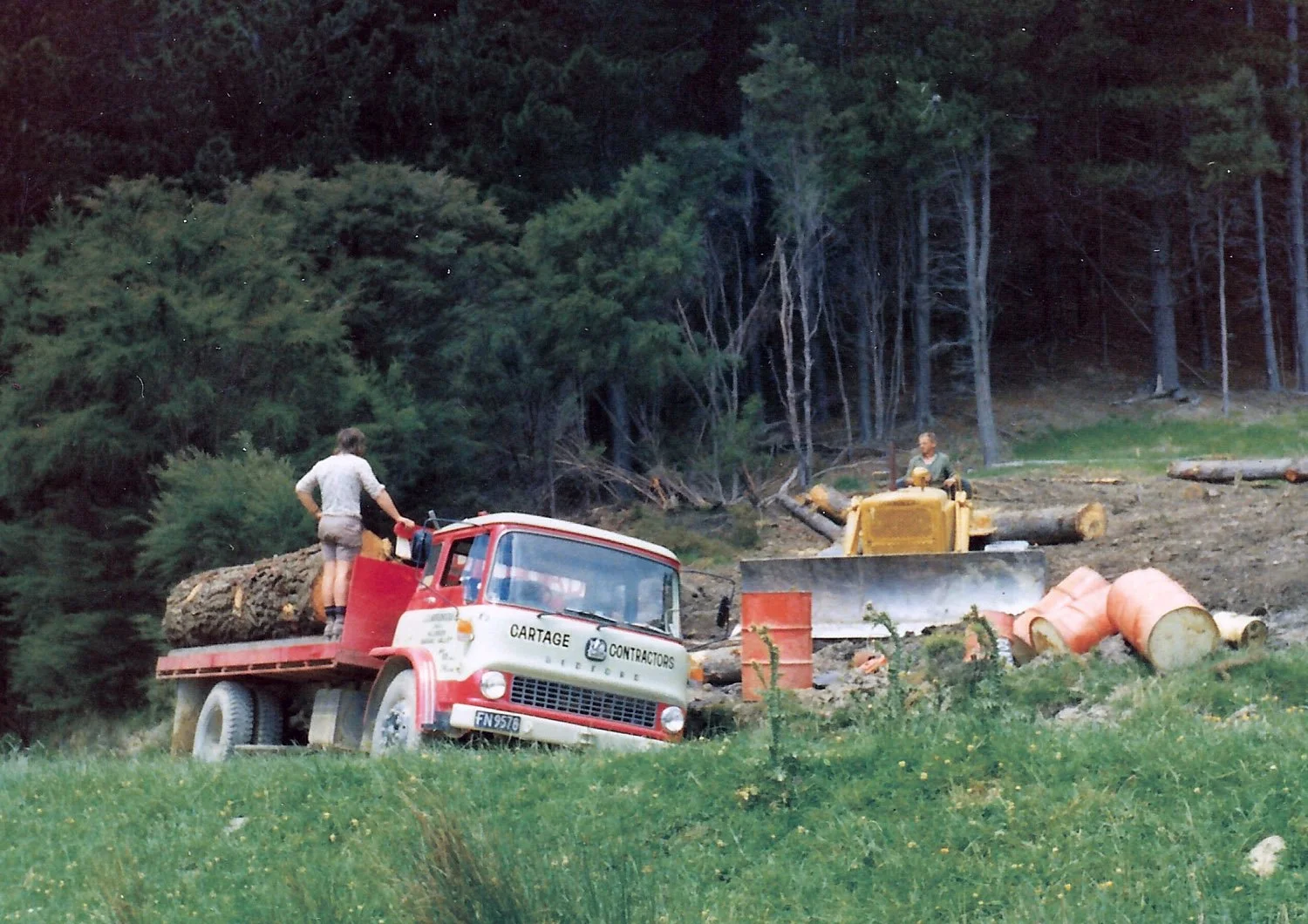
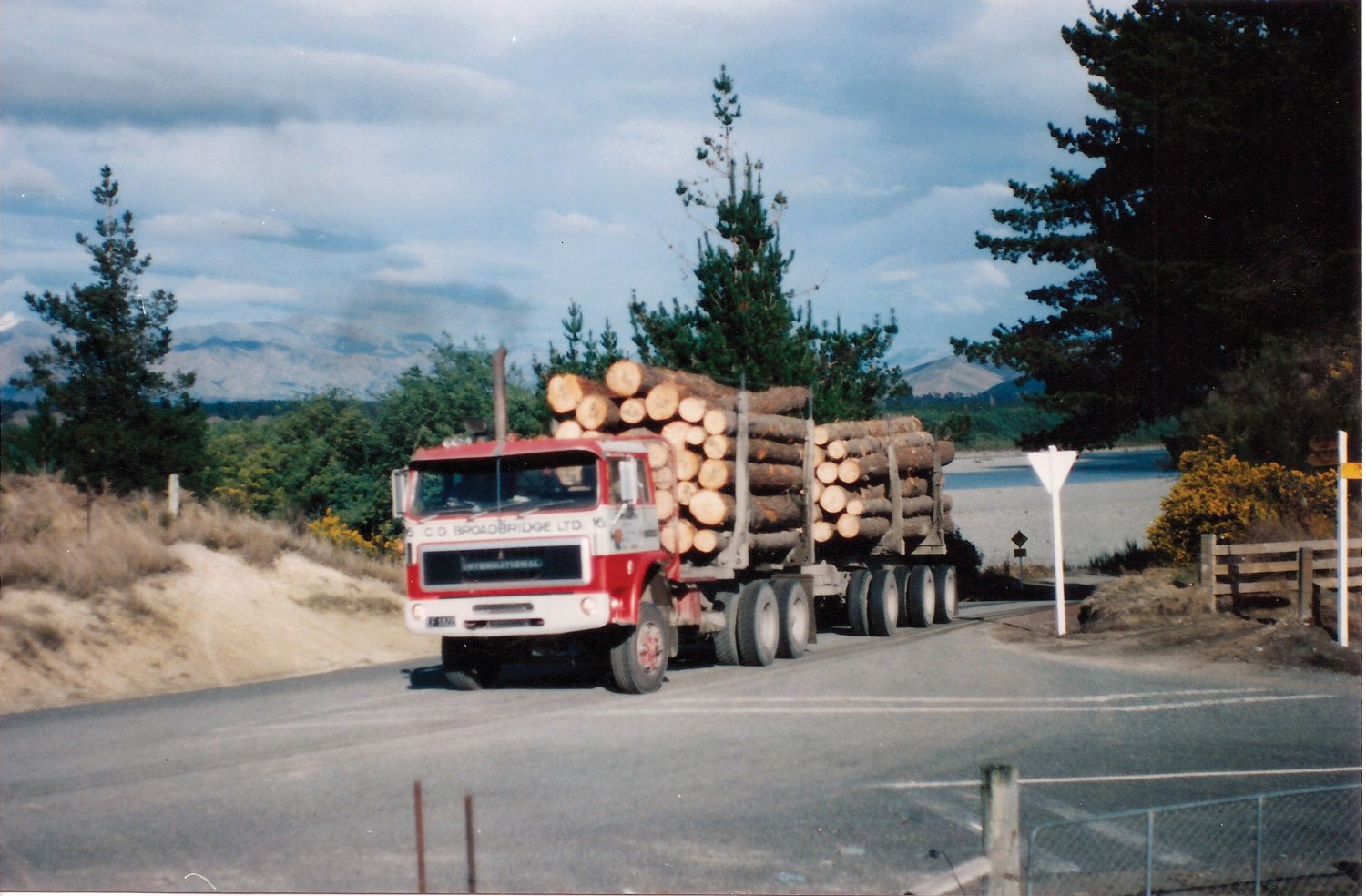
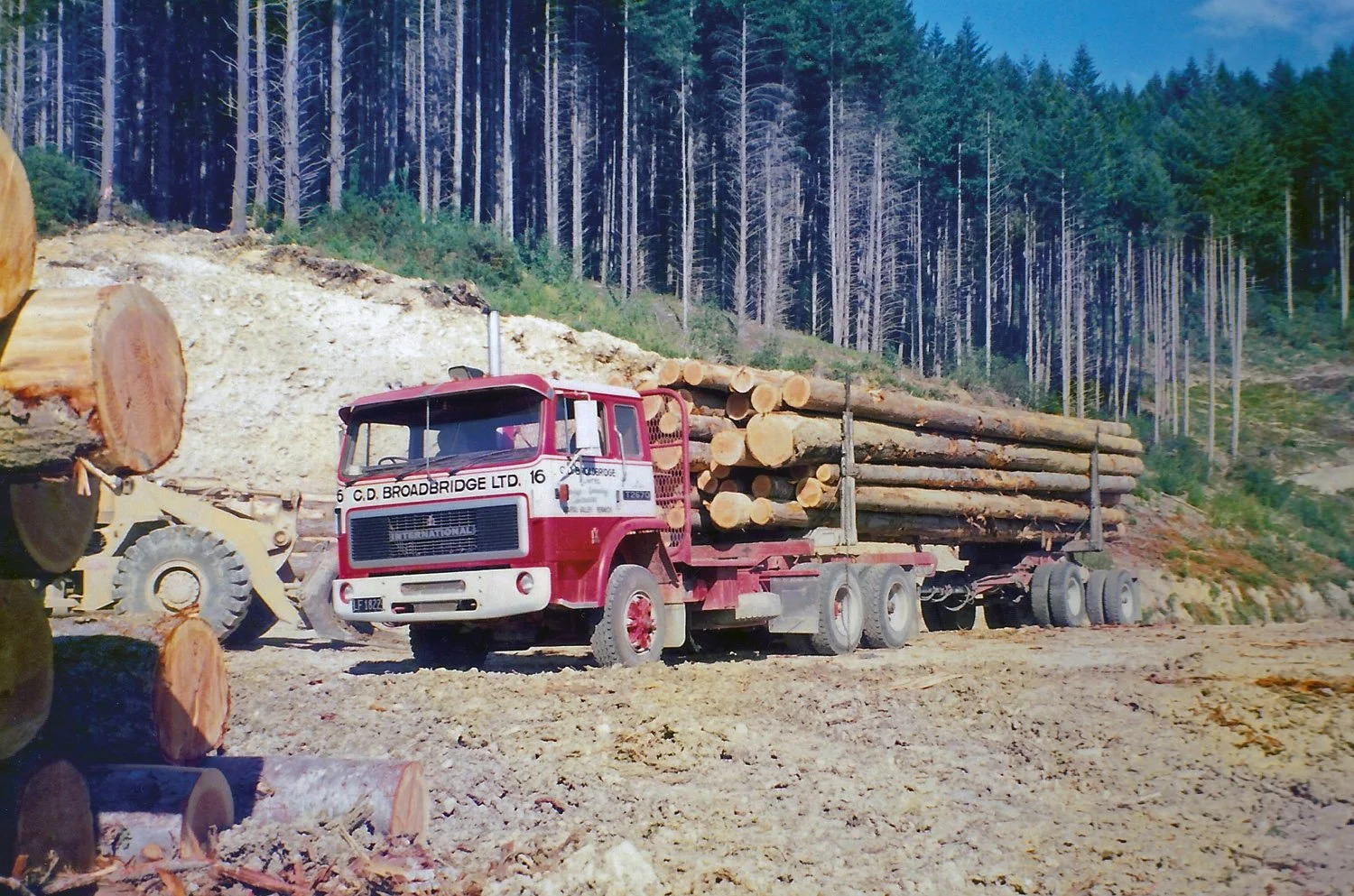
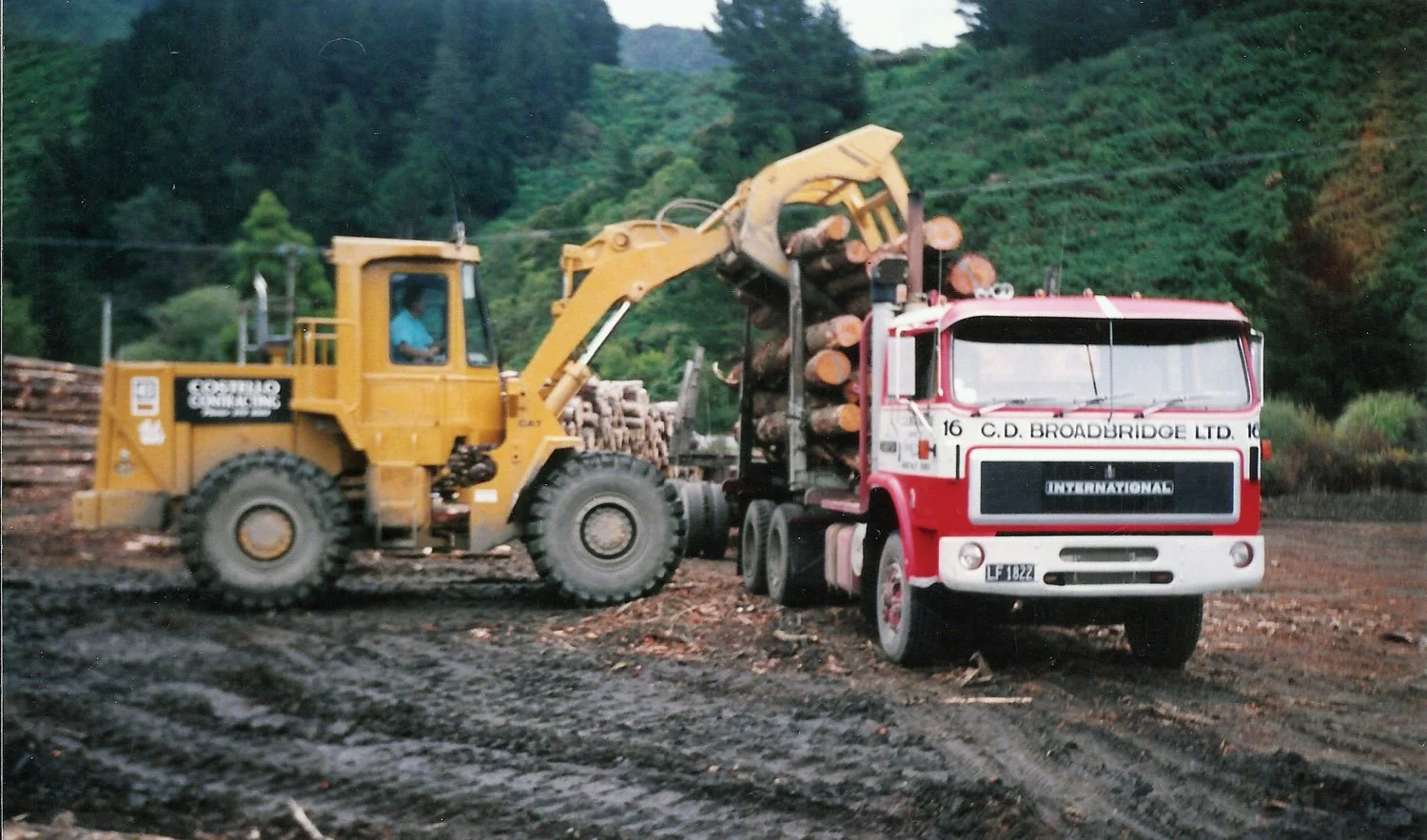
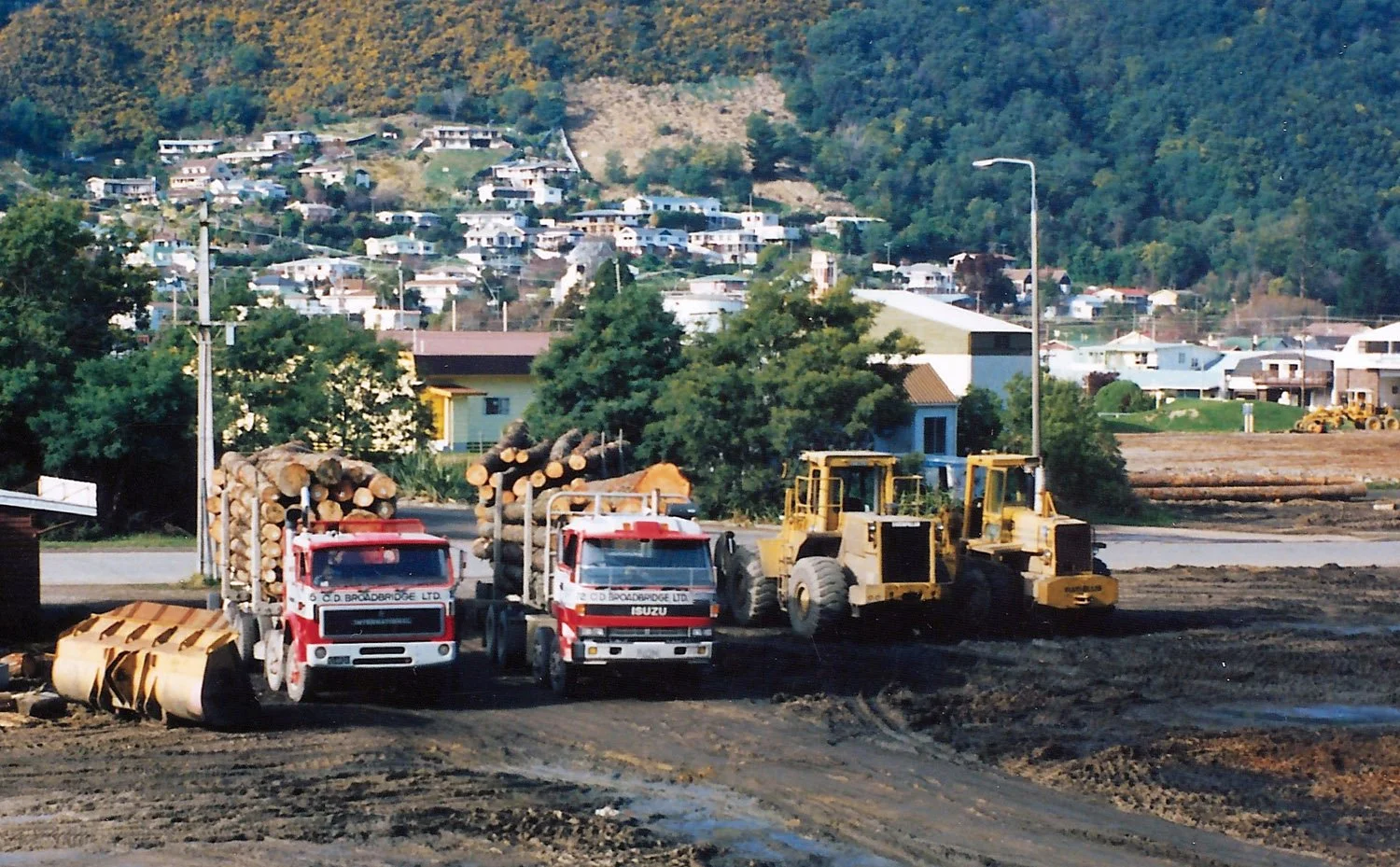
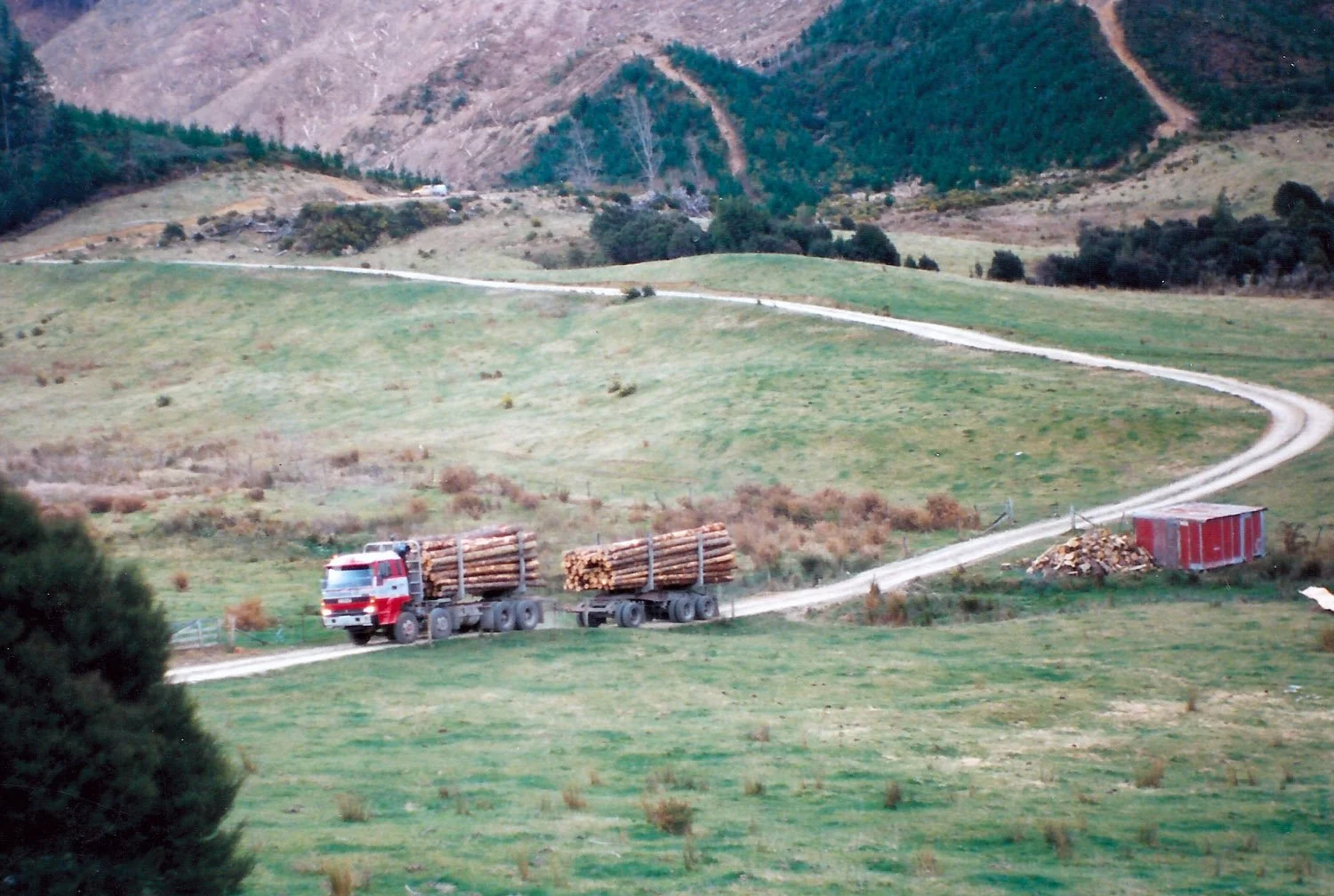
Timber was also becoming a regularly carried commodity. Initially, logs were carried on flat deck trucks with bolsters mounted to them. It wasn’t too long before dedicated units would be hauling this valuable resource out of the back blocks around Blenheim. By 1992, logging was a regular feature of the business and a contract with McVicar timber was secured (which included a W924 Kenworth longs unit).
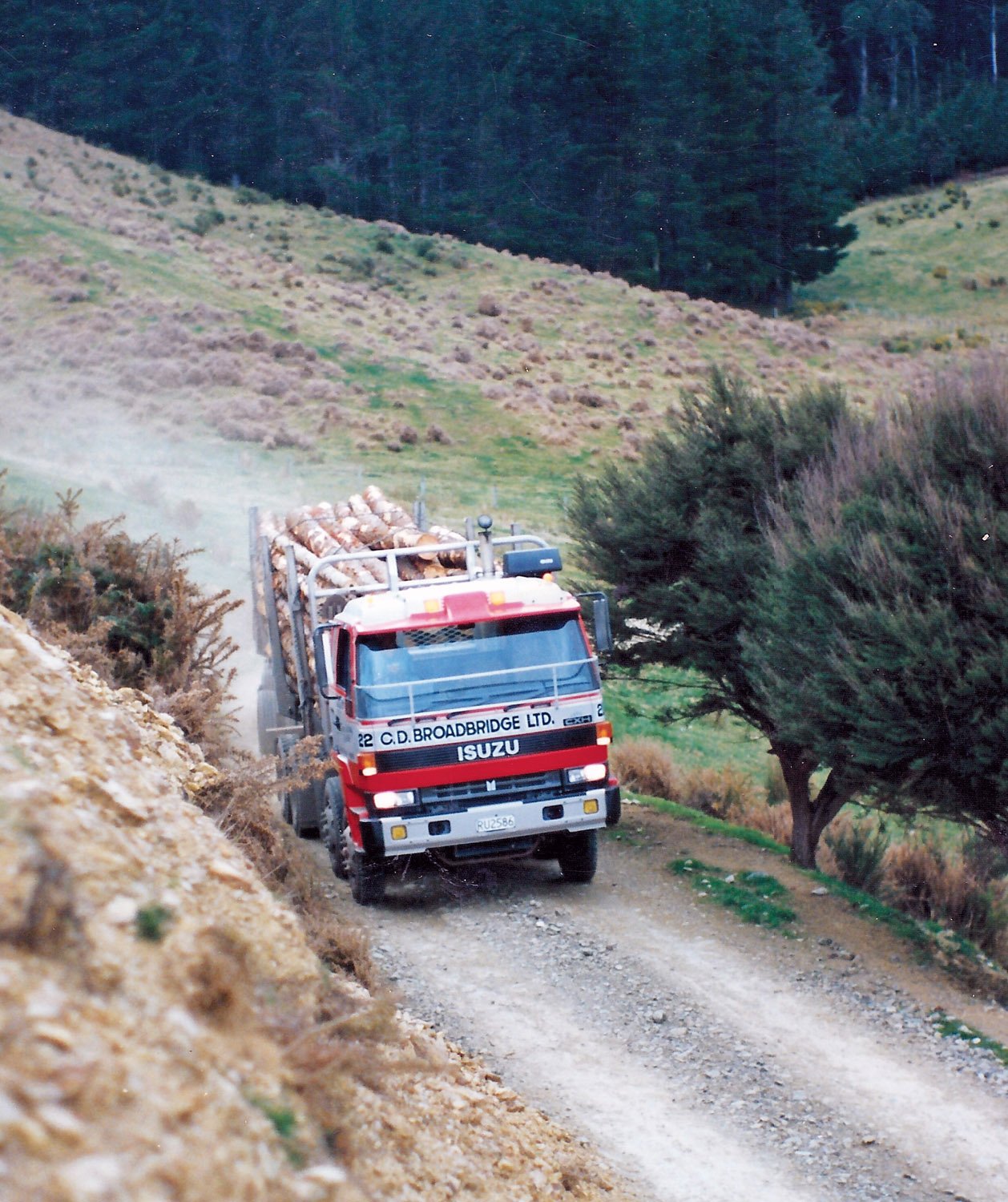
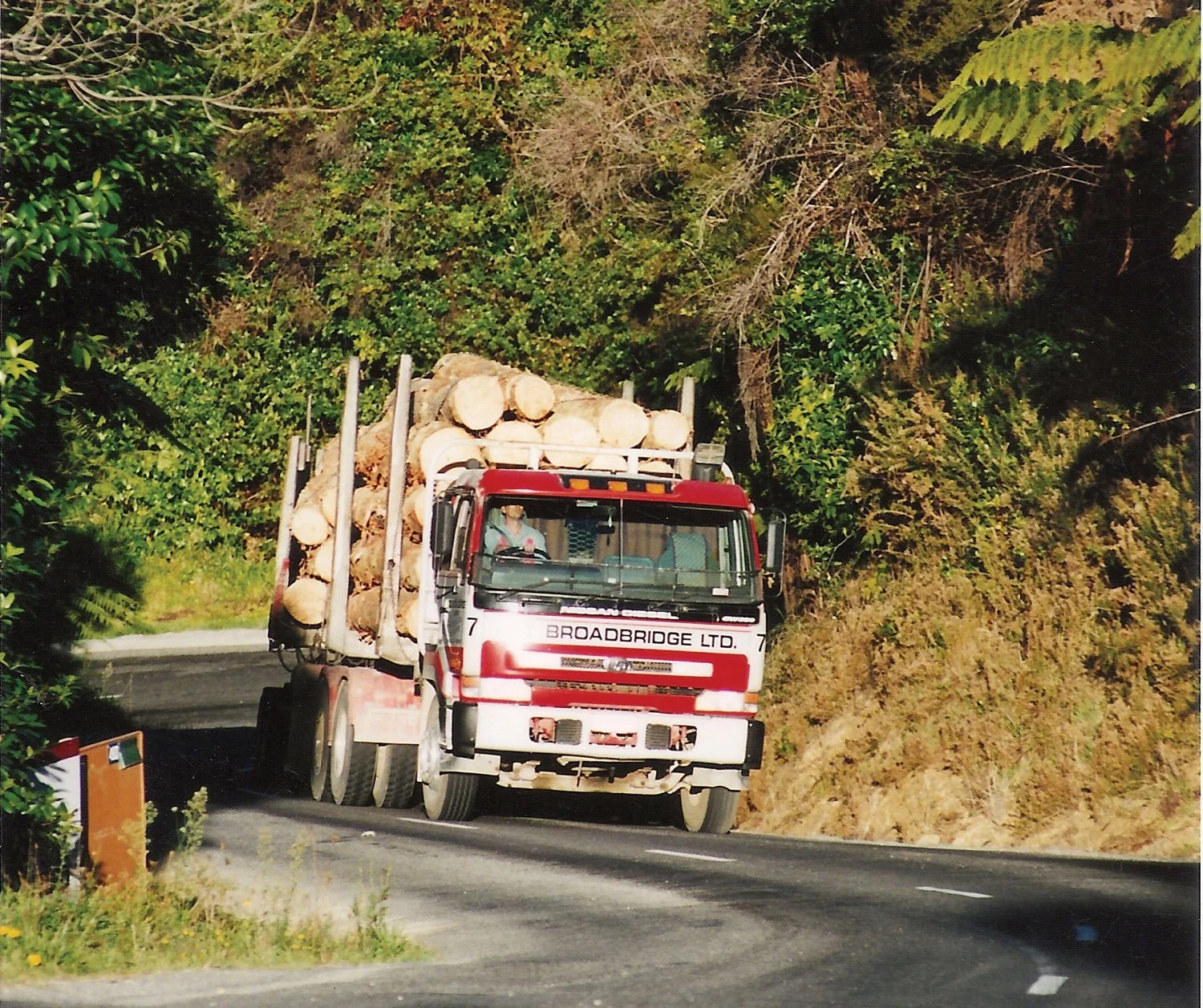
In 1998 Johnson Logging from Nelson was purchased, which added a further eight trucks to the roster. Eventually, together with Waimea Contract Carriers Ltd, Stuart Drummond, and B T Wood Ltd, the G4 joint venture logging group was established to handle the Nelson Marlborough forestry contracts for Rayonier and Weyerhaeuser NZ Inc.
Some of the trucks previously under contract to G4.
This joint venture worked satisfactorily until the contract came up for renewal and the contract was awarded to another contractor. This only slightly reduced Broadbridge’s involvement in logging, currently Weir has several trucks working in Nelson, under contract to Stuart Drummond (a deal done on a hand shake), and more working around the Blenheim/Picton district.
Peaking
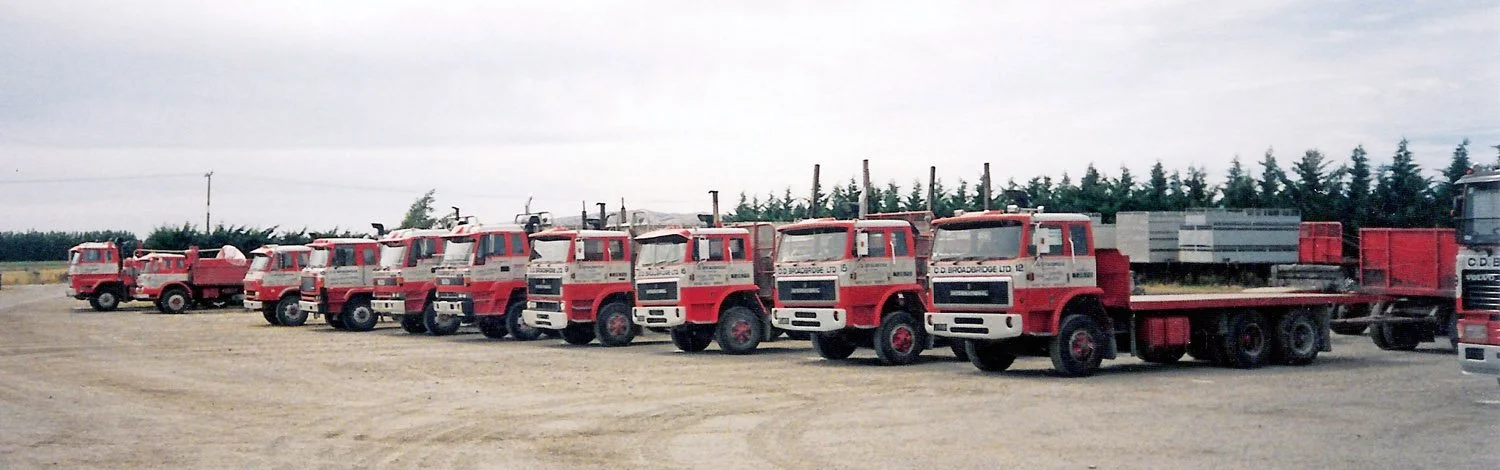
At its peak in the early 2000s, C D Broadbridge was operating around 40 large trucks, with a number of smaller units tacked on. Today the fleet has been whittled down to just 26 large trucks, a number Weir is more than comfortable with. As he points out, even with the reduced number of trucks, they are still making about the same amount of profit as they were during the peak years.
The workload is more manageable now and they have built up a very good team to ensure the smooth running of the operation. In the office you will find Weir with ‘Taff’ Clifford, an extremely well known character amongst locals, drivers and clients.
Taff is a fairly new recruit, having only served a few years with Broadbridges, in his seventies, he nowhere near ready to retire. While Taff looks after the livestock side of the operation, long time driver Rob Costello looks after the remainder of the dispatching, rural, bulk, fertiliser, etc.
Out in the yard they have a number of long standing drivers, as well as some newer, but loyal, drivers. Longest serving is Peter Wells who has been associated with the Broadbridge operations since 1964. At the other end of the scale is an ex farmer, now casual driver, who just loves working for the company, according to Weir. James Kay sold his farm some time ago, but loves coming in driving, a pastime he finds very enjoyable.
Vehicles
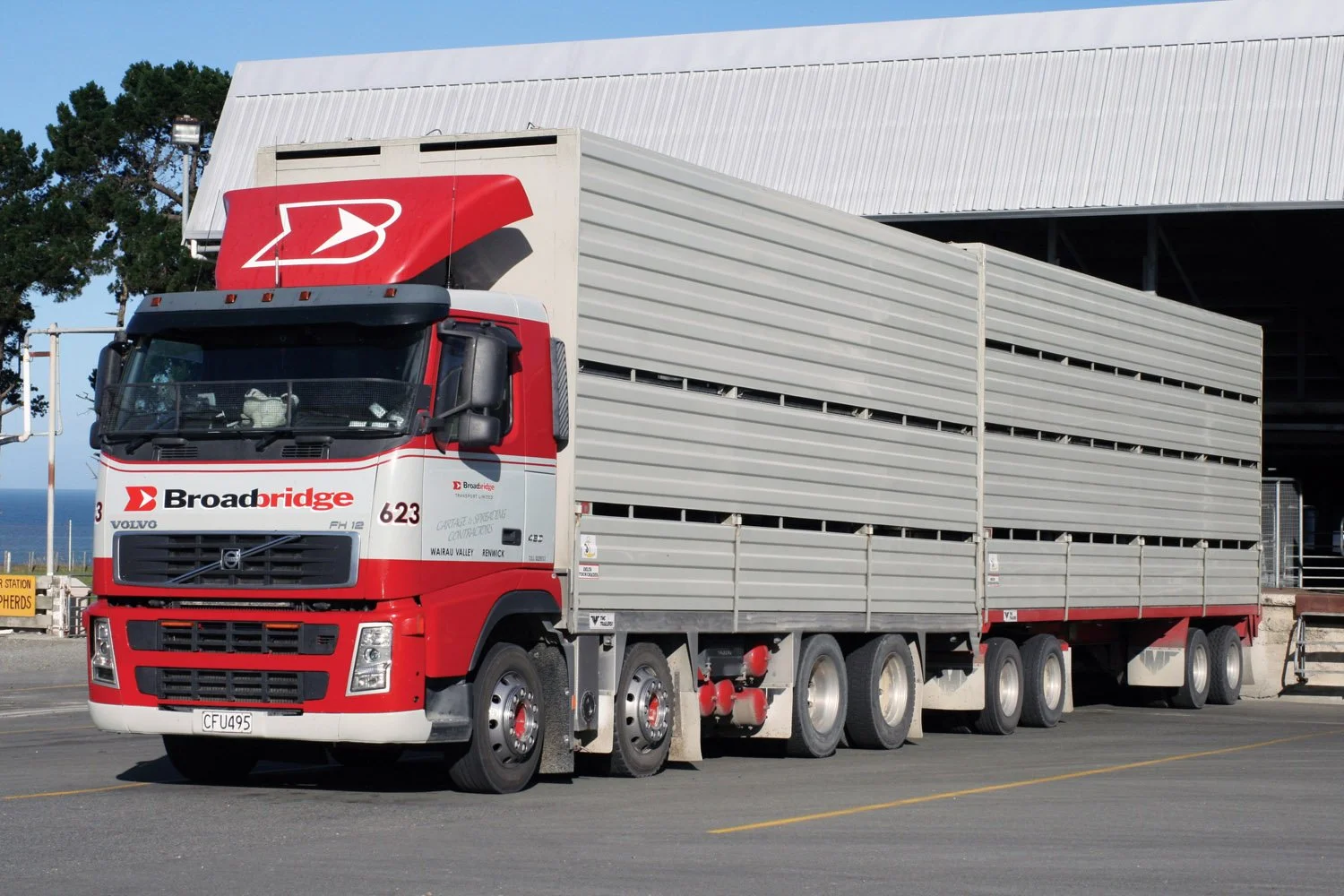
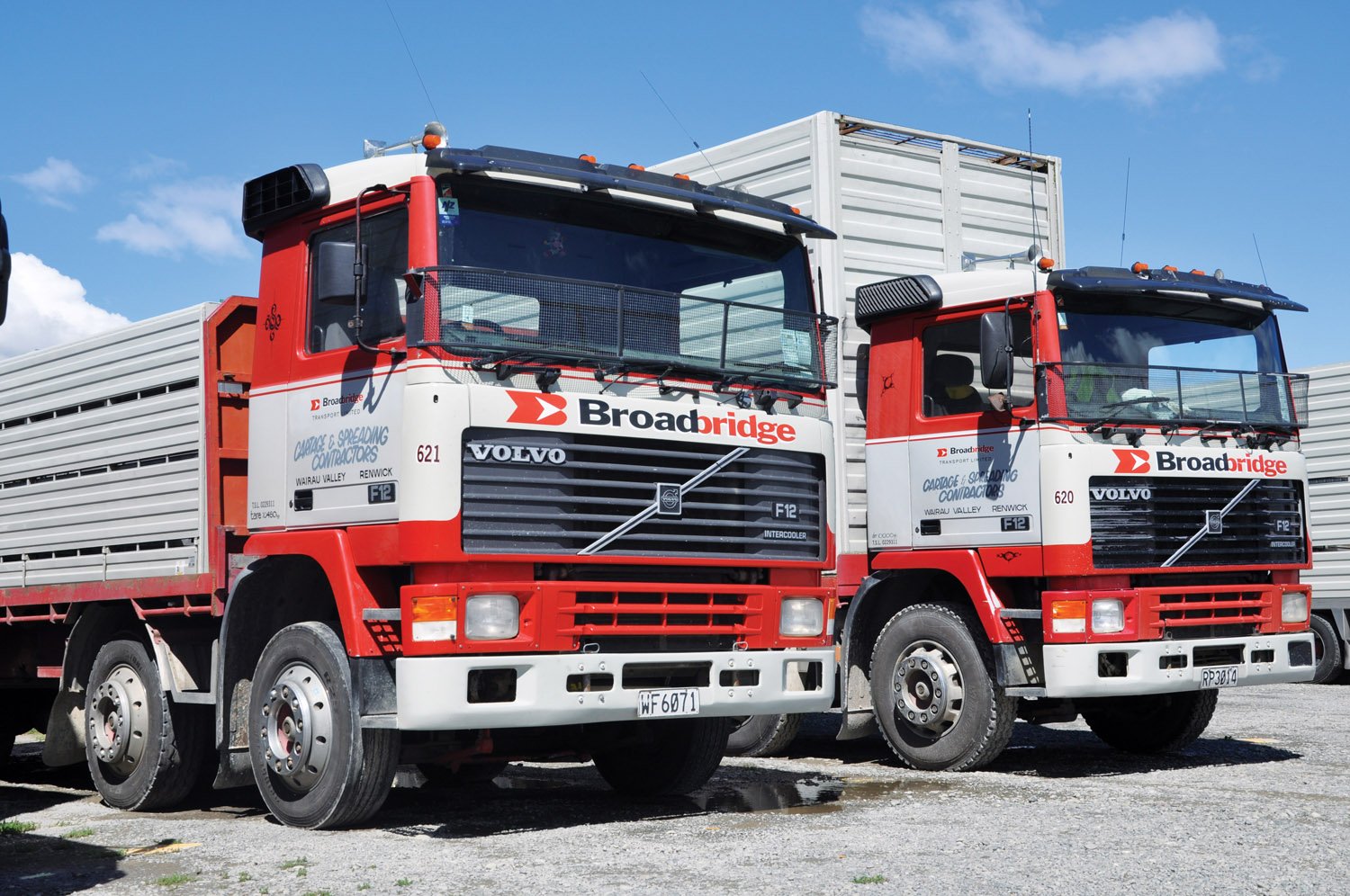
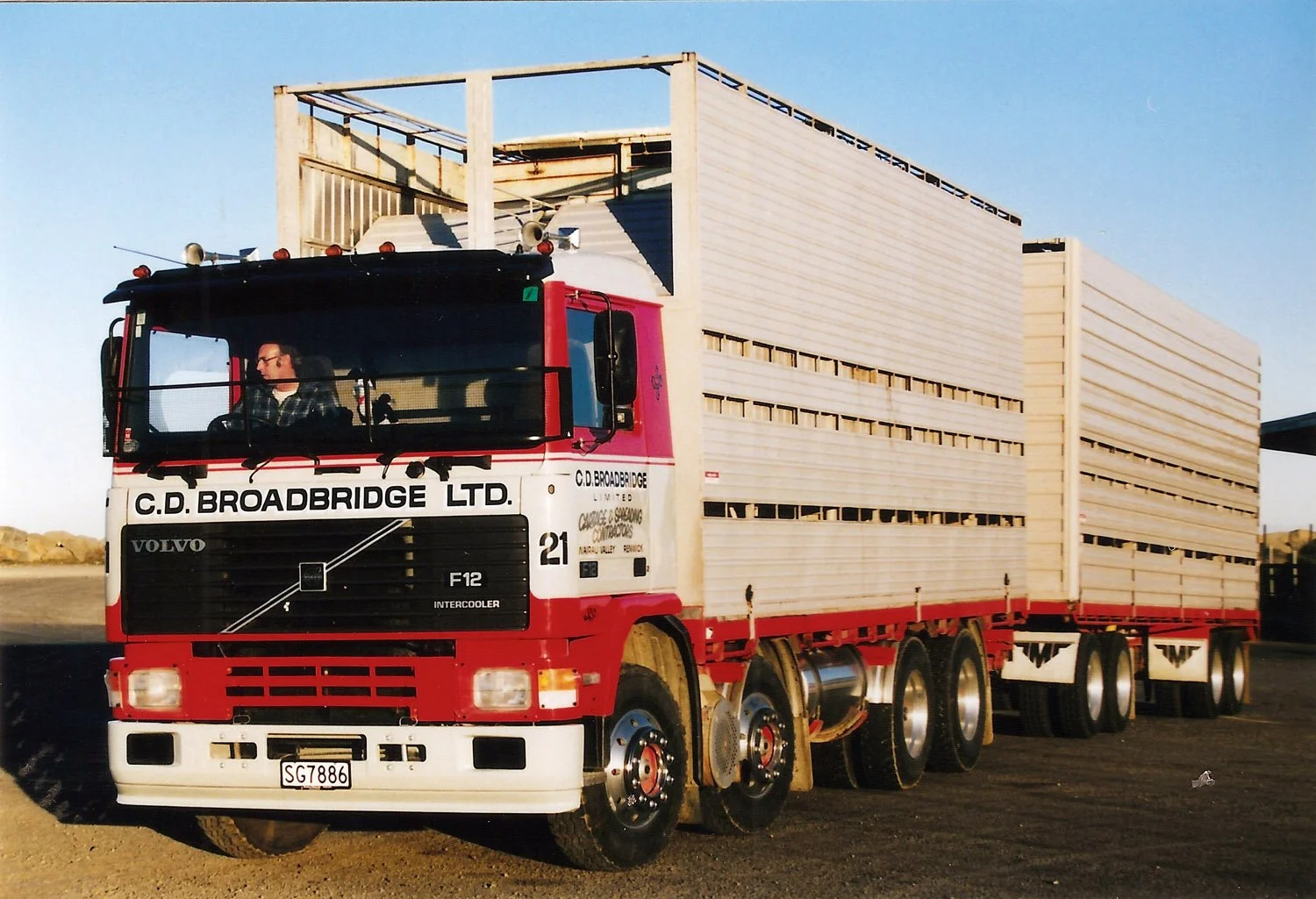
Asked about his choices of vehicle, Weir makes some interesting points. Whilst they are extremely happy with their Japanese brands, which are predominantly Nissan at present, Weir says they have to have the Volvos to retain good drivers. He says that living out at the edge of a rural area is not everybody’s cup of tea, but providing top gear certainly helps along the way.
Similarly, the company has had a number of Kenworths, and continues to run one on logs, the reason for having them is their rugged construction, which is well suited to the harsh logging environment, and the driver appeal – even Adam would love to get behind the wheel.
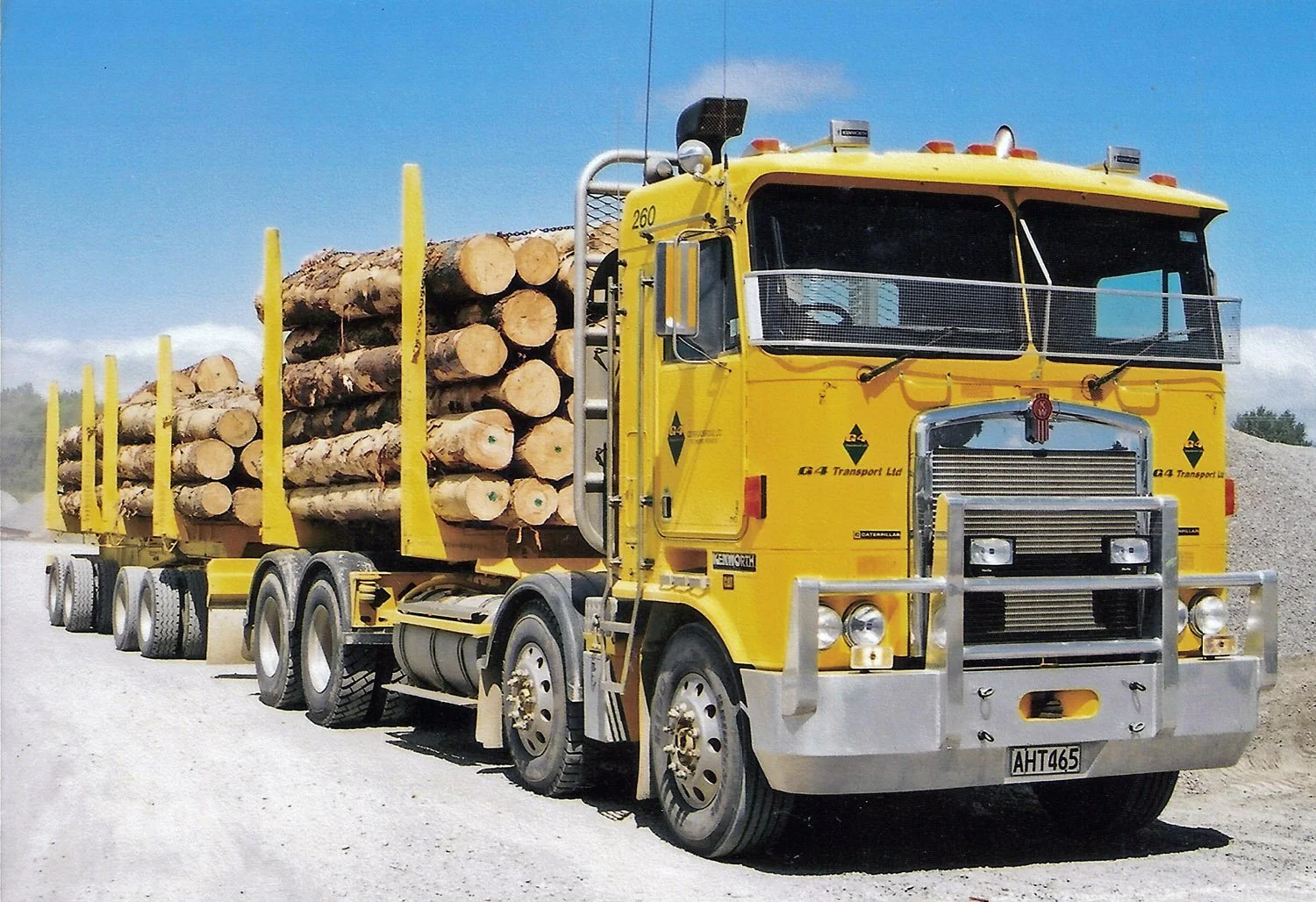
Adam’s usual truck When in the G4 operation.
Into the future
Much has changed over the life span of C D Broadbridge and Broadbridge Transport Ltd, yet 62 years in transport is a highly significant achievement. Much of the credit must go to Cyril and Hazel Broadbridge, the founders and driving force of the company for the first thirty odd years. With their drive and commitment, under what must have been significantly difficult conditions, they sowed the seeds for their sons to grow the business further.
As time passes, things change and so it has been with the Broadbridges, the business today is a far different beast from only a few years ago. Weir and Leon man the rudder today, and at least one of the next generation is putting his hand up to take a more active role in guiding the business through another 60 years.
Hard times teach us the value of success, because without them we never really understand just how easy it can be to fail. We wish Weir, Leon and Adam all the best, knowing success will smile upon those who learn from past mistakes.